25 Best Men’s Short Hairstyles for 2026 by Face Shape
Men’s short hairstyles are no longer just about keeping things neat. In 2026, short haircuts are engineered around face shape, hair density, lifestyle, and how clean the fade transitions into the beard. If you understand structure, not just trends, short hair becomes your sharpest advantage.
25 Men’s Short Hairstyles That Dominate 2026

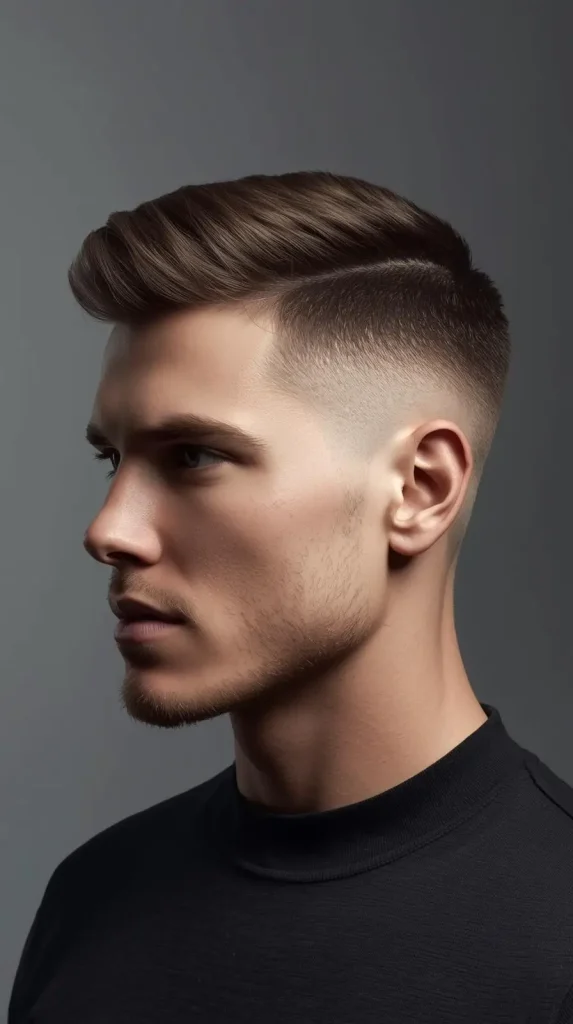
1. Classic Crew Cut
The classic crew cut remains the foundation of structured short hair. The top stays slightly longer than the sides, usually 1 to 1.5 inches, allowing subtle texture without styling complexity.
- Best for straight or slightly wavy hair
- Ideal for oval and rectangle face shapes
- Low product requirement
The strength of this cut lies in proportion. Keep the sides tapered instead of fully faded for a timeless, masculine silhouette.
2. Buzz Cut with Skin Fade
The buzz cut with skin fade removes excess weight and sharpens the outline. The top is clipper uniform while the sides transition into skin at the base.
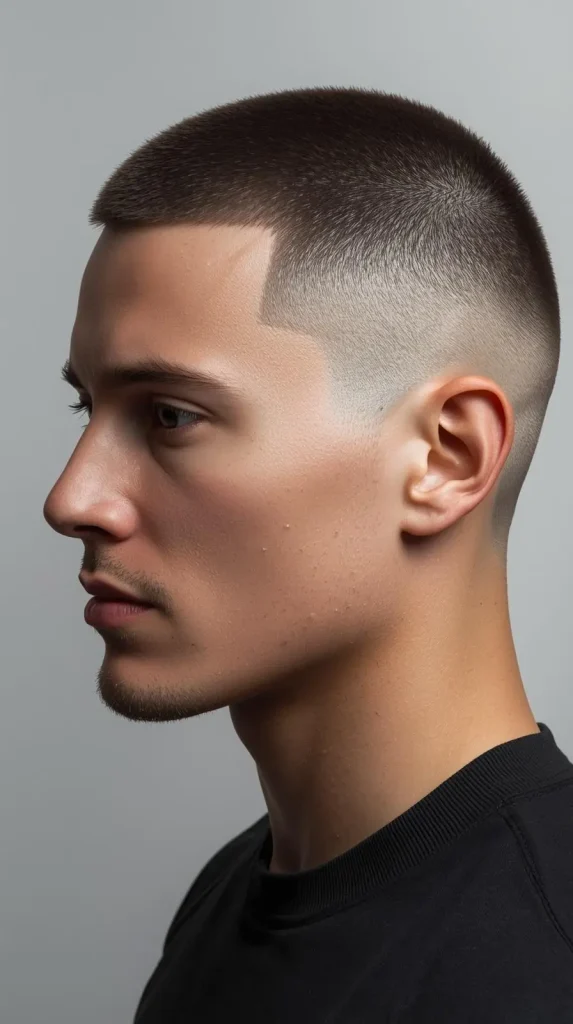
- Works well for thinning hair
- Excellent for receding hairlines
- Ultra low maintenance
If you want to understand how fade transitions affect head shape, study the different types of taper fades.
3. Textured French Crop
The textured French crop is controlled disorder. Short sides, cropped fringe, and choppy texture on top create visual density.
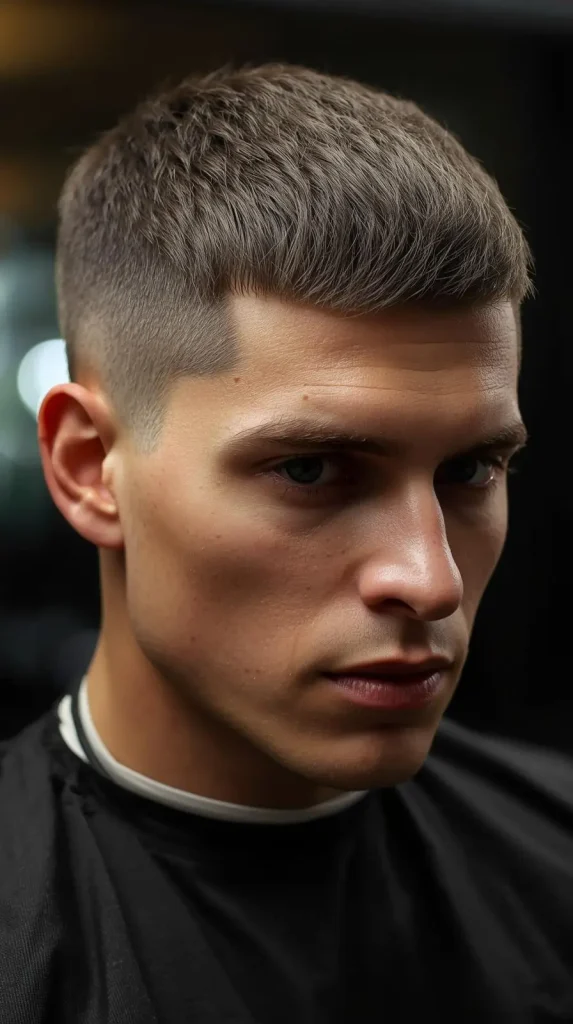
- Best for thin or fine hair
- Strong choice for big foreheads
- Requires matte clay for definition
The fringe should not be heavy. Keep it fragmented to avoid flattening facial structure.
4. Ivy League Side Part
The Ivy League side part is the elevated crew cut. Slightly longer top allows directional styling with a natural side part.
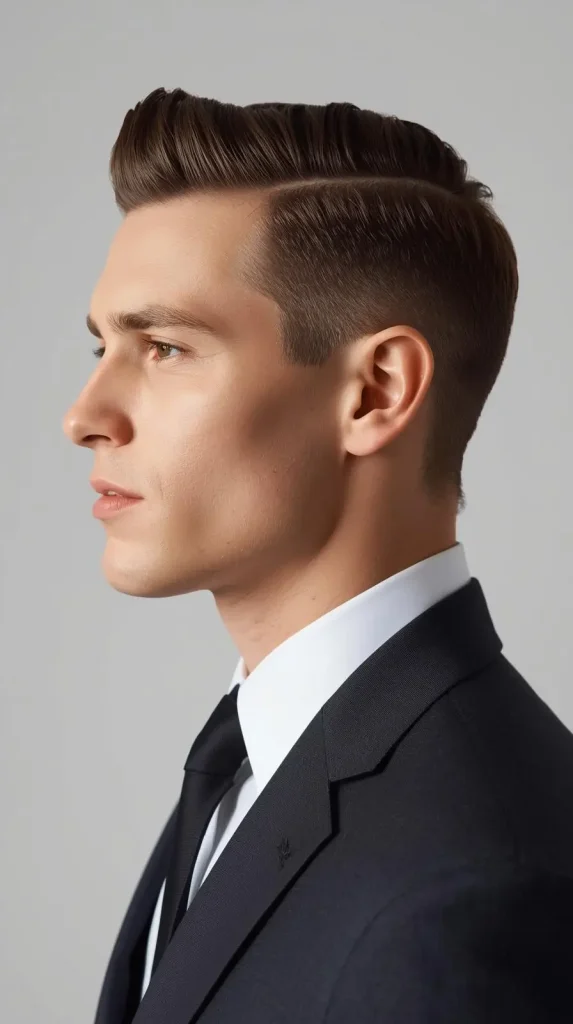
- Professional setting friendly
- Ideal for straight or thick hair
- Pairs well with light stubble
For precise fade execution under this style, reference the full perfect taper fade guide.
5. Low Taper Fade Short Top
The low taper fade short top keeps the fade subtle and professional while maintaining structure on top.
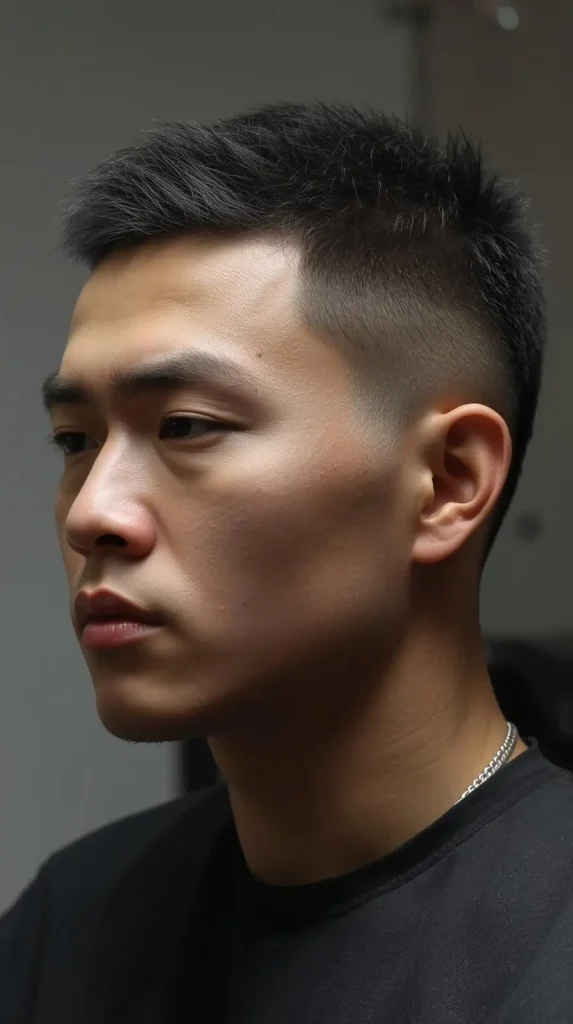
- Best for office environments
- Works across all hair types
- Low grow out contrast
For deeper breakdown of fade structure, study the versatile taper fade concept.
6. Mid Fade with Short Quiff
The mid fade with short quiff balances bold and wearable. The fade rises above the temples while the front lifts slightly.
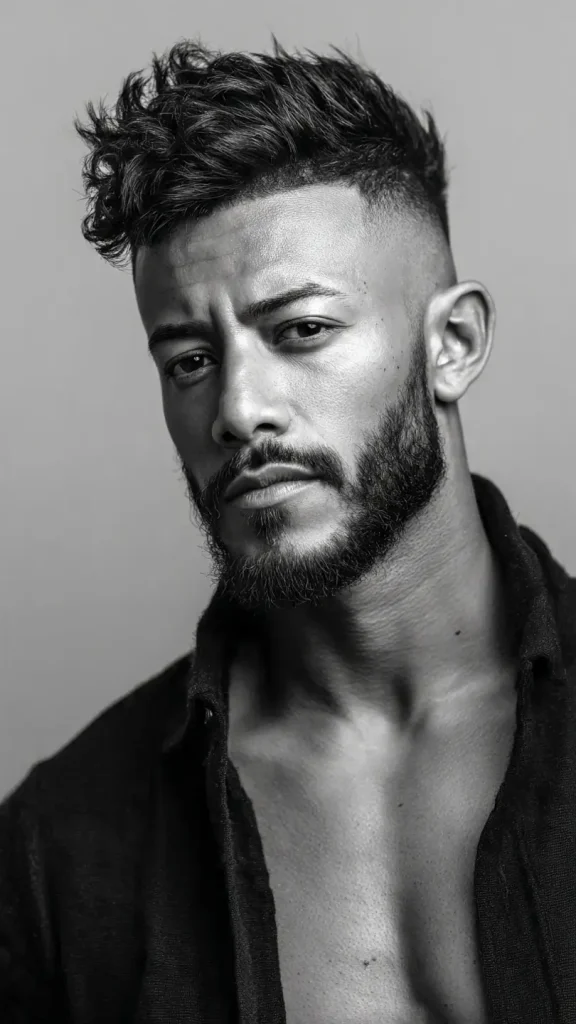
- Best for round faces
- Adds vertical height
- Requires blow drying for lift
Keep the quiff compact. Overextending the front ruins proportion.
7. High Fade with Crop Top
The high fade with crop top is sharper and more aggressive. The fade climbs high and removes bulk from the sides.
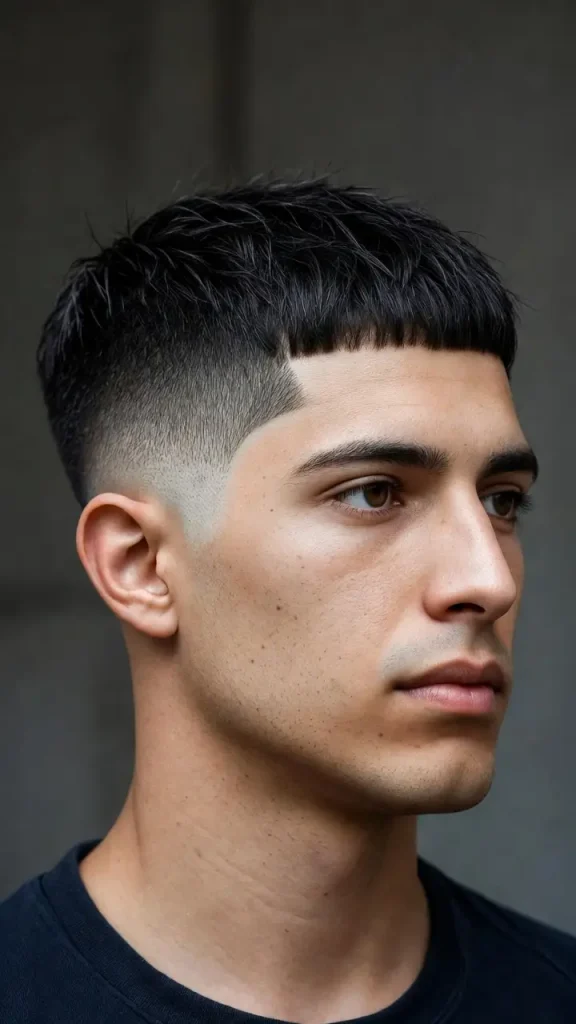
- Great for thick hair
- Strong contrast aesthetic
- Best for defined jawlines
This cut emphasizes bone structure and suits athletic builds.
8. Short Slick Back
The short slick back keeps length minimal but direction controlled. Unlike long slick backs, this version maintains tight proportions.
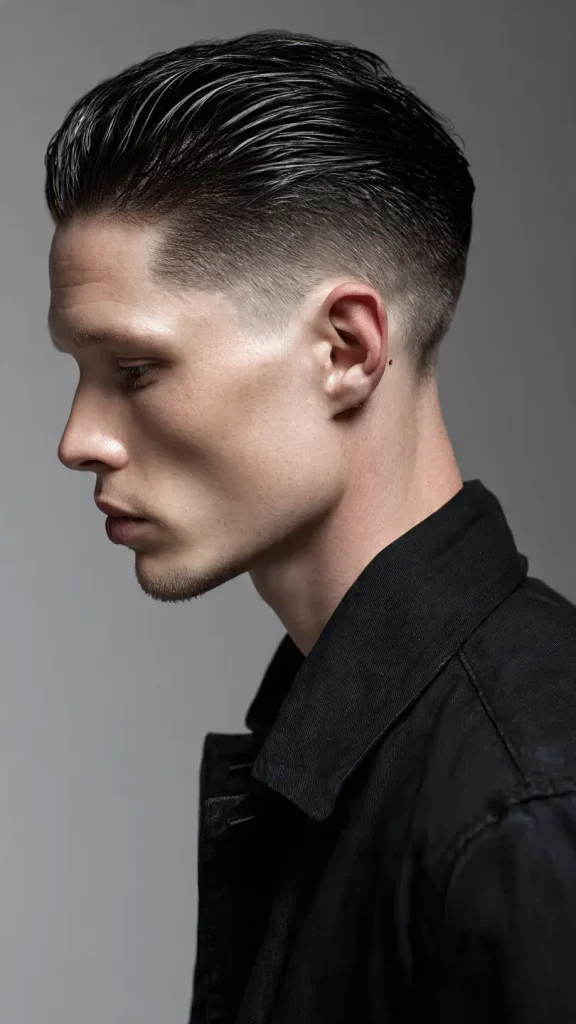
- Best for straight hair
- Works with beard integration
- Requires light pomade
Do not oversaturate with product. Natural shine looks more current than heavy gloss.
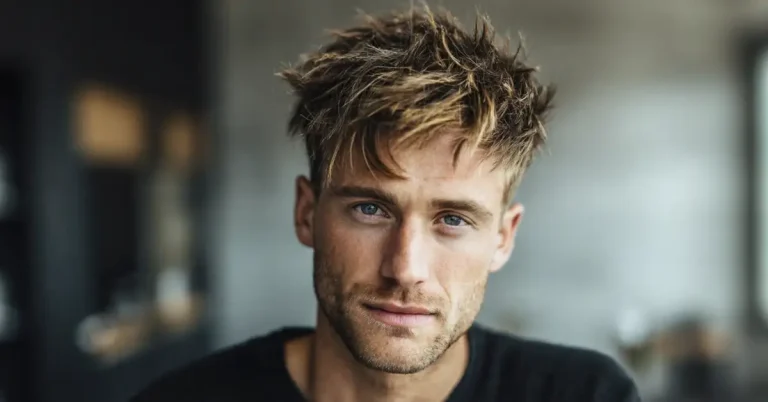
9. Short Messy Textured Cut
The short messy textured cut is structured chaos. Texture is intentional, not random.
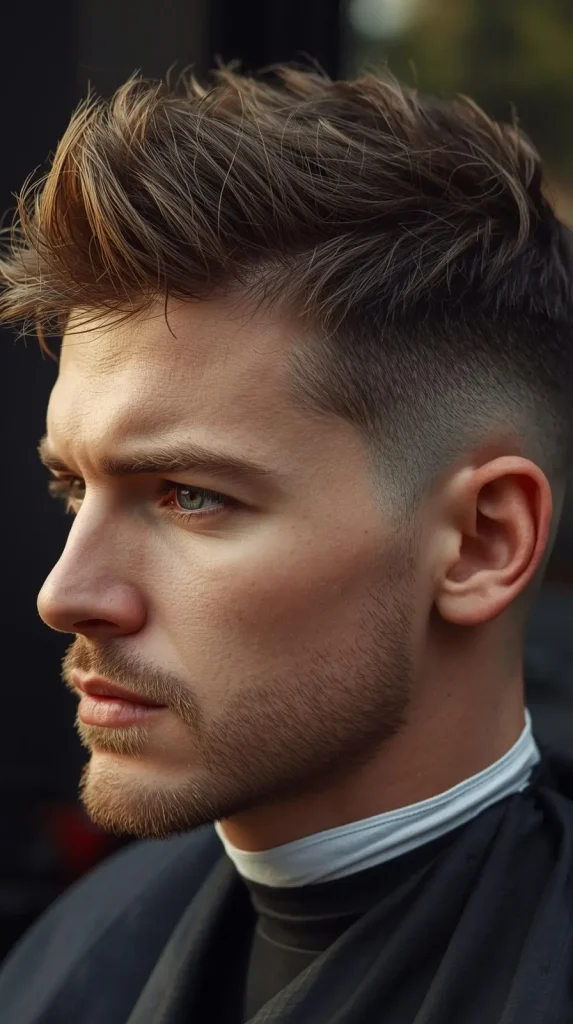
- Best for medium density hair
- Easy everyday styling
- Pairs well with low or mid fade
For a full breakdown of variations, see the dedicated guide on messy short hair men styles.
10. Caesar Cut Modern Version
The modern Caesar cut keeps the fringe short and horizontal while upgrading the sides with a fade or taper.
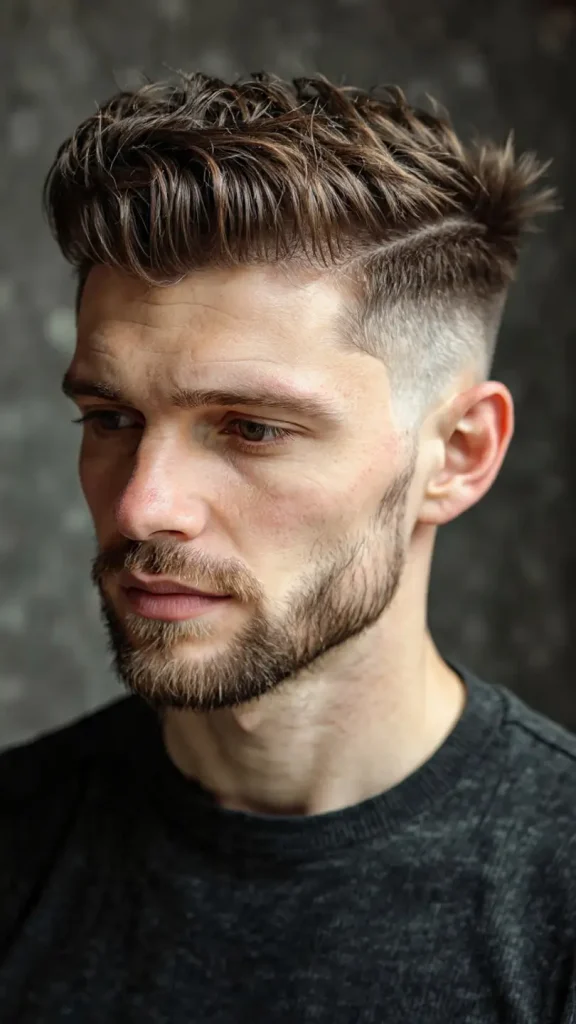
- Excellent for receding hairlines
- Minimal styling time
- Works well on straight and slightly wavy hair
Keep the fringe tight and textured. A blunt, heavy line looks outdated.
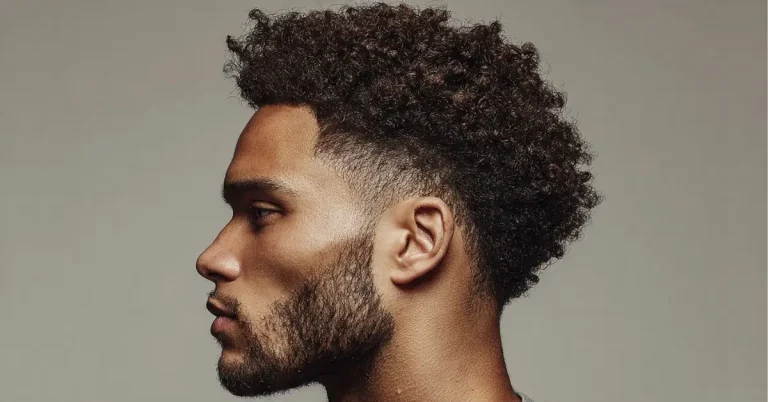
11. Short Curly Taper Fade
The short curly taper fade keeps the sides tight while allowing natural curl definition on top. The taper removes bulk around the ears and neckline without disconnecting the curl pattern.
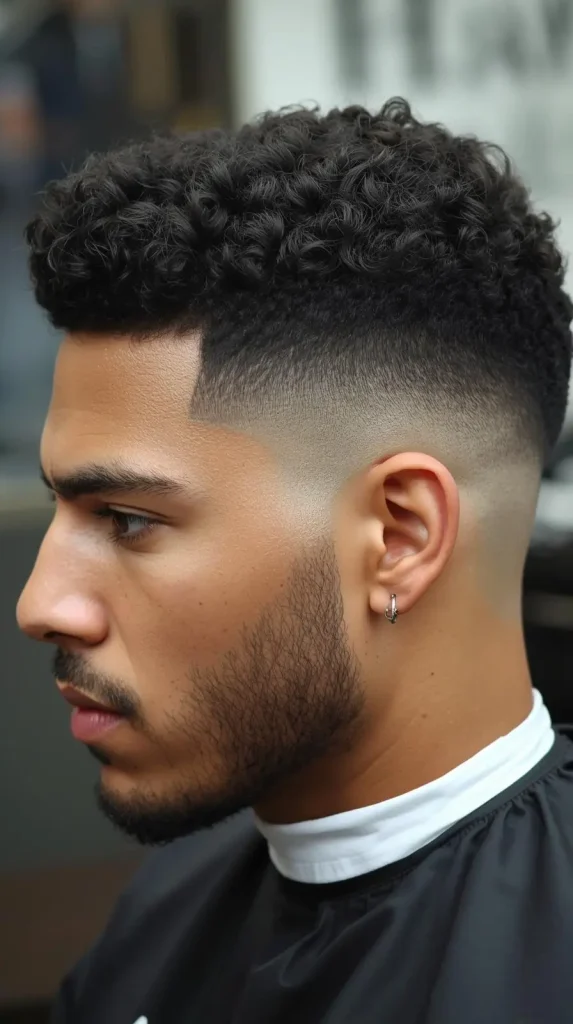
- Best for type 3 and 4 curls
- Adds shape without flattening texture
- Prevents triangle silhouette
If you want a full breakdown of how curls interact with fade structure, study the detailed curly hair taper fade guide.
12. Short Wavy Crop
The short wavy crop uses controlled texture instead of height. Waves are kept compact and slightly forward to create density.
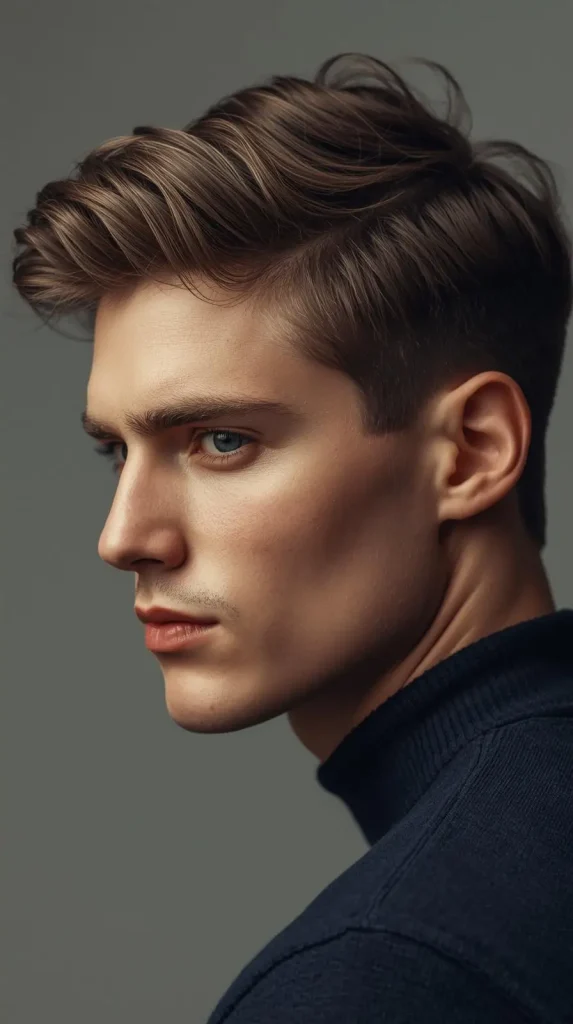
- Ideal for medium thickness hair
- Softens sharp facial features
- Works well with low or mid fade
Use matte cream instead of heavy clay to avoid stiff movement.
13. Short Afro with Taper
The short Afro with taper maintains natural volume while cleaning the perimeter. The taper around the temples and neckline sharpens the overall silhouette.
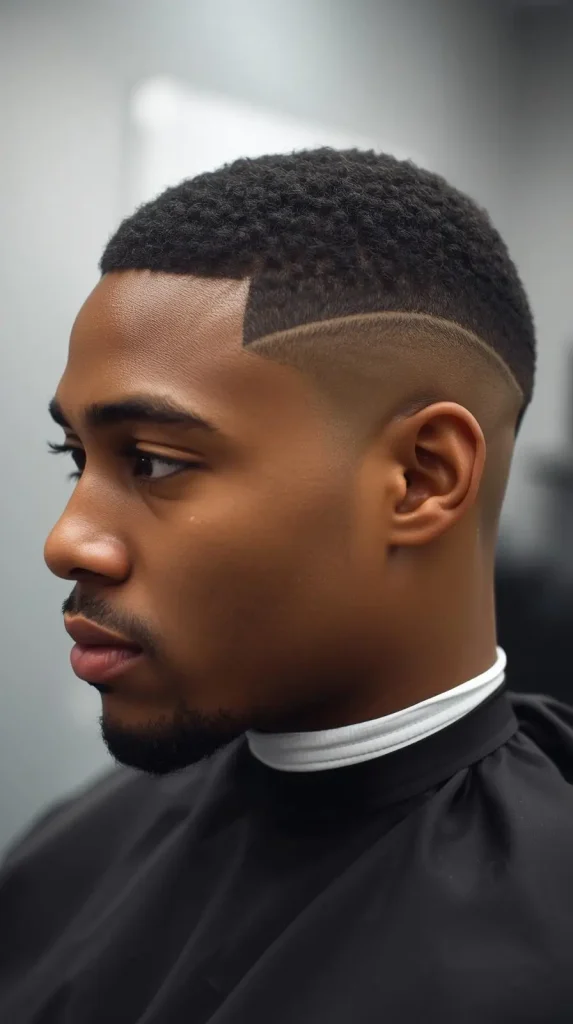
- Perfect for 4B and 4C hair
- Professional yet expressive
- Keeps edge up crisp longer
The key is balance. Do not over fade into the curl base.
14. Buzz Cut for Receding Hairline
The buzz cut for receding hairline minimizes contrast between thinning areas and denser zones. Keeping everything uniform reduces attention to the temples.
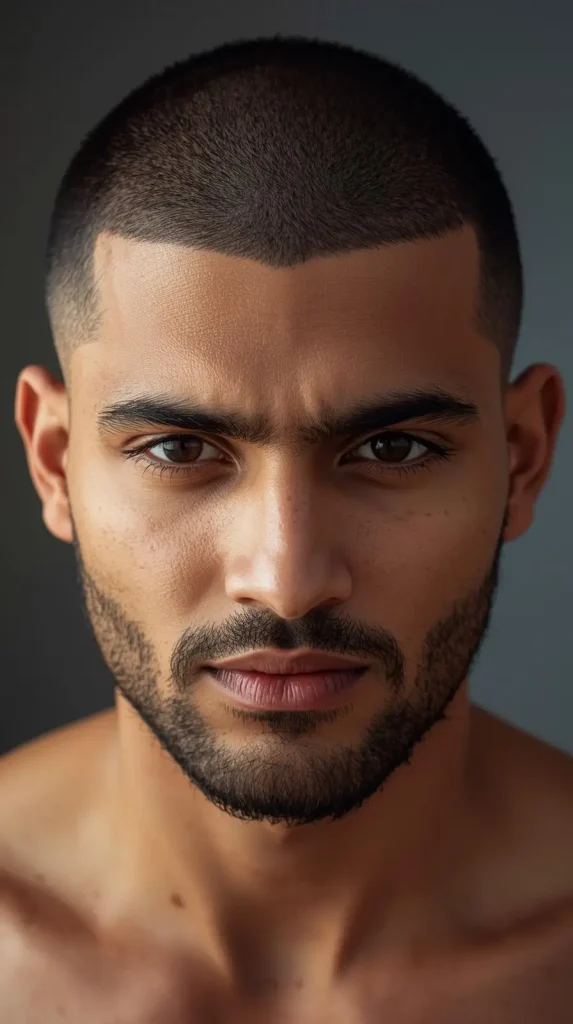
- Strong option for widow’s peak
- Low daily styling effort
- Works well with skin or low fade
Avoid leaving excess length on top. Shorter is cleaner and more confident.
15. Short Side Part with Hard Part
The short side part with hard part adds structure through a defined shaved line. It separates top from sides clearly and enhances symmetry.
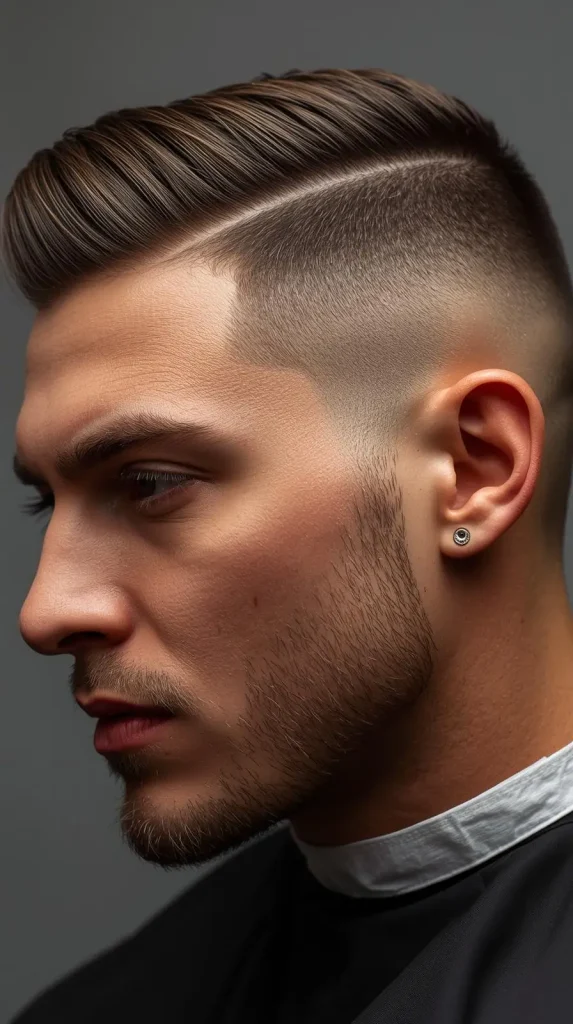
- Best for straight or thick hair
- Great for office environments
- Pairs well with trimmed beard
Keep the hard part subtle. Overcutting the line makes the haircut look rigid.
16. Military Regulation Cut
The military regulation cut is structured, practical, and precise. The top remains short but not shaved, with tight faded or tapered sides.
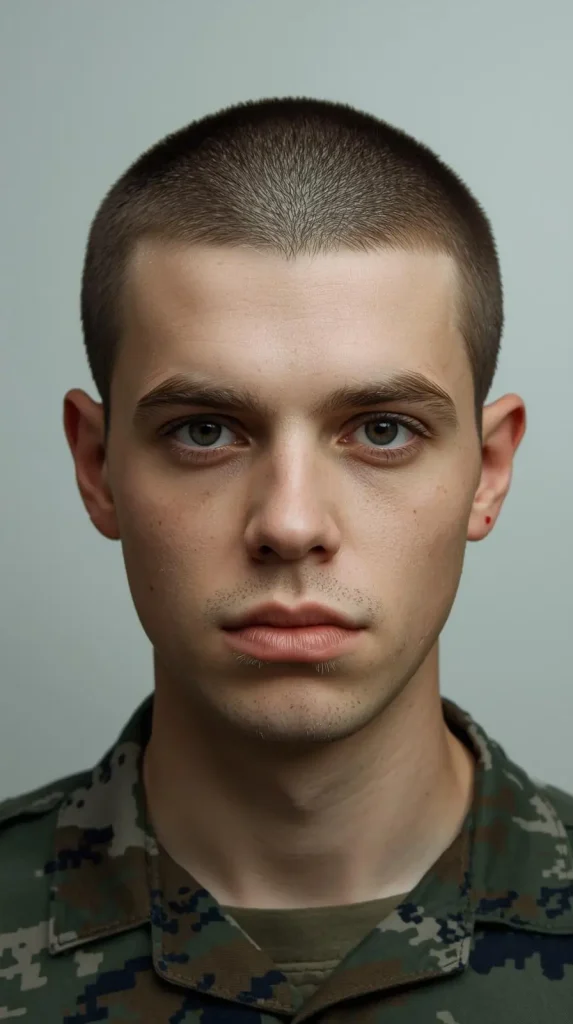
- Excellent for active lifestyles
- Minimal maintenance
- Sharp masculine outline
This is one of the most reliable professional short haircuts for men.
17. Short Undercut
The short undercut disconnects the top from the sides while keeping overall length short. Unlike longer undercuts, this version stays controlled.
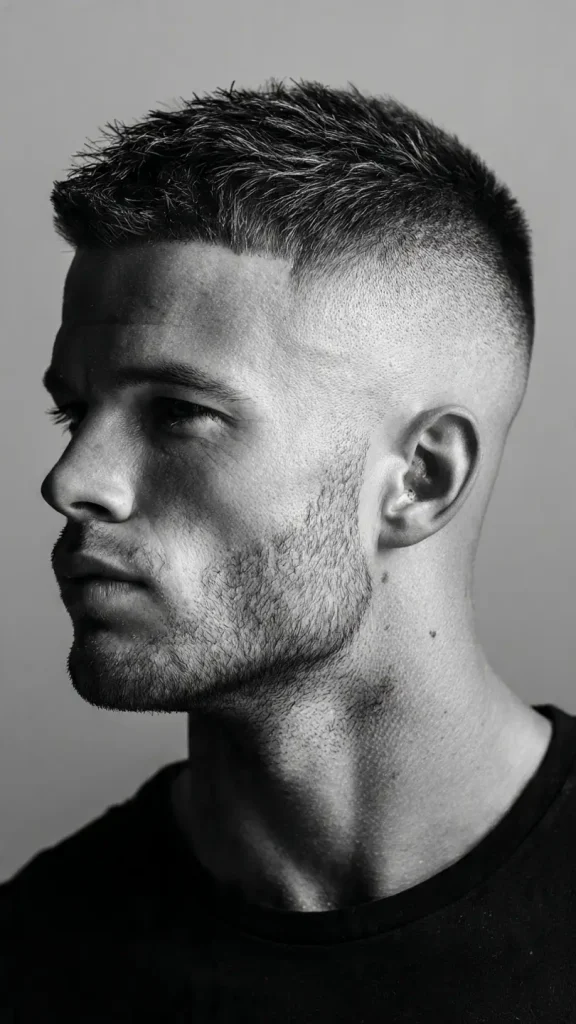
- Best for thick hair
- Strong contrast aesthetic
- Works with slick back or textured styling
Precision blending determines whether it looks refined or abrupt.
18. Short Middle Part
The short middle part is a modern reinterpretation influenced by Korean and Gen Z trends. The length stays compact while the part defines symmetry.
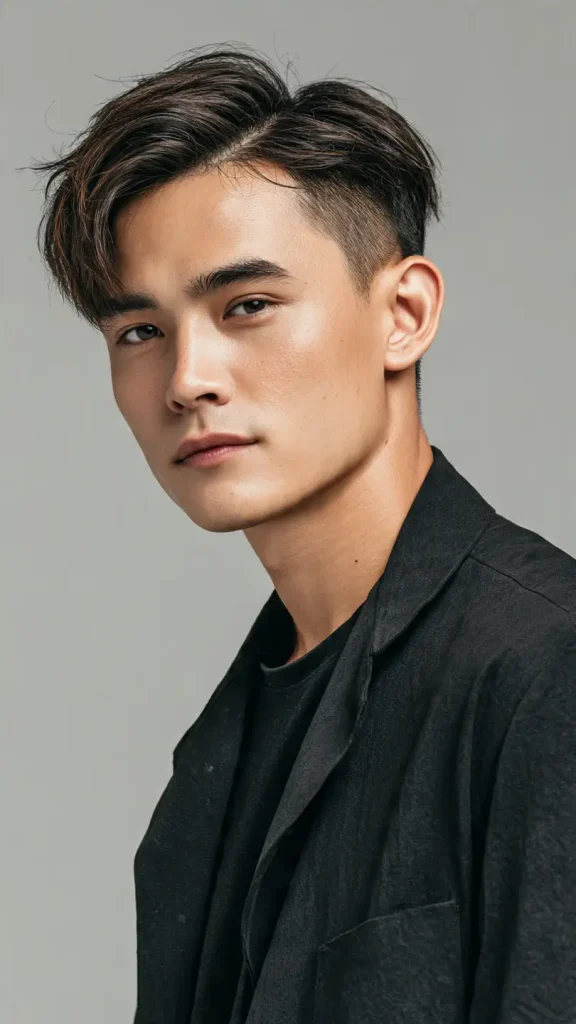
- Best for straight or slightly wavy hair
- Frames oval and diamond face shapes
- Requires light styling cream
Keep sides tapered instead of shaved for a cleaner 2026 finish.
19. Short Blonde Textured Cut
The short blonde textured cut enhances movement and dimension. Lighter tones make texture more visible.
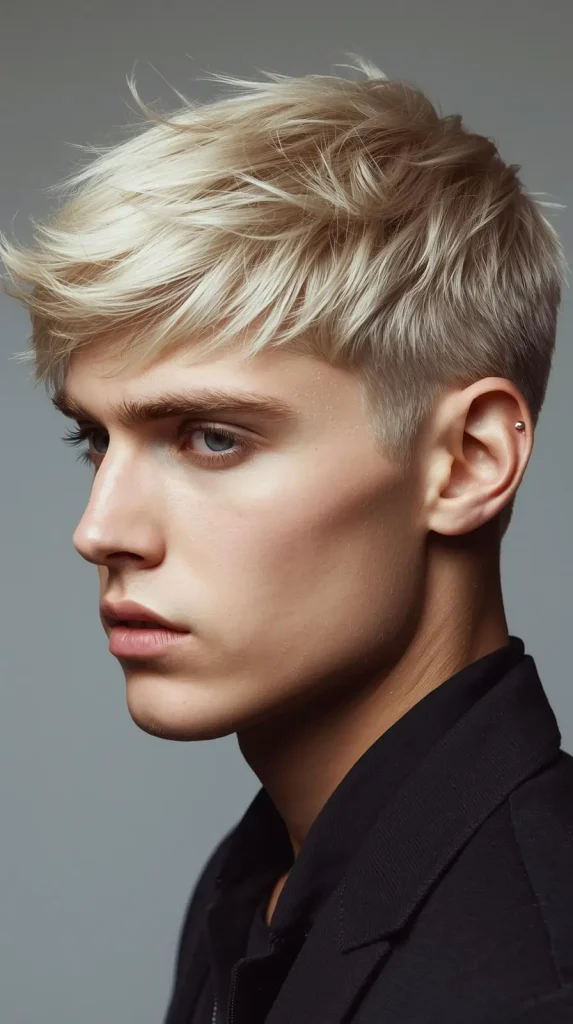
- Great for fine hair
- Adds perceived volume
- Works well with crop or messy structure
Avoid excessive bleaching that damages density.
20. Short Viking Inspired Cut
The short Viking inspired cut blends rugged masculinity with structured sides. Typically paired with a beard, the top remains short but dense.
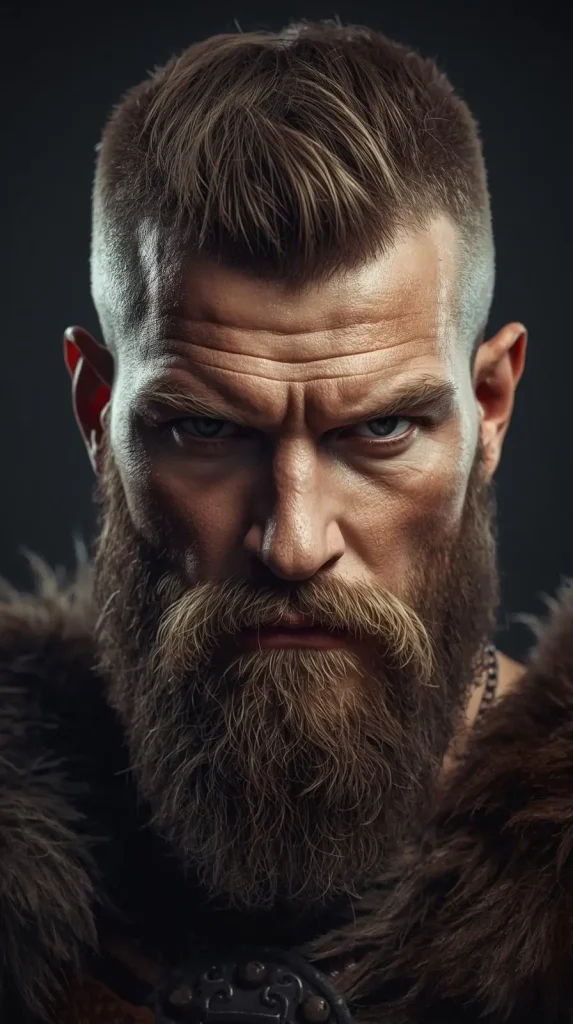
- Ideal for thick hair
- Strong jawline emphasis
- Works with low or mid-fade
Keep proportions balanced so the beard and hair complement each other.
21. Short Cut for Thin Hair
The short cut for thin hair reduces weight and avoids long top sections that expose scalp. Texture is subtle and controlled.
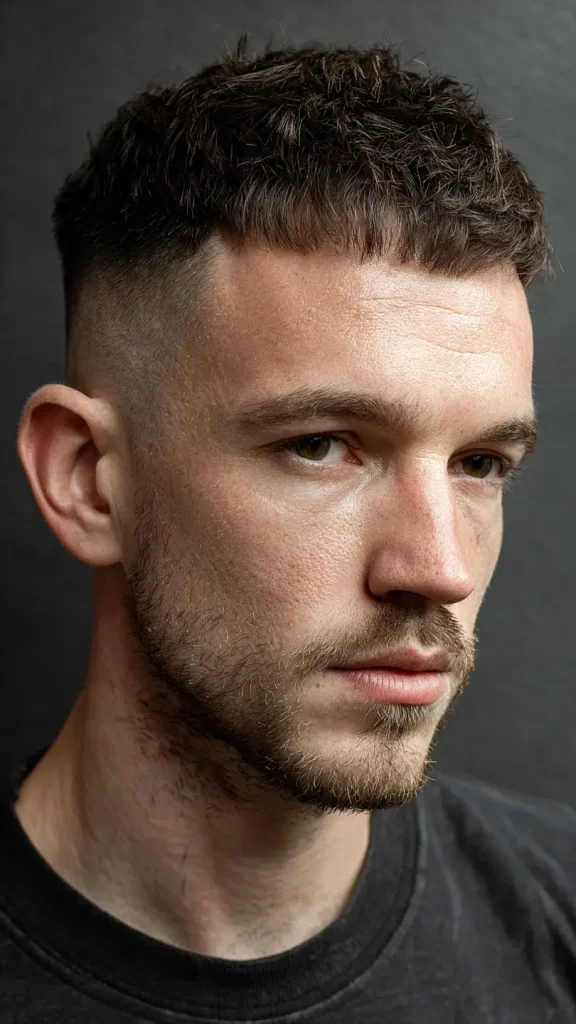
- Best with crop or crew structure
- Avoid heavy fringe
- Low shine styling products only
For fade blending fundamentals that prevent overexposure of scalp, review the perfect taper fade guide.
22. Short Thick Hair Structured Crop
The short thick hair structured crop removes internal bulk while maintaining strength on top. Precision texturizing is essential.
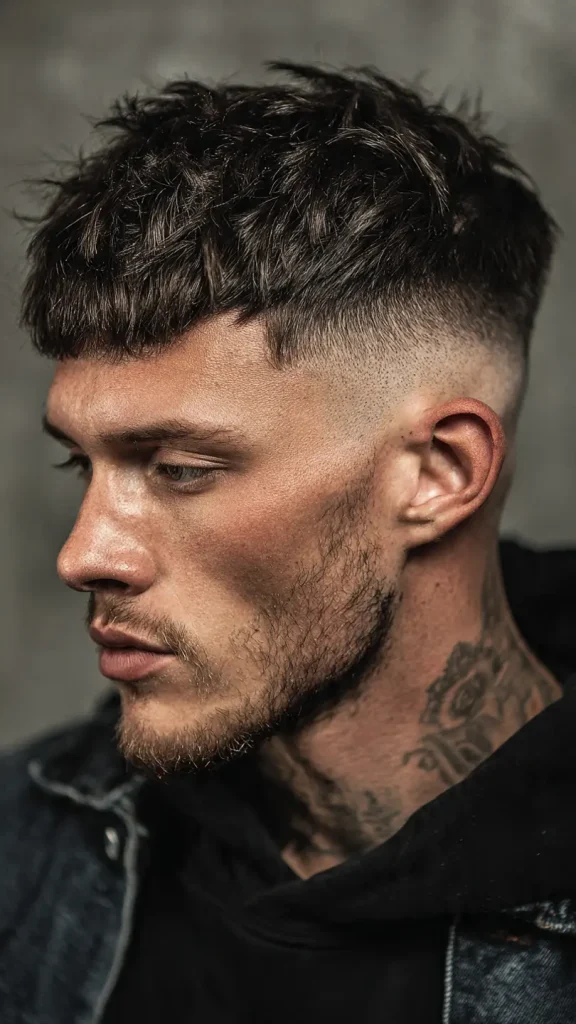
- Ideal for dense coarse hair
- Prevents mushroom shape
- Pairs well with mid fade
The barber must debulk strategically, not just shorten.
23. Low Maintenance Short Haircut
The low maintenance short haircut focuses on practicality. Crew cuts, buzz cuts, and tight tapers dominate this category.
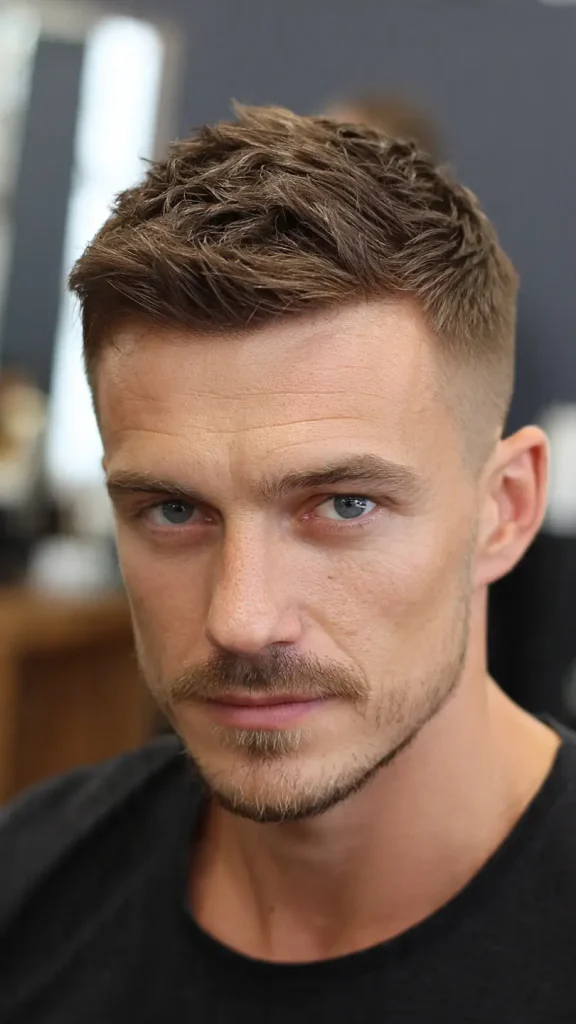
- Minimal product use
- Easy grow out phase
- Works across age groups
Understanding proper fade structure is critical. Study the different types of taper fades.
24. Short Hair with Beard Blend
The short hair with beard blend connects the sideburns smoothly into facial hair. The fade should transition naturally into the beard line.
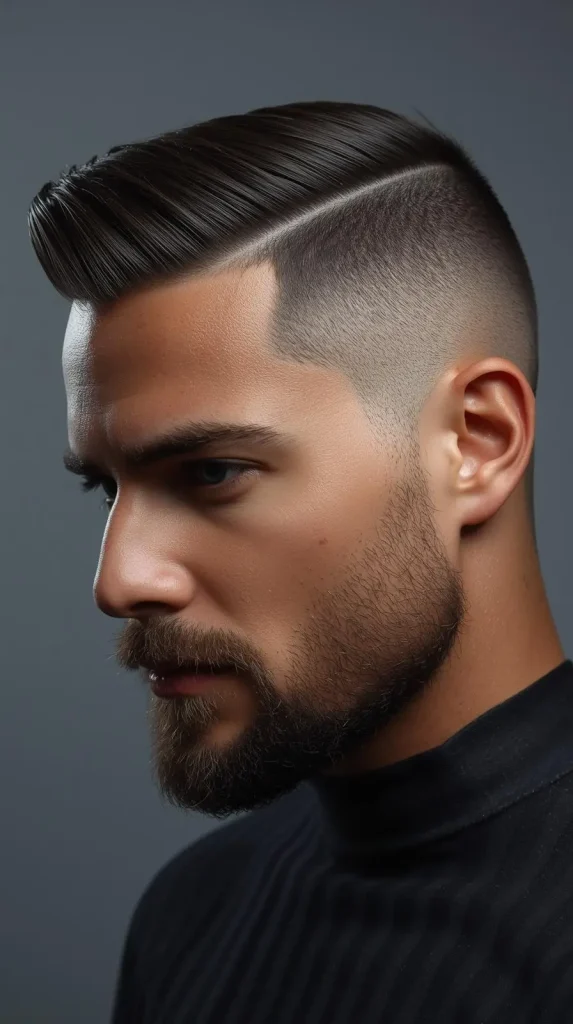
- Best for full beard styles
- Adds facial definition
- Requires consistent lineup maintenance
The blend must be gradual, not disconnected.
25. Short Hair with Mustache Styling
The short hair with mustache styling keeps attention centered on the upper lip while maintaining a clean head shape.
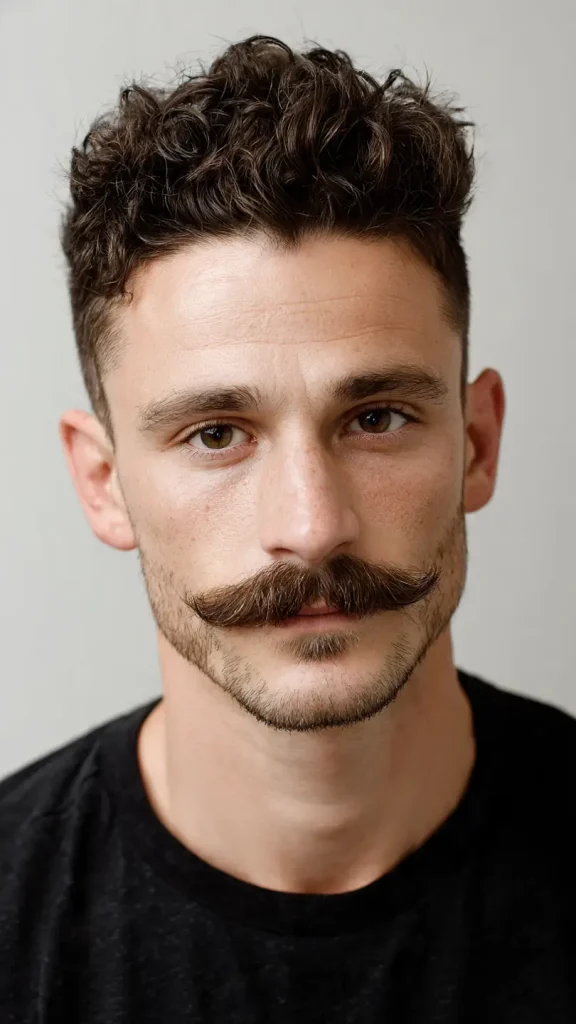
- Works well with buzz or crop cuts
- Highlights strong cheekbones
- Minimal styling effort
Keep the haircut sharp and understated so the mustache becomes the focal detail.
Men’s Short Hairstyles by Hair Type
Hair type determines structure more than trend. The right men’s short hairstyles are not chosen randomly. They are engineered based on density, strand thickness, curl pattern, and growth direction. When you match the haircut to your hair type, styling becomes easier and the shape lasts longer between trims.
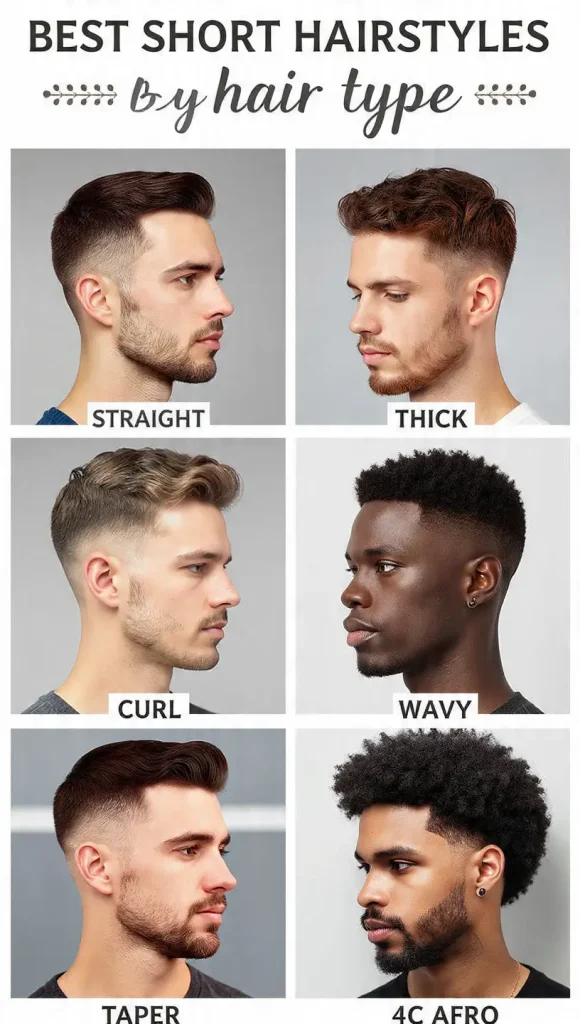
i. Short Hairstyles for Straight Hair
Straight hair exposes every mistake. Because it lays flat, poor blending or weak structure becomes obvious immediately. The solution is controlled layering and precise tapering.

Best options include crew cuts, French crops, short side parts, and short slick backs. A low or mid fade adds structure without removing too much weight. If you prefer minimal contrast, a clean taper works better than a skin fade.
Avoid heavy thinning on top. Straight hair needs internal support to avoid collapsing.
For technical blending principles that keep straight hair sharp, review taper fade styling techniques.
iI. Short Hairstyles for Thick Hair
Thick hair offers volume but can quickly look bulky. The goal is weight removal without destroying structure.
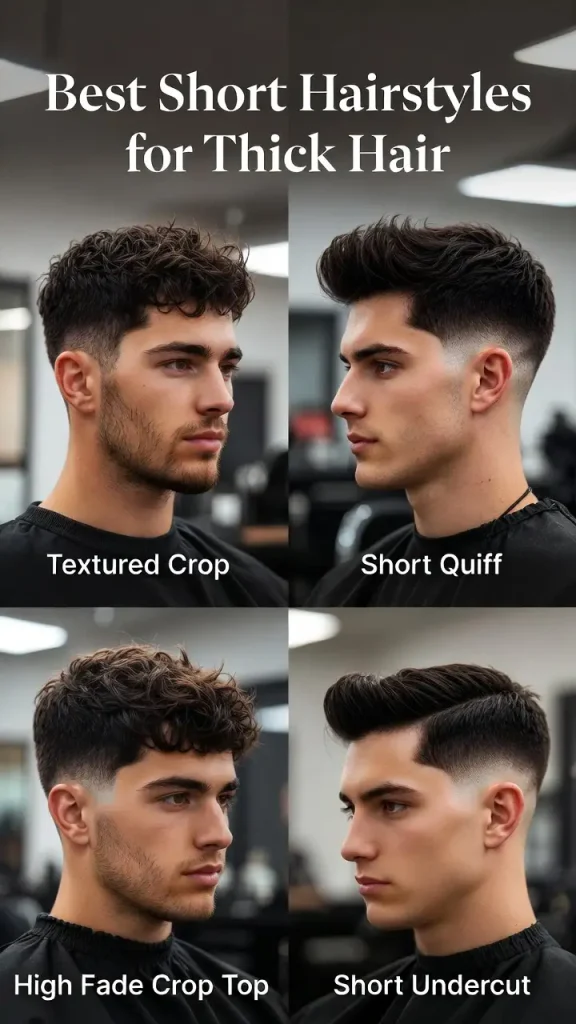
Strong choices include structured crops, short quiffs, high fades with crop tops, and short undercuts. Strategic texturizing prevents the mushroom effect while maintaining density where it counts.
A mid or high fade works especially well because it removes side bulk and emphasizes top shape.
Do not over thin the crown. Thick hair still needs internal structure to maintain clean movement.
III. Short Hairstyles for Thin or Thinning Hair
With thin or thinning hair, length exaggerates scalp visibility. Shorter cuts reduce contrast between dense and sparse areas.
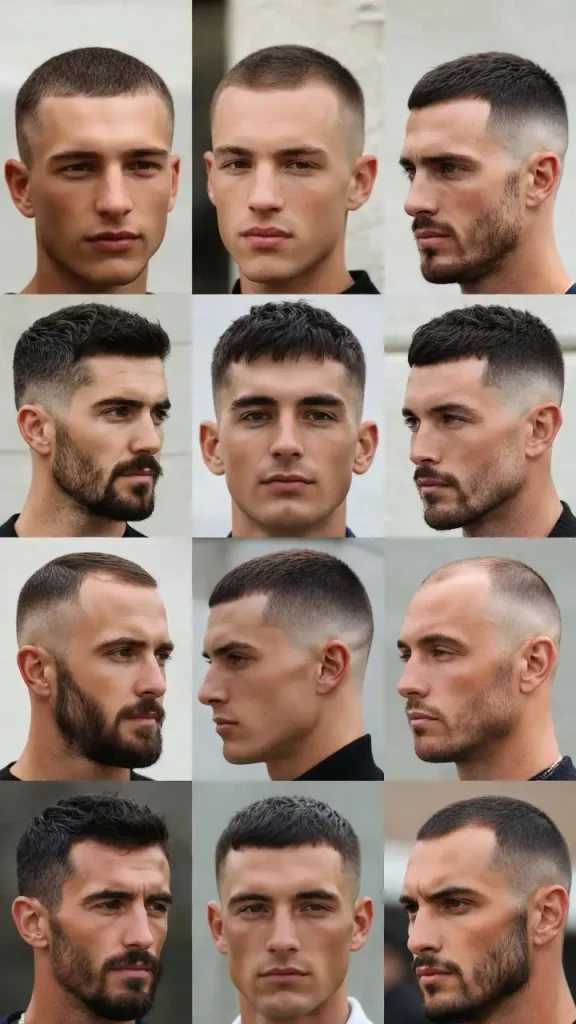
Buzz cuts, textured crops, short Caesar cuts, and tight crew cuts perform best. Keeping the top compact prevents separation lines that expose scalp.
Low fades are generally safer than high fades because they preserve slight density near the temples.
If thinning is combined with recession, shorter uniform cuts are often the most confident solution.
IV. Short Hairstyles for Curly Hair
Curly hair demands shape control, not length control. Removing too much bulk from the sides without respecting curl pattern leads to imbalance.
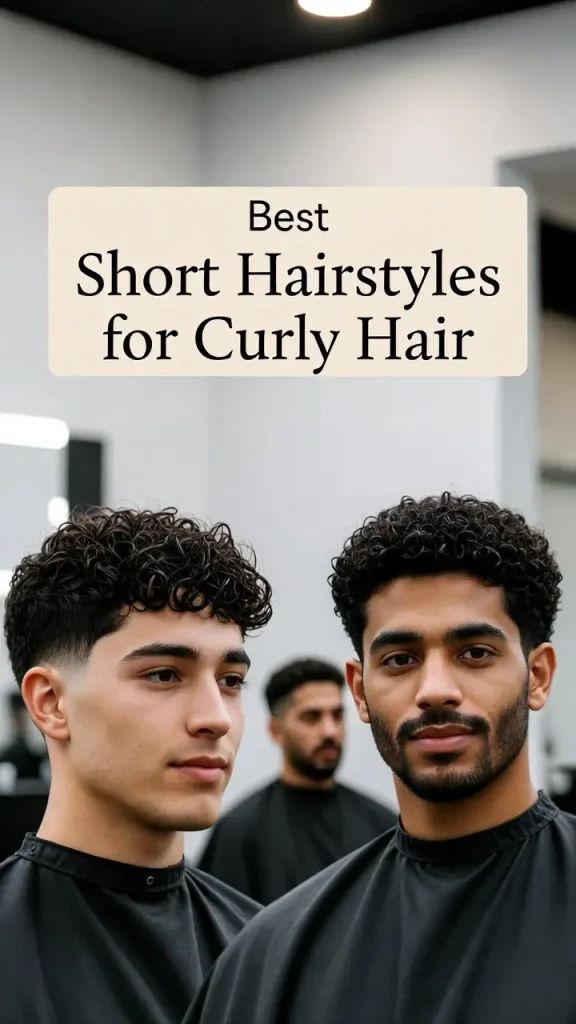
Short curly taper fades, compact curly crops, and defined short afros are reliable options. The key is gradual tapering that supports curl density instead of cutting directly into it.
Moisture and definition products are essential. Dry curls expand unpredictably and distort silhouette.
For a deeper breakdown of how curl structure interacts with fades, study the curly hair taper fade guide.
V. Short Hairstyles for Wavy Hair
Wavy hair sits between straight and curly. It can either appear flat or overly puffy depending on cut precision.
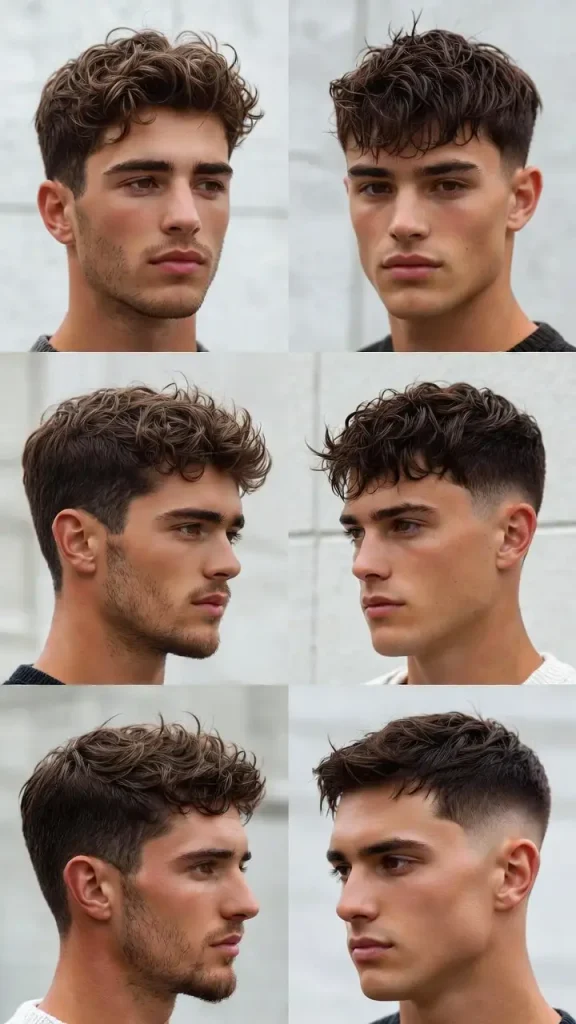
Short wavy crops, side parts, and textured crew cuts are ideal. A low taper keeps the look professional while allowing movement on top.
Avoid extremely high fades unless the waves are dense. Too much side removal can make the top appear disconnected.
Light matte creams work better than heavy clays for maintaining natural wave flow.
VI. Natural Afro and 4C Short Hairstyles
4C and tight coily textures require structure that supports density without collapsing shape.
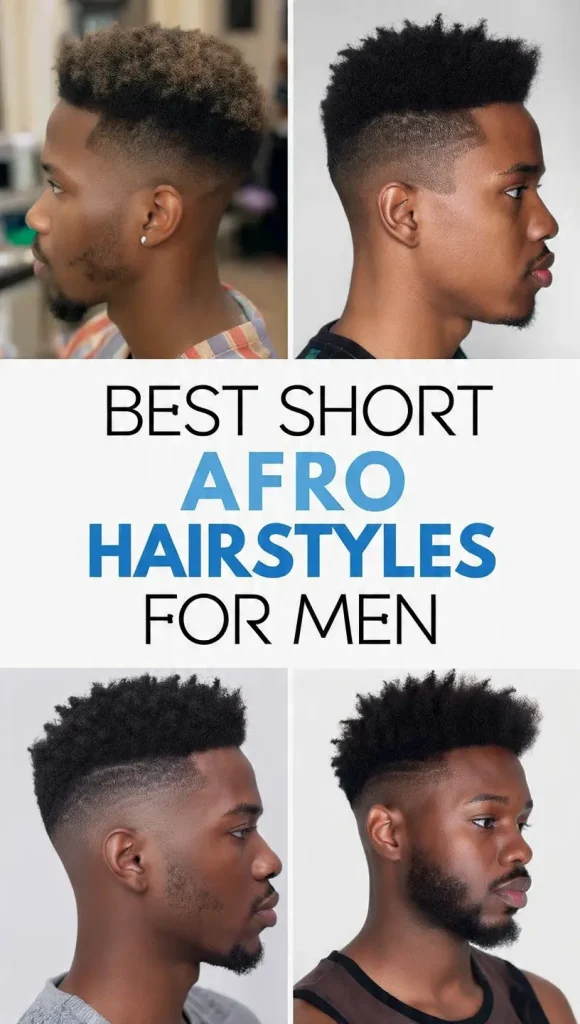
Short afros with tapers, structured 4C crops, and controlled burst fades are effective. Edge up precision is critical because tight curls highlight perimeter lines.
Moisture retention is non negotiable. Dry 4C hair shrinks unevenly and changes silhouette.
For understanding fade variations that complement natural textures, review the types of taper fades.
Men’s Short Hairstyles by Face Shape
Face shape determines visual balance. The right men’s short hairstyles either add width, reduce height, or introduce structure where bone definition is lacking. When haircut proportions align with facial geometry, the result looks intentional instead of trendy.

A. Round Face
Round faces lack sharp angles and typically have equal width and length. The objective is vertical emphasis and side compression.
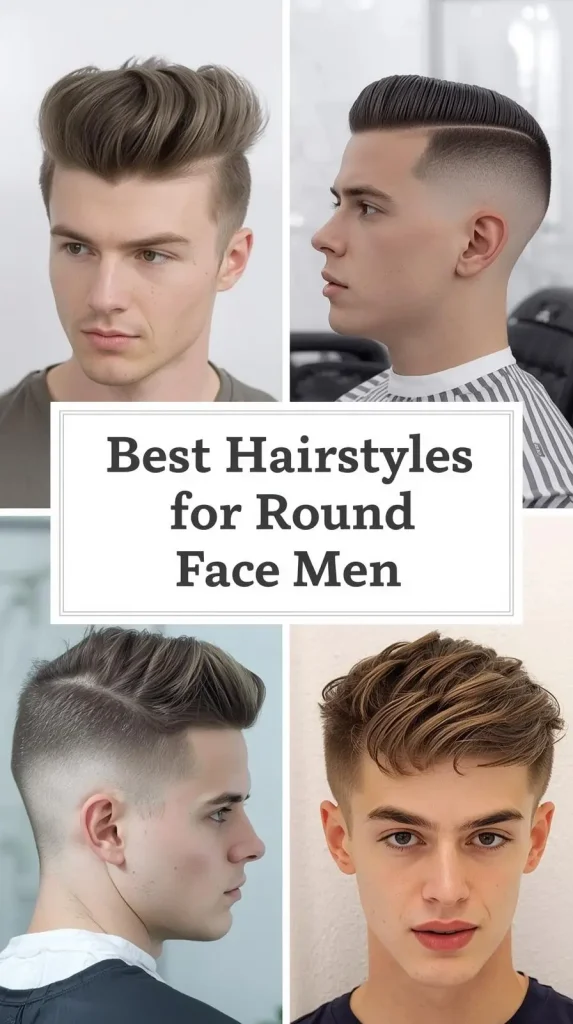
Best options include short quiffs, mid fades with lift, structured crops with slight height, and high fades that slim the sides. Adding controlled volume on top elongates the face.
Avoid heavy fringes and low flat cuts. They widen the face and remove vertical structure.
A mid fade paired with a short textured top is one of the most reliable combinations for this shape.
B. Oval Face
Oval faces are balanced and versatile. Most men’s short hairstyles work well here because proportions are already symmetrical.

Crew cuts, buzz cuts, slick backs, side parts, and crops all perform effectively. The focus should be on maintaining natural balance rather than overcompensating with extreme fades.
High fades can work, but moderate tapers often look more refined. Avoid excessive height that elongates the face unnecessarily.
Oval faces benefit from subtle structure rather than dramatic contrast.
C. Diamond Face
Diamond face shapes feature wider cheekbones with narrower forehead and chin. The goal is softening the mid face while adding slight width at the temples.
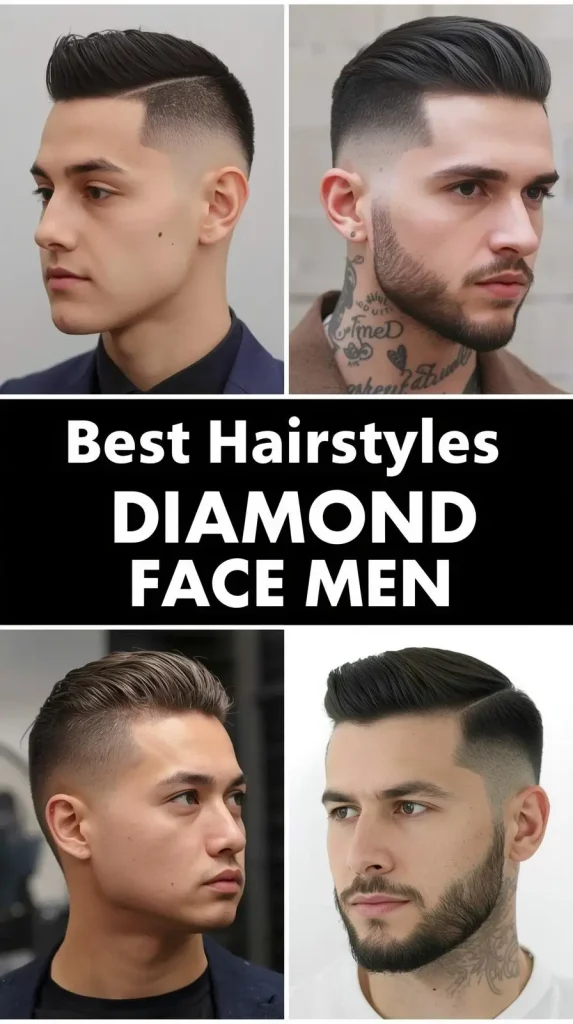
Textured crops, side parts with moderate volume, and short middle parts work well. A low or mid fade maintains balance without exaggerating cheekbone width.
Avoid extremely tight skin fades that sharpen the mid face too aggressively.
A controlled taper often complements diamond structures better than a high contrast fade.
D. Rectangle Face
Rectangle faces are longer than they are wide. The strategy is reducing vertical height and avoiding overly tall styling.
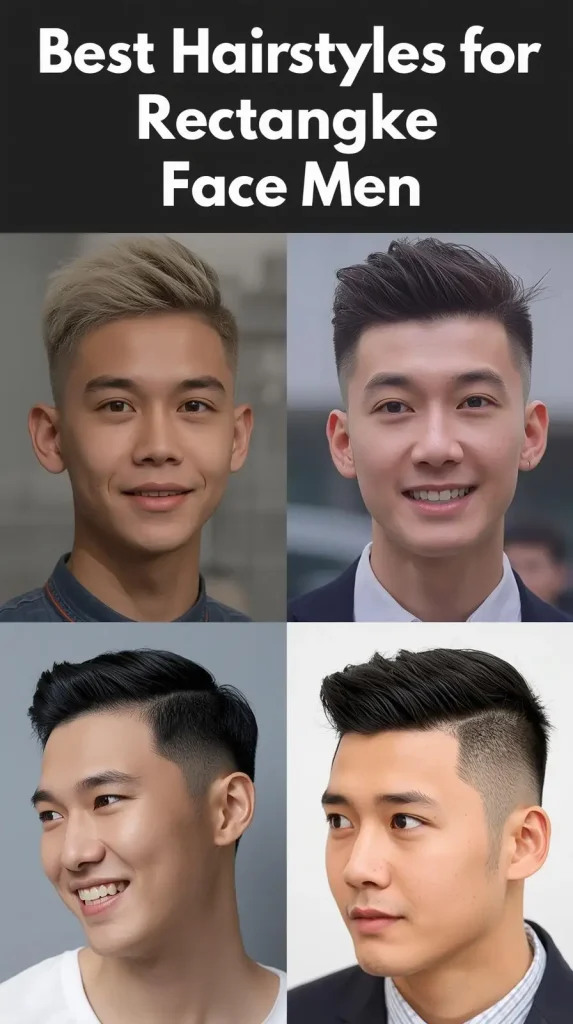
Short crops, Caesar cuts, and low fades perform best. Keep the top compact and avoid exaggerated quiffs.
High fades can elongate the silhouette further, so mid or low tapers are generally more balanced.
For fade placement fundamentals that protect facial proportion, review the perfect taper fade guide.
E. Big Forehead and Widow’s Peak
A big forehead or widow’s peak requires strategic fringe or uniform shortening. The goal is reducing contrast at the temples.
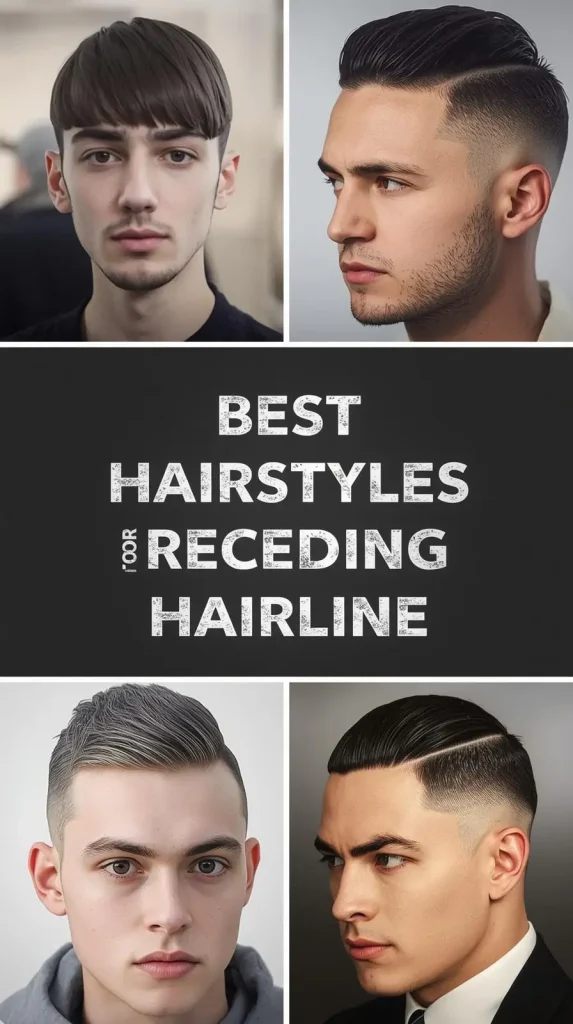
French crops with soft fringe, Caesar cuts, and short textured cuts are effective. For more advanced recession, a buzz cut often creates the cleanest silhouette.
Avoid slick backs that expose the hairline unless density is strong.
If recession is present, shorter overall length minimizes visual gaps and creates a more confident outline.
Men’s Short Hairstyles with Beard and Facial Hair
Facial hair changes the entire balance of men’s short hairstyles. The haircut is no longer working alone. It must connect, contrast, or complement the beard structure. When blending is precise, the result looks intentional. When it is not, the style looks disconnected.
The transition between sideburn, fade, and beard line determines whether the haircut feels premium or amateur.
1. Short Hairstyles with Full Beard
A full beard adds width and density to the lower face. The haircut must compensate with clean structure on top.
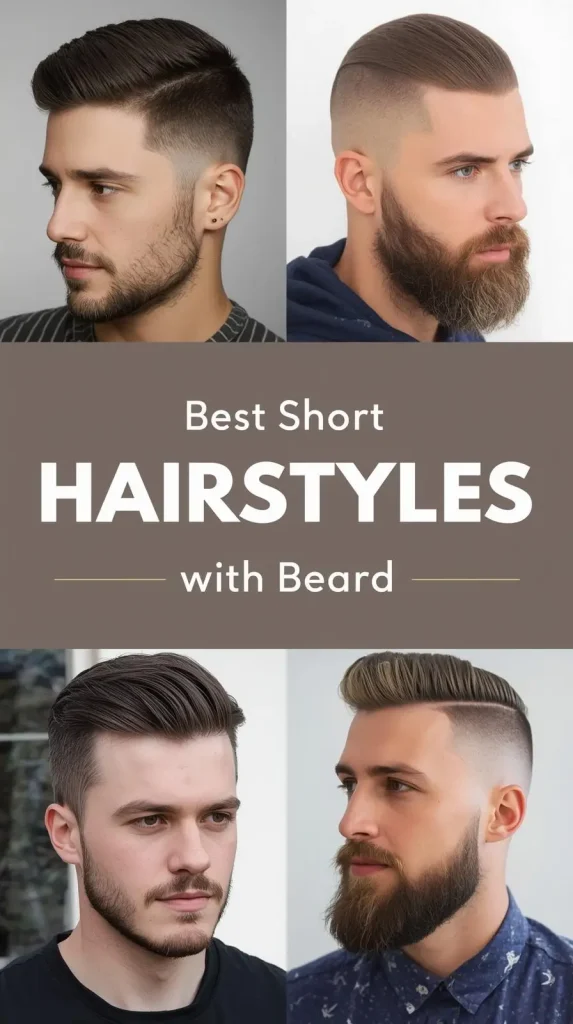
Crew cuts, textured crops, short quiffs, and structured undercuts work best. Low or mid fades create a smooth transition into the beard without abrupt disconnection.
The key is a gradual blend from temple to beard. Hard separation lines make the look feel segmented.
Maintain beard bulk under control. If the beard is too wide and the sides are too tight, proportions become distorted.
2. Short Hairstyles with Long Beard
A long beard introduces vertical weight. The haircut should not compete with it.
Buzz cuts, tight tapers, short crops, and compact crew cuts are ideal. Keeping the top controlled prevents the upper half from overpowering the beard length.
Avoid exaggerated height on top. Tall quiffs combined with long beards elongate the face excessively.
Precision fade placement is critical. A clean taper around the ear allows the beard to remain dominant without looking unmanaged.
3. Short Hairstyles with Mustache
A mustache shifts visual focus to the center of the face. The haircut should support that focus, not distract from it.
Buzz cuts, short crops, middle parts, and tight side parts perform well. Clean lines around the temples and neckline keep attention on the mustache.
Avoid overly dramatic fades or heavy textured tops that compete with the upper lip detail.
The haircut should feel sharp and understated.
4. Clean Shaven Short Hairstyles
Without facial hair, structure must come entirely from the haircut itself. Every line, blend, and proportion becomes more visible.
High fades, mid fades, crew cuts, slick backs, and structured crops all work well. Clean shaven styles allow stronger contrast because there is no beard to balance the lower face.
For sharp blending fundamentals that elevate clean shaven looks, review the perfect taper fade guide.
When there is no beard, precision becomes the defining feature of the entire haircut.
Low Maintenance and Professional Men’s Short Hairstyles
Low maintenance does not mean careless. The most effective men’s short hairstyles reduce daily effort while maintaining sharp structure. The difference lies in proportion, not complexity.

I. Office Ready Short Haircuts
Professional environments favor balance and restraint. Crew cuts, Ivy League side parts, low taper fades, and compact textured crops deliver structure without extreme contrast.
Keep fades subtle rather than skin tight. Natural transitions grow out cleaner and require fewer emergency trims.
Shine levels should remain controlled. Matte or low sheen products maintain a refined finish suitable for corporate settings.
II. Gym Friendly Cuts
Active lifestyles demand efficiency. Buzz cuts, short crops, military cuts, and tight tapers dominate this category.
These styles resist sweat collapse and require minimal restyling. The shorter the top, the less daily correction needed.
Avoid heavy fringe or high volume quiffs if you train frequently. Movement and sweat quickly distort height focused styles.
III. Older Men Short Hairstyles Over 40 and 50
For mature men, structure and density control become priorities. Short textured crops, clean crew cuts, short side parts, and tight tapers maintain strength without exaggerating thinning areas.
Avoid overly dramatic high fades. Moderate fades or classic tapers maintain dignity and balance.
Shorter sides combined with controlled top length often create a sharper and more youthful silhouette without appearing trendy.
2026 Trends in Men’s Short Hairstyles
Trends in 2026 are less about shock value and more about proportion refinement. The evolution of men’s short hairstyles focuses on texture control, clean transitions, and face specific customization.
A. Gen Z Aesthetic Short Hair
Gen Z influenced cuts prioritize individuality with compact structure. Short middle parts, soft textured crops, and low tapers dominate this space.
The finish leans natural rather than heavily styled. Light creams replace hard gels.
Precision without stiffness defines this aesthetic.
B. Korean and Japanese Short Hairstyles
Korean and Japanese inspired short hairstyles emphasize softness and symmetry. Short middle parts, layered crops, and controlled tapers frame the face rather than overpower it.
Volume remains subtle and directional. Sides are often tapered instead of aggressively faded.
This approach works especially well for straight and slightly wavy hair textures.
C. Viking and Retro 80s 90s Revival
Modern Viking inspired cuts focus on rugged masculinity paired with structured fades. Short dense tops combined with defined beards create a grounded look.
Retro influence appears in compact textured crops and subtle volume at the front, not exaggerated height.
The revival is controlled and updated for modern proportion standards.
D. Military & Ultra Short Cuts
Ultra short cuts continue to dominate because of simplicity and confidence. Buzz cuts, regulation cuts, and skin fades remain strong in 2026.
The emphasis is on head shape alignment and clean fade execution rather than creative styling.
These styles remain among the most searched short haircuts for men due to practicality.
Maintenance Blueprint for Men’s Short Hairstyles
Even the best men’s short hairstyles fail without disciplined maintenance. Precision fades and structured tops demand consistent upkeep.
1. Trimming Frequency
Most short haircuts require maintenance every 2 to 3 weeks. Skin fades may need touch ups sooner.
Crew cuts and textured crops grow out more forgivingly than high contrast fades.
Stretching trims too long destroys silhouette integrity.
2. Product Selection Based on Texture
Straight hair benefits from light matte clay or low shine pomade.
Thick hair performs better with medium hold clay that controls density without stiffness.
Curly and 4C textures require moisture focused creams rather than drying waxes.
Selecting incorrect product weight disrupts structure faster than growth.
For deeper fade and blend education that supports clean grow out, study the types of taper fades.
3. How to Keep Fades Sharp
The sharpness of a fade depends on neckline control and temple precision.
Use a trimmer for light touch ups between barber visits if comfortable. Avoid aggressive self fading that damages blend gradients.
Consistent barber visits remain the most reliable way to preserve fade integrity.