Curly Hair Taper Fade: 21 Sharp Styles, Cuts & Pro Barber Tips
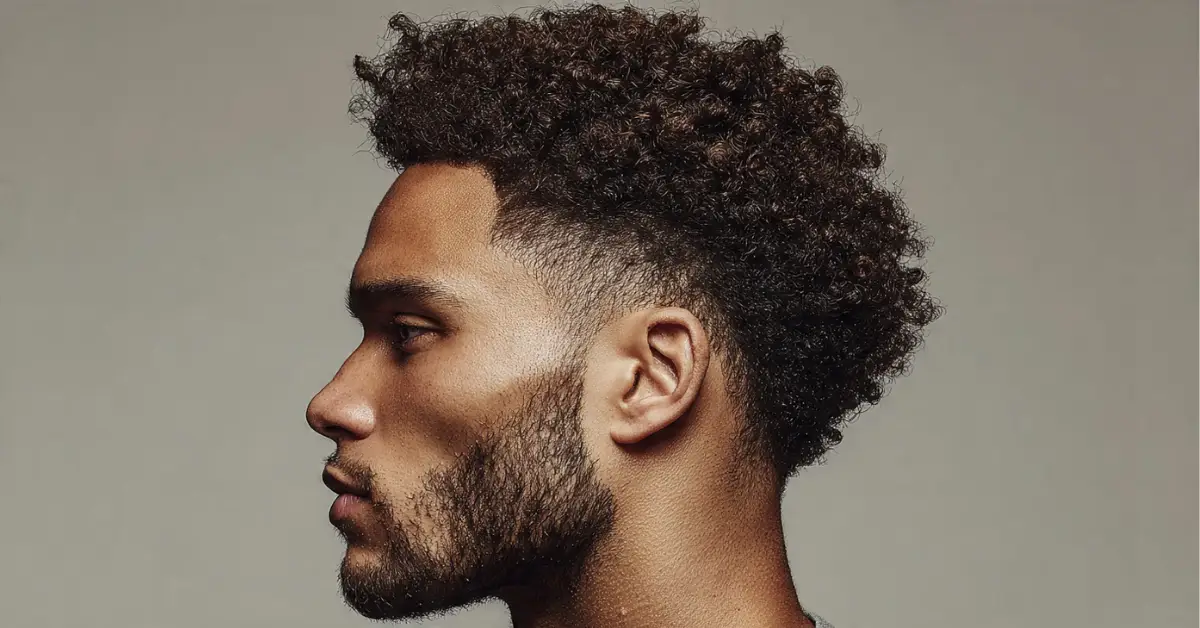
Curly hair taper fade is one of the most searched haircut terms on Pinterest because images show the final look but never explain the structure behind it. The cut appears clean, modern, and flexible, yet most people misunderstand how a taper fade actually behaves on curly hair.
Before choosing a style, length, or fade height, it is essential to understand how a taper interacts with curl texture and why it delivers a sharper, longer-lasting finish than most traditional fades.
What Is a Curly Hair Taper Fade and Why It Works
A curly hair taper fade is a haircut where the hair gradually shortens at the temples and nape while preserving curl density on top. Unlike aggressive fades, the taper transitions subtly into the curls instead of cutting against their natural pattern. This makes the haircut look structured without flattening curl volume.
For curly hair, a taper fade acts as a framing tool. It cleans the perimeter while allowing curls to remain dominant, defined, and intentional. This balance is why the style works across short, medium, and long curly hair lengths.
Taper vs Fade on Curly Hair
Many people confuse a taper fade with a standard fade, especially on curly textures.
A taper focuses on the edges only. The sides and back gradually narrow down but never disappear into skin unless requested.
A fade removes bulk aggressively and often reaches skin level.
On curly hair, heavy fades can break curl flow and create uneven shrinkage. A taper fade avoids this by keeping enough hair weight to support curl shape while still delivering a sharp outline.
This is why searches like low taper fade curly hair, mid taper fade curly hair, and very low taper fade on very curly hair are consistently rising.
Who Should Choose a Taper Fade With Curly Hair
A curly hair taper fade works best for men and boys who want a clean haircut without sacrificing curl identity.
It is ideal if you want:
- A professional look that still feels natural
- A haircut that grows out cleanly
- Defined edges without harsh contrast
- Compatibility with line ups, beards, or designs
This cut adapts well to different curl patterns, including loose waves, tight coils, afro textured curls, and mixed textures. It also scales easily for kids, teens, and adults without changing the core structure.
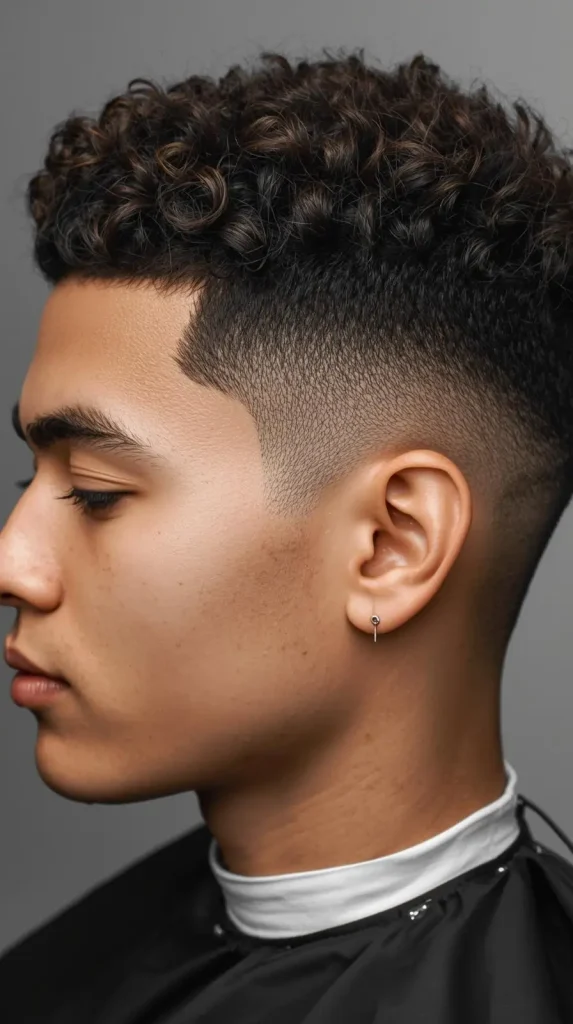
1. Short Curly Hair Low Taper Fade
Who This Style Works For
The short curly hair low taper fade is ideal for men who want a clean outline without sacrificing curl texture. It works especially well for professionals, students, and anyone who needs a haircut that stays presentable between barber visits. Because the taper is kept low, the look avoids harsh contrast and grows out naturally, making it suitable for daily wear, formal environments, and low maintenance routines.
This style is also a strong choice for first time taper clients who are unsure about fade height. The low taper keeps things controlled while still delivering a sharp finish.
Curl Types That Look Best
This cut performs best on curly hair ranging from loose curls to tight coils.
- Looser curls benefit from the taper because it prevents the sides from puffing out.
- Medium curls gain shape and definition without losing volume.
- Tight curls and afro textured hair maintain density while the perimeter stays clean.
If your hair experiences heavy shrinkage, the low taper is safer than a mid or high taper because it preserves enough weight to support curl structure.
Barber Instructions
When asking for this cut, be precise. Do not rely on photos alone.
Tell your barber you want a low taper fade on curly hair, keeping the taper confined to the temples and nape only. Ask them to avoid pushing the fade too high into the sides. The curls on top should remain short but dense, not thinned out.
Key points to communicate:
- Low taper only, no skin fade
- Natural curl shape preserved
- Clean neckline without boxy edges
- Optional light line up, not aggressive
This clarity prevents over tapering, which is the most common mistake with short curly hair taper fades.
2. Short Curly Hair Taper Fade With Line Up
Hairline Shape Rules
A curly hair taper fade with line up depends entirely on restraint. The line up must follow the natural hairline instead of forcing sharp corners or pushing the front backward. On curly hair, over-sharpened lines break the natural flow and make the cut look artificial within days.
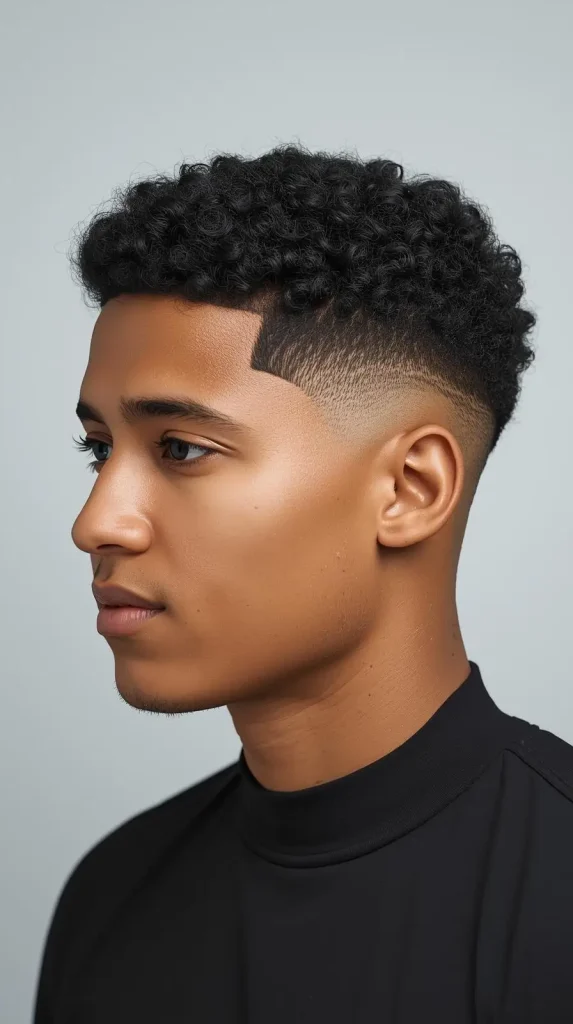
For best results, the front edge should be crisp but slightly rounded at the corners. The taper at the temples should remain low so the line up blends smoothly into the curl pattern rather than cutting against it.
Maintenance Frequency
This style requires more upkeep than a basic low taper. The line up typically needs refreshing every 10 to 14 days to stay clean. The taper itself can last longer, usually three to four weeks, if the barber keeps it subtle.
Between visits, light edge maintenance with a soft brush and minimal product helps prevent fuzz buildup around the hairline. Avoid over trimming at home, as curly hair loses shape quickly when edges are repeatedly cut.
Common Mistakes
The most common mistake is asking for a line up that is too aggressive. Sharp corners, overly straight fronts, or pushed back edges can permanently change the hairline over time.
Other mistakes include:
- Letting the taper climb too high into the sides
- Combining a heavy line up with very short curls
- Ignoring curl shrinkage when shaping the front
- Using harsh products that dry out the edges
When done correctly, a short curly hair taper fade with line up looks intentional, clean, and balanced rather than forced.
3. Very Low Taper Fade on Very Curly Hair
Shrinkage Control
With very curly hair, shrinkage is the biggest technical challenge. A very low taper fade works because it limits how much hair is removed at the edges, allowing the curls to retain visual weight and balance as they contract.

Proper shrinkage control depends on:
- Keeping the taper confined strictly to the neckline and temples
- Avoiding skin exposure that exaggerates curl recoil
- Preserving enough edge density to support curl shape
- Cutting curls dry or semi dry to account for contraction
- Maintaining consistent length transitions into the taper
When shrinkage is respected, the haircut stays proportional even after the curls fully set.
Best Curl Patterns
This style is designed for tighter curl structures that lose length rapidly once cut.
It performs best on:
- Very tight curls with visible coil formation
- Afro textured curls that require perimeter control
- Dense curl patterns with heavy shrinkage
- Natural curly hair that resists blending into fades
- Coily hair that looks uneven with mid or high tapers
For these curl types, a very low taper keeps the haircut clean without disrupting natural volume.
Styling Advice
Styling should focus on moisture and curl preservation rather than hold. Very curly hair responds poorly to heavy products when paired with a taper.
Follow these guidelines:
- Apply a leave in conditioner to reduce dryness
- Use a curl cream instead of a stiff styling gel
- Avoid excessive brushing that breaks curl pattern
- Let curls air dry to maintain natural shape
- Refresh with water instead of reapplying product daily
A very low taper fade on very curly hair looks best when the curls remain soft, hydrated, and defined rather than forced into structure.
4. Curly Hair Taper Fade for Black Men
Edge Control vs Curl Volume
For black men with curly hair, the success of a taper fade depends on balancing clean edges with natural curl volume. Over sharpening the perimeter can make the top look disconnected, while too much bulk can hide the taper entirely.
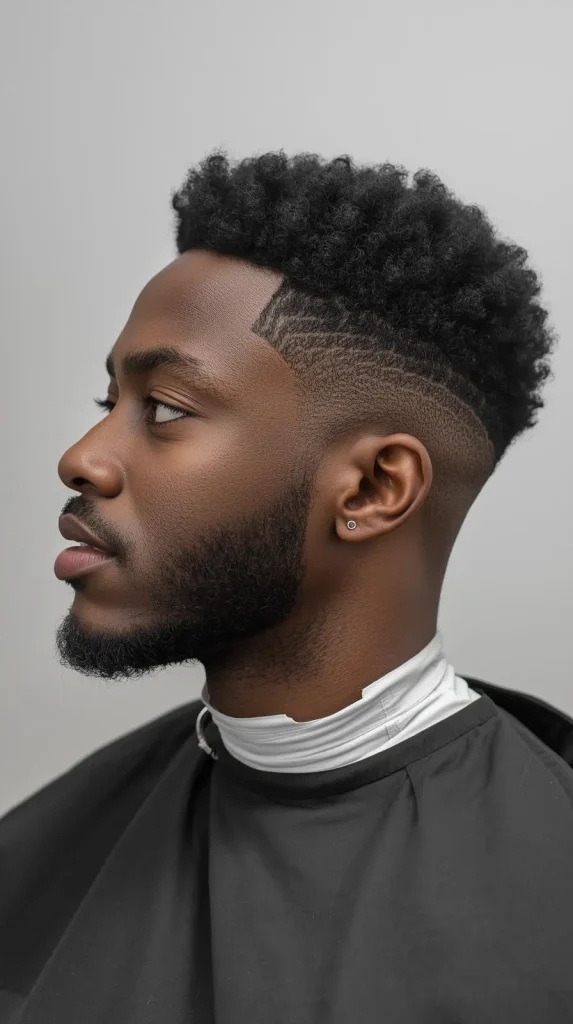
The right balance comes from:
- Keeping the taper low enough to frame the curls
- Preserving curl density on top to avoid a flat profile
- Using soft edge work instead of aggressive line ups
- Allowing the curls to sit forward rather than straight up
- Shaping the silhouette instead of cutting for contrast
When edge control supports the curls instead of competing with them, the haircut looks intentional and strong.
Fade Depth Guidelines
Fade depth determines whether the cut looks clean or overworked. On curly hair, deeper fades are not always better.
Recommended guidelines:
- Choose a low or very low taper for tighter curls
- Avoid skin fades unless specifically needed
- Keep the fade narrow at the temples and nape
- Blend gradually into the curl mass, not under it
- Account for shrinkage before finalizing length
A controlled taper fade maintains structure without disrupting curl behavior.
Product Selection
Product choice can make or break a curly hair taper fade on black men. The goal is definition without stiffness.
Use products that:
- Provide moisture without heavy buildup
- Enhance curl definition naturally
- Reduce frizz along the taper line
- Support daily reshaping with minimal effort
- Protect hair from dryness and breakage
Cream based curl enhancers and light leave in conditioners work best. Avoid waxes or heavy gels that harden the edges and dull curl texture.
5. Curly Hair Taper Fade With Beard
Beard Blend Technique
A curly hair taper fade with beard looks refined only when the transition between hair and beard is seamless. The blend should guide the eye naturally from the temple into the facial hair without creating a visible stop point.
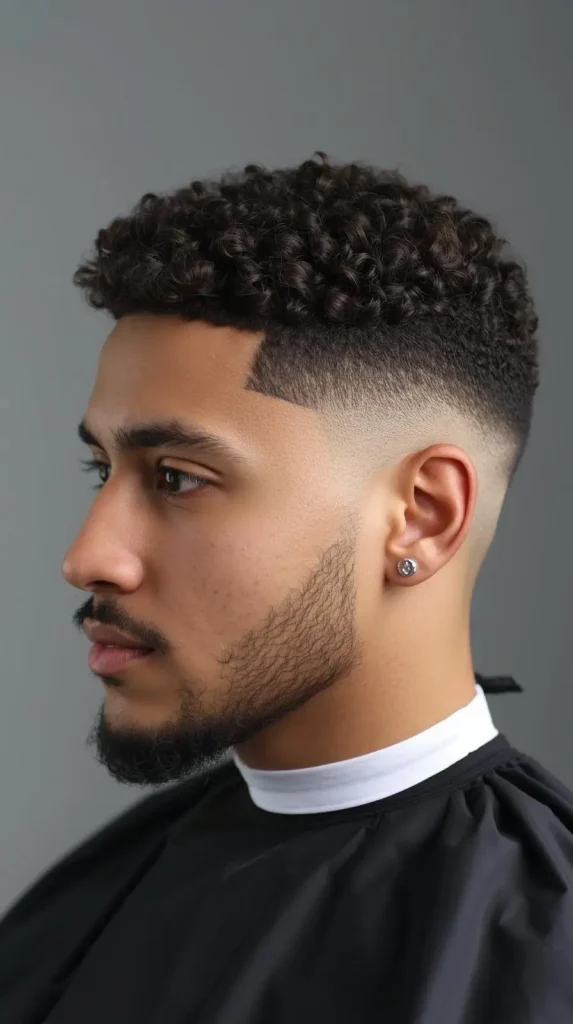
A proper blend relies on:
- Gradual length reduction from temple into beard
- Matching beard density to the taper depth
- Avoiding sharp corners where hair meets beard
- Keeping the cheek line soft, not overly carved
- Using clippers and scissors together for control
When the blend is done correctly, the haircut and beard function as one continuous shape.
Neckline Alignment
Neckline alignment is critical when combining a taper fade with a beard. A poorly placed neckline can throw off the entire look.
Follow these alignment rules:
- The nape taper should flow into the beard line
- Avoid straight necklines that cut across the jaw
- Keep the neckline natural, slightly curved
- Ensure both sides mirror each other in height
- Maintain enough length to prevent irritation
A clean but natural neckline supports long term comfort and visual balance.
Upkeep Timeline
This style requires structured maintenance to stay sharp without overworking the hair.
A realistic upkeep schedule includes:
- Light beard shaping every 7 to 10 days
- Edge refinement around the taper every 2 weeks
- Full haircut refresh every 3 to 4 weeks
- Daily beard brushing to maintain blend
- Minimal trimming between barber visits
A curly hair taper fade with beard stays polished when maintenance is consistent but restrained.
6. Curly Hair Taper Fade for Boys and Kids
Age Appropriate Taper Depth
For boys and kids, a curly hair taper fade should always prioritize comfort and natural growth. The taper depth must stay conservative so the haircut looks clean without appearing too mature or overly styled.
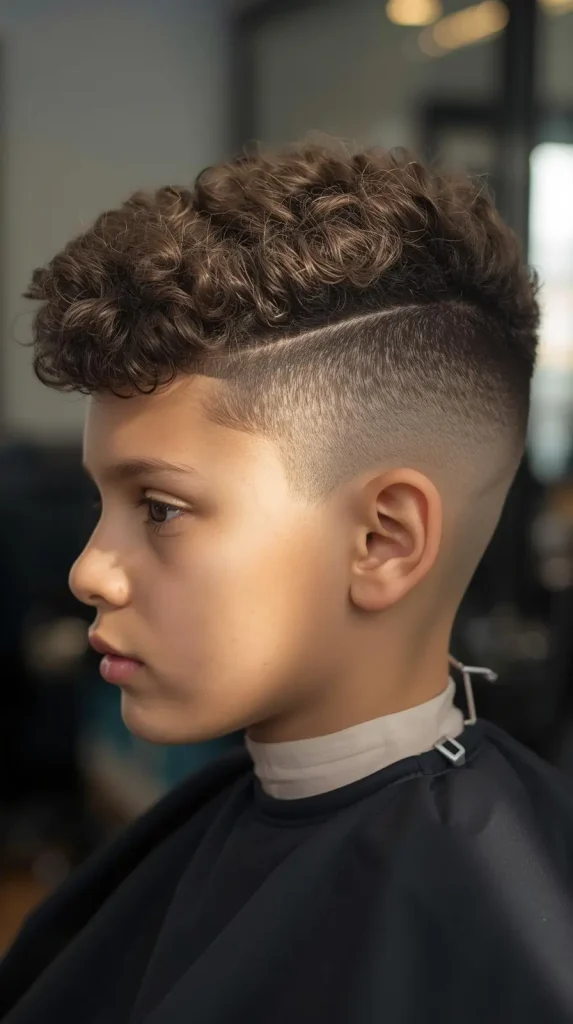
Age appropriate taper depth means:
- Choosing a low or very low taper only
- Avoiding skin fades on young scalps
- Keeping the taper narrow at the temples
- Preserving softness around the neckline
- Letting curls remain full and touchable
A subtle taper keeps the haircut neat while still looking natural for a child.
Growth Friendly Design
Children’s hair grows quickly, and the haircut must adapt without constant correction. A growth friendly design allows the curls to expand naturally as the taper softens.
Key design principles include:
- Rounded shapes instead of sharp angles
- No hard parts or aggressive designs
- Balanced length across the crown
- Smooth blending into the taper
- Flexibility for school and activities
This approach prevents awkward grow out phases and frequent barber visits.
Parent Maintenance Tips
Daily care should be simple and gentle. Over styling or frequent trimming can damage curl health in kids.
Parents should focus on:
- Moisturizing curls with light leave in products
- Detangling gently with fingers or wide tooth combs
- Avoiding heavy gels or edge control products
- Refreshing curls with water, not heat
- Scheduling trims only when needed
A curly hair taper fade for boys and kids works best when it supports healthy curls and low stress upkeep rather than perfection.
7. Mid Taper Fade Curly Hair Classic
Balanced Proportions
The mid taper fade curly hair classic sits at the ideal midpoint between subtle and defined. The taper starts slightly higher than a low taper but stops well before turning into a full fade, allowing curls to remain the dominant feature.
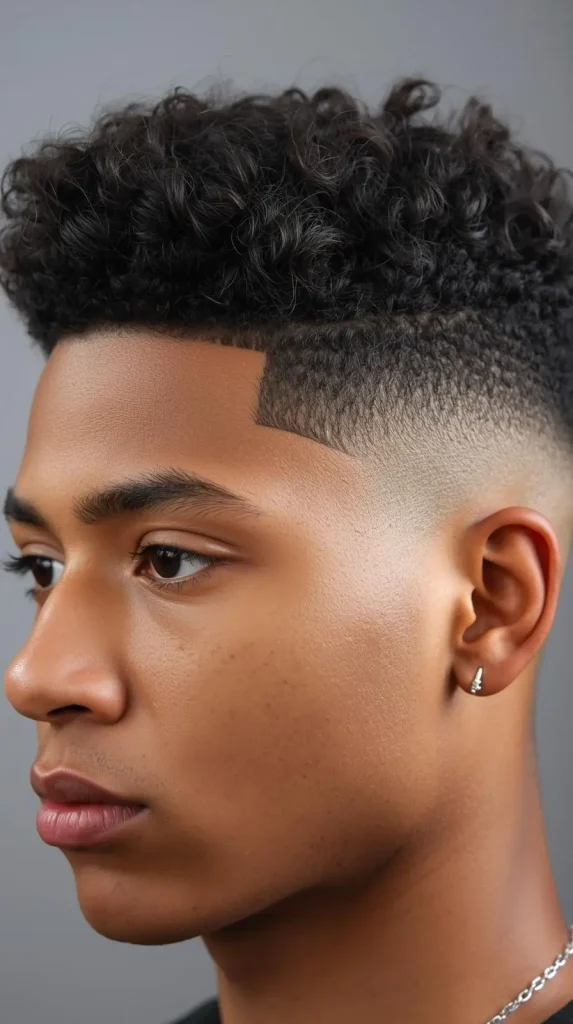
Balanced proportions are achieved by:
- Keeping enough bulk on the sides to support curl shape
- Blending gradually from the mid taper into the crown
- Avoiding sharp contrast that flattens the profile
- Maintaining even weight distribution around the head
- Shaping the silhouette instead of chasing symmetry
This balance is why the mid taper is considered the safest universal option for curly hair.
Daily Styling Effort
This style requires moderate daily effort but stays forgiving if skipped occasionally. The curls already provide natural structure, so styling focuses on refinement rather than construction.
Daily effort typically includes:
- Light water mist to reactivate curls
- Small amount of curl cream or leave in conditioner
- Finger styling instead of brushing
- Allowing curls to settle naturally
- Avoiding repeated product layering
Because the taper is mid level, it stays presentable longer without constant edge work.
Best Face Shapes
The mid taper fade curly hair classic adapts well to most face shapes, but it excels when proportion matters.
It works especially well for:
- Round faces needing vertical balance
- Oval faces that support flexible styling
- Square faces that benefit from softened edges
- Longer face shapes needing controlled width
- Mixed facial structures that need adaptability
This versatility makes it one of the most requested curly taper fade variations.
8. Mid Taper Fade Curly Hair With Design
Design Placement Rules
A mid taper fade curly hair with design works only when the design enhances the haircut instead of overpowering it. Placement should respect curl density and head shape, keeping the focus on the curls rather than the pattern.
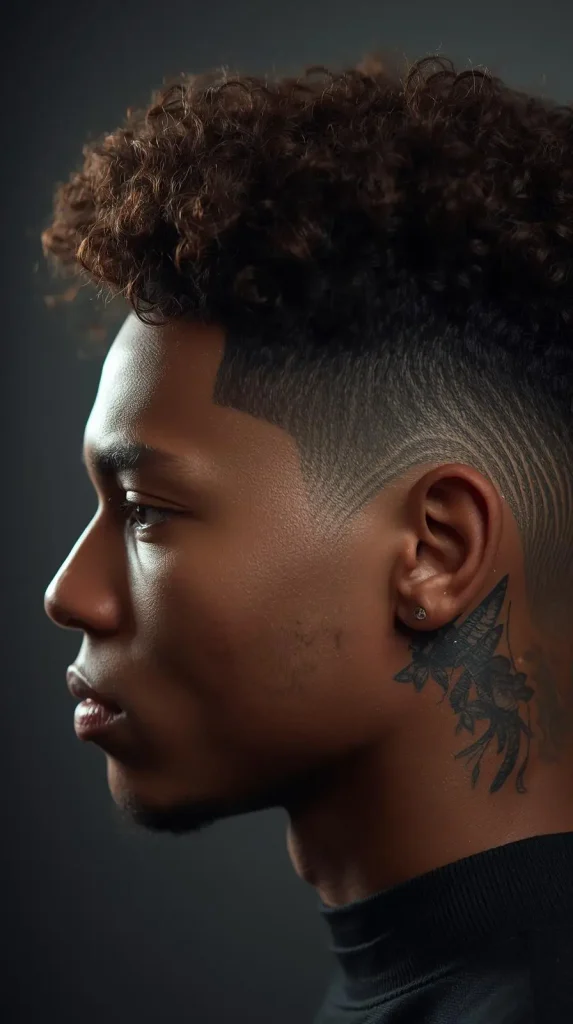
Effective placement follows these rules:
- Position designs within the taper zone only
- Avoid cutting into the curl mass on top
- Keep designs compact and intentional
- Align designs with natural head contours
- Maintain symmetry or deliberate asymmetry, not randomness
When placed correctly, the design adds personality without disrupting curl flow.
Skin Exposure Limits
Excessive skin exposure is the fastest way to ruin this style. Curly hair relies on weight and texture, and removing too much hair creates imbalance.
Safe skin exposure limits include:
- No full skin fades in the design area
- Minimal contrast between taper and curls
- Gradual fade depth rather than sharp drop offs
- Preserving a soft base beneath the design
- Avoiding high cut lines that climb into the sides
Controlled exposure keeps the haircut refined instead of aggressive.
Regrowth Behavior
Designs fade faster than the taper itself, especially on curly hair. Understanding regrowth prevents the cut from looking messy between visits.
Expected regrowth behavior includes:
- Design softening within 10 to 14 days
- Taper remaining clean for 3 to 4 weeks
- Curl mass expanding naturally without distortion
- Lines becoming less visible rather than uneven
- Overall shape staying balanced if the taper was controlled
A mid taper fade curly hair with design ages best when the design is subtle and the taper remains the structural anchor of the haircut.
9. Curly Hair Taper Fade With Natural Part
Part Placement Logic
A curly hair taper fade with natural part relies on working with curl behavior rather than forcing a razor line. The part should appear where the hair naturally separates, not where symmetry demands it.
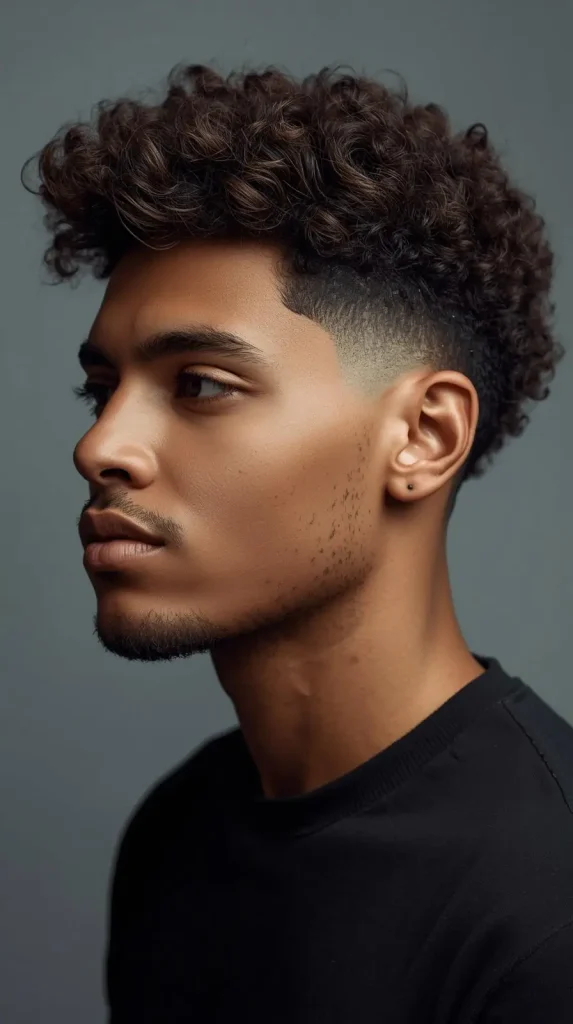
Correct part placement follows these principles:
- Identify the natural fall of the curls when dry
- Allow the part to form slightly off center if needed
- Avoid straight razor parts that fight curl direction
- Keep the part soft and organic, not carved
- Position the part so it complements the taper
This logic keeps the haircut realistic and wearable.
Curl Separation Technique
Natural parts succeed when curls are separated intentionally, not cut apart. The goal is definition without disruption.
Effective curl separation includes:
- Using fingers instead of combs
- Separating curls while damp, not soaking wet
- Encouraging curl clumps to form naturally
- Avoiding excessive manipulation during drying
- Letting the part evolve rather than forcing it
This technique maintains curl integrity while highlighting the part.
Styling Products
Product choice should enhance separation without stiffness. Heavy products collapse the natural part and flatten curls.
Use products that:
- Provide light hold with flexibility
- Enhance curl definition without crunch
- Maintain moisture throughout the day
- Reduce frizz along the part line
- Allow reshaping with water alone
A curly hair taper fade with natural part looks best when the curls remain fluid, defined, and naturally positioned.
10. Curly Hair Taper Fade With Beard and Line Up
Facial Structure Balance
This style succeeds when the haircut, beard, and line up work together to frame the face instead of competing for attention. Balance is created by aligning visual weight across the forehead, cheeks, and jaw.
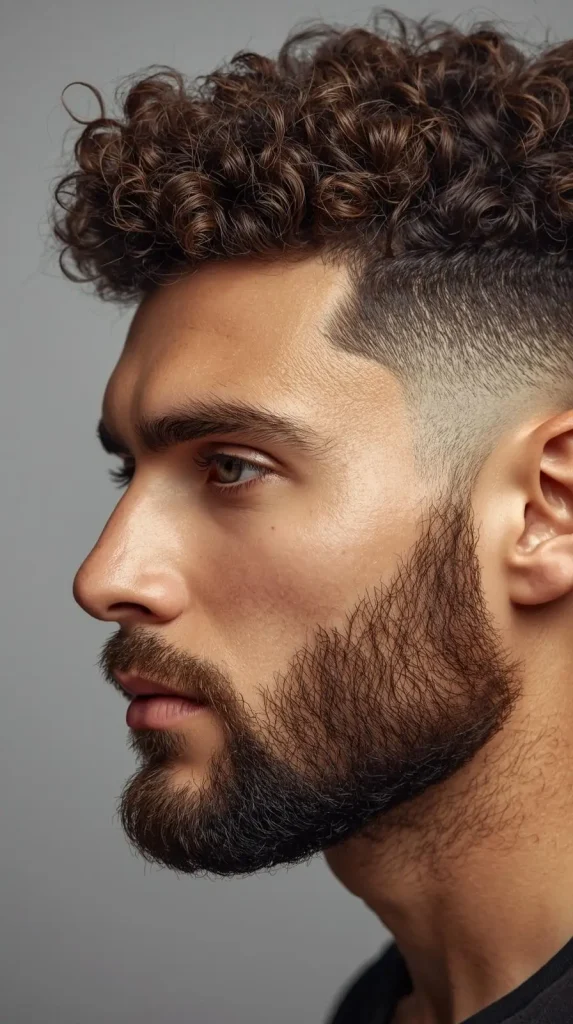
Key balance principles include:
- Matching taper depth to beard density
- Keeping the line up proportional to forehead width
- Allowing curls to sit slightly forward for softness
- Avoiding overly wide temple lines that widen the face
- Blending the beard gradually into the taper
- Maintaining symmetry without forcing straight lines
When balance is right, the face appears structured but natural.
Sharpness vs Softness
Too much sharpness can make curly hair look unnatural, while too much softness can make the cut look unfinished. The goal is controlled contrast.
Achieve the right balance by:
- Using crisp lines only at the hairline
- Keeping the taper blended, not etched
- Softening beard edges near the cheeks
- Preserving curl texture at the front
- Avoiding razor heavy finishes on curly edges
This contrast allows the line up to stand out without overpowering the curls.
Barber Communication
Clear communication prevents overcutting and mismatched proportions. Vague requests often lead to aggressive line ups or disconnected beards.
When speaking to your barber:
- Specify a low or mid taper, not a full fade
- Ask for a natural line up, not a pushed back one
- Request a gradual beard blend, not a sharp cutoff
- Emphasize curl preservation on top
- Confirm symmetry before final detailing
Precise instructions ensure the curly hair taper fade with beard and line up stays refined.
11. Curly Hair Taper Fade for Round Face
Vertical Volume Strategy
Round faces benefit from height and elongation. A curly hair taper fade should lift the profile upward rather than outward.
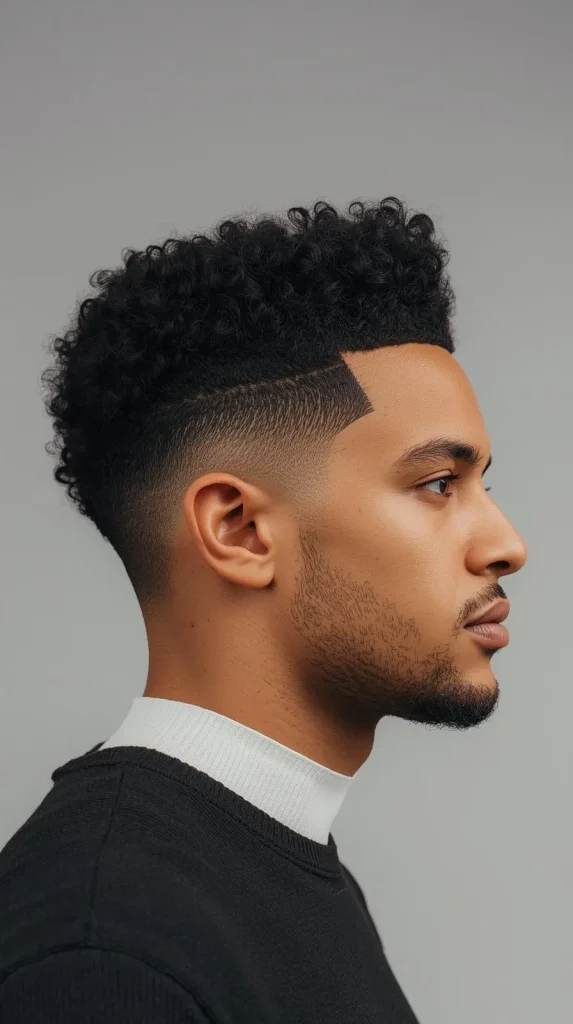
Effective vertical strategies include:
- Leaving more length at the crown
- Encouraging curls to stack vertically
- Using a low or mid taper to avoid width
- Avoiding flat or compressed tops
- Styling curls forward and upward
- Keeping edges clean but subtle
Vertical volume visually lengthens the face.
Side Compression Rules
Side control is essential for round face shapes. Excess bulk at the sides exaggerates width and shortens the appearance of the face.
Follow these rules:
- Keep the taper tight at the temples
- Avoid wide fades that expand the sides
- Blend smoothly into the top curls
- Maintain even compression on both sides
- Let curls sit closer to the head laterally
Controlled sides support a more balanced silhouette.
Avoid These Errors
Small mistakes can undo the benefits of this haircut for round faces.
Avoid:
- High tapers that expose too much side skin
- Heavy line ups that widen the forehead
- Short tops that remove vertical lift
- Excessive product that weighs curls down
- Over thinning the sides with texturizers
When executed correctly, a curly hair taper fade for round face creates definition, structure, and visual balance without harshness.
12. Curly Hair Taper Fade for Oval Face
Length Flexibility
An oval face supports the widest range of haircut variations, making the curly hair taper fade especially adaptable. Length can be adjusted without risking imbalance, as long as curl structure is respected.
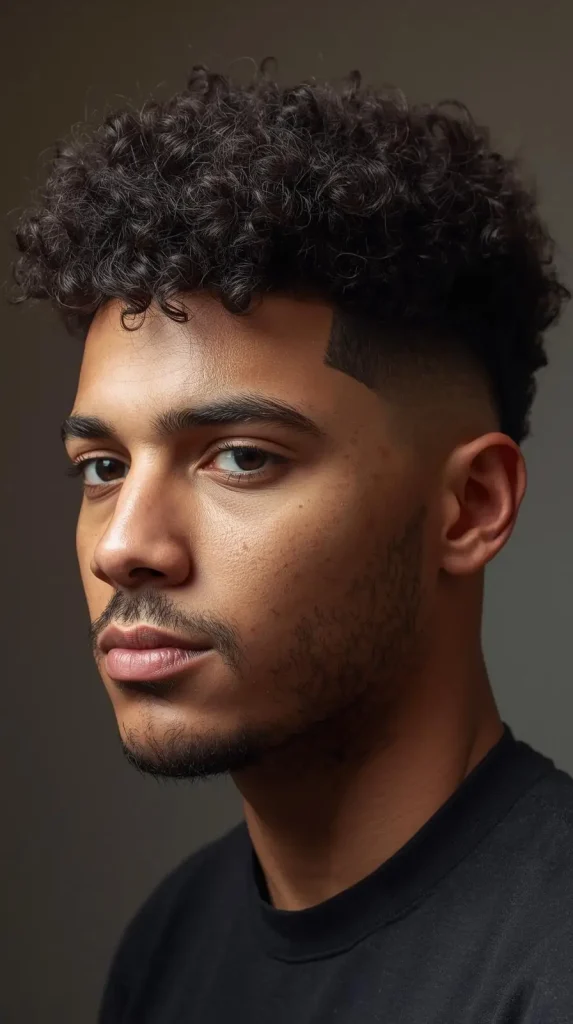
This flexibility allows:
- Short curls with clean edges
- Medium lengths with natural movement
- Longer curls without widening the face
- Layered tops that maintain proportion
- Experimentation without structural risk
Oval faces tolerate change better than most shapes, provided the taper remains controlled.
Fade Height Options
Fade height can be customized more freely for oval faces, but moderation still matters.
Effective fade height choices include:
- Low taper for a classic, clean look
- Mid taper for stronger definition
- Subtle high taper when curl volume is sufficient
- Even taper depth on both sides
- Gradual transitions rather than sharp drops
The key is choosing a fade height that complements curl density rather than overpowering it.
Styling Freedom
Oval faces allow for greater creativity without sacrificing balance. Styling can shift depending on lifestyle and preference.
Styling freedom includes:
- Wearing curls forward, upward, or relaxed
- Switching between natural and defined finishes
- Using light to medium hold products
- Refreshing curls without reshaping the cut
- Adapting the look for casual or formal settings
A curly hair taper fade for oval face offers versatility without constant adjustment.
13. Long Curly Hair Low Taper Fade
Bulk Control Without Weight Loss
With long curls, the challenge is reducing bulk without thinning the hair. A low taper fade controls the perimeter while allowing length to remain dominant.
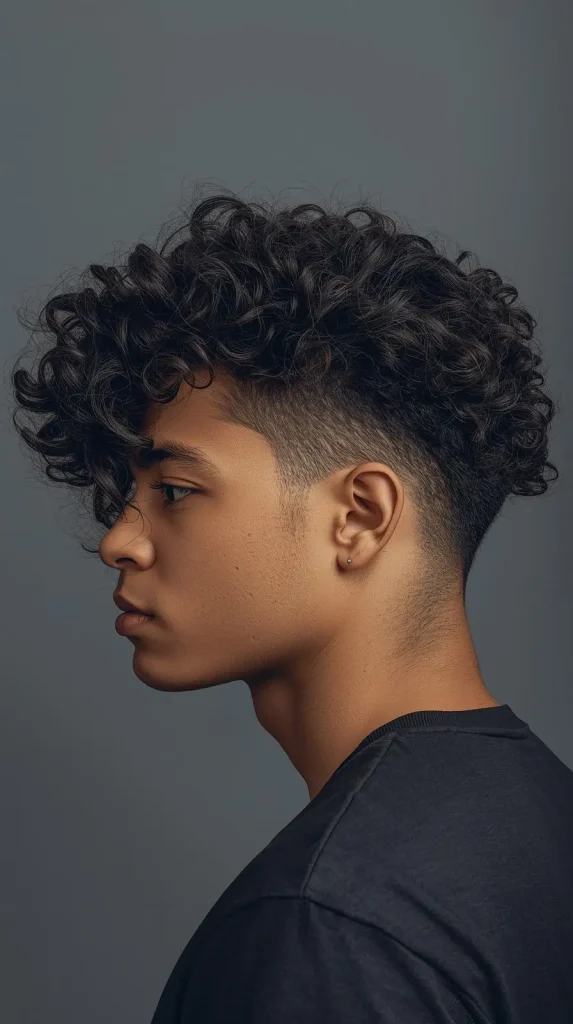
Bulk control is achieved by:
- Limiting the taper to the nape and temples
- Preserving full curl density on top
- Avoiding undercutting beneath long curls
- Using blending instead of thinning shears
- Shaping the outline rather than removing mass
This approach keeps the hair full while preventing a heavy, unstructured look.
Growth Management
Long curly hair grows unevenly if the taper is too aggressive. A low taper supports a smoother grow out phase.
Effective growth management includes:
- Gradual blending into long curls
- Avoiding high taper points that expand quickly
- Maintaining balance as length increases
- Allowing curls to expand naturally over time
- Refreshing only the taper between full cuts
This keeps the haircut presentable as the hair gains length.
Maintenance Reality
Long curls paired with a low taper require honest maintenance expectations.
Realistic maintenance involves:
- Edge and taper cleanups every 3 to 4 weeks
- Moisture focused daily care
- Minimal trimming of length
- Consistent detangling routines
- Patience during grow out phases
A long curly hair low taper fade rewards consistency, not constant cutting.
14. Blowout Taper Fade Long Curly Hair
Height Control
A blowout taper fade with long curly hair is built around controlled height rather than uncontrolled volume. The goal is lift at the top without widening the sides or overpowering the taper.
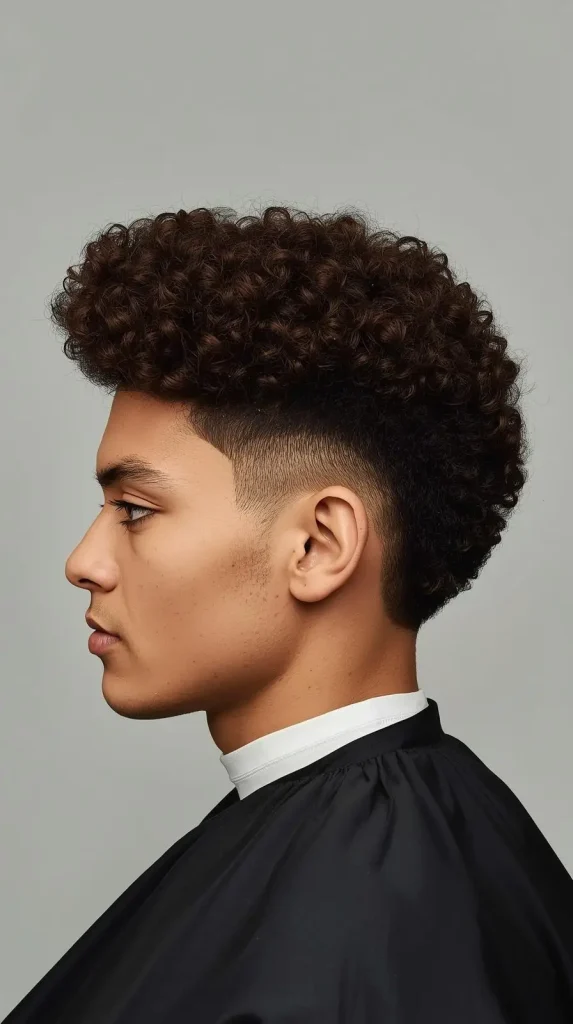
Proper height control depends on:
- Keeping the taper low to support vertical lift
- Maintaining length at the crown for structure
- Directing curls upward instead of outward
- Avoiding excessive thinning near the roots
- Shaping the silhouette, not chasing height
When controlled, the blowout adds presence without instability.
Heat Usage Rules
Heat is optional, not mandatory, for this style. Overuse quickly damages curl integrity and collapses long term results.
Safe heat rules include:
- Using low to medium heat only
- Applying heat protectant before drying
- Limiting blow drying to shaping, not drying fully
- Allowing curls to finish air drying
- Avoiding daily heat exposure
Used correctly, heat enhances shape without compromising curl health.
Long Term Shape
The blowout taper fade must age gracefully. Poor execution leads to uneven growth and loss of structure.
A stable long term shape requires:
- Even length retention across the top
- Consistent taper depth at the edges
- Minimal trimming between full cuts
- Moisture focused maintenance
- Scheduled reshaping every few weeks
A blowout taper fade long curly hair works best when shape is maintained, not constantly reset.
15. Curly Hair Taper Fade Undercut Hybrid
Controlled Disconnection
This hybrid introduces separation between the taper and the curl mass, but control is essential. Too much disconnection turns the cut into a harsh undercut that fights curl flow.
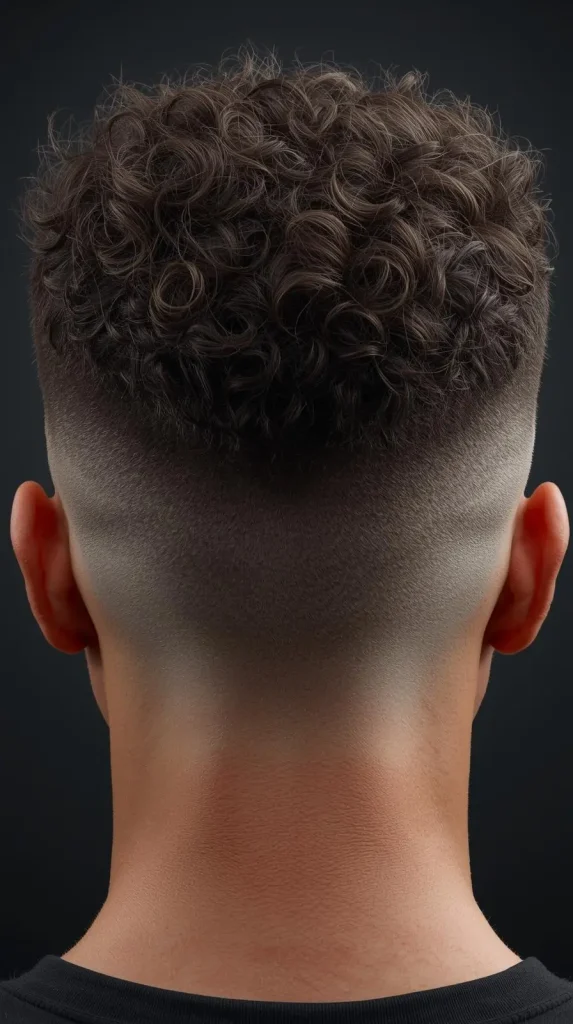
Controlled disconnection involves:
- Keeping separation subtle, not dramatic
- Blending visually even if lengths differ
- Preserving curl density above the disconnect
- Avoiding hard lines beneath the curls
- Using shape to guide the transition
The disconnect should feel intentional, not accidental.
Risk Factors
This style carries higher risk than traditional tapers and should not be attempted casually.
Primary risk factors include:
- Rapid grow out creating uneven bulk
- Curl shrinkage exaggerating separation
- Limited styling forgiveness
- Higher maintenance requirements
- Dependence on barber precision
Understanding these risks prevents disappointment.
Styling Commitment
This hybrid demands consistent styling to look polished.
Styling commitment includes:
- Daily curl shaping with product
- Frequent perimeter checks
- Moisture control to prevent frizz
- Willingness to restyle after sleep
- Regular barber follow ups
A curly hair taper fade undercut hybrid suits those ready to maintain it.
16. Curly Hair Taper Fade With Initial or Pattern
Placement Strategy
Initials and patterns should enhance the taper, not compete with the curls. Placement determines whether the design looks premium or chaotic.
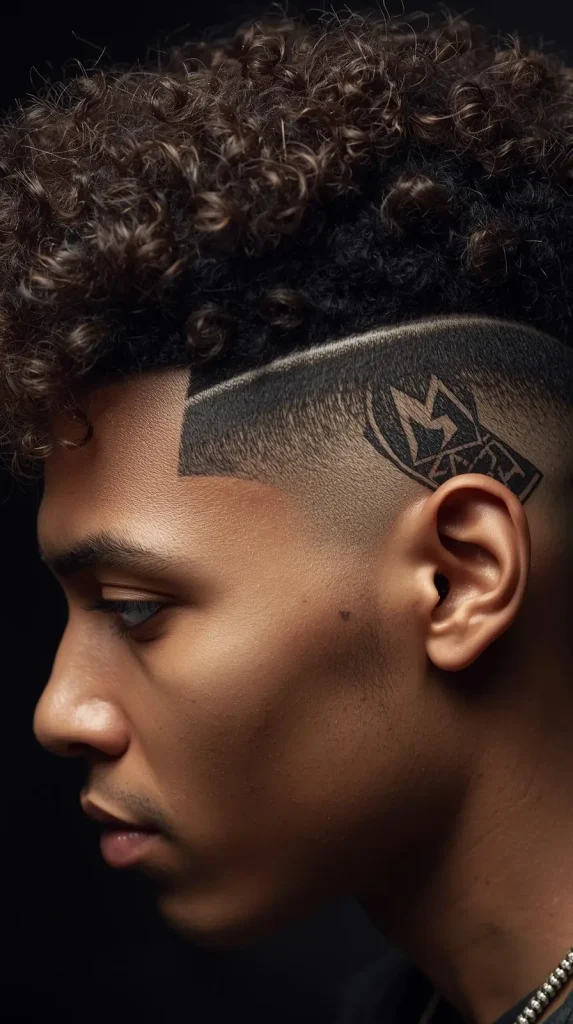
Effective placement strategy includes:
- Positioning designs within the taper zone
- Keeping designs small and precise
- Avoiding placement under heavy curl mass
- Aligning patterns with head shape
- Maintaining visual balance on both sides
Proper placement ensures clarity and intention.
Longevity
Design longevity depends on depth and complexity. Simple designs last longer and age cleaner.
Longevity is influenced by:
- Depth of the carved design
- Hair growth speed
- Curl density around the design
- Fade depth beneath the pattern
- Maintenance habits
Expect visible softening within two weeks.
Touch Up Schedule
Designs require planned upkeep to stay sharp.
A realistic touch up schedule includes:
- Design refresh every 10 to 14 days
- Taper cleanup every 2 to 3 weeks
- Full haircut every 3 to 4 weeks
- Avoiding home razor corrections
- Coordinating design touch ups with taper work
A curly hair taper fade with initial or pattern looks best when maintenance is proactive, not reactive.
17. Curly Hair Taper Fade With Middle Part
Symmetry Expectations
A middle part on curly hair should never aim for perfect symmetry. Curls naturally shift, and forcing balance creates tension in the shape.
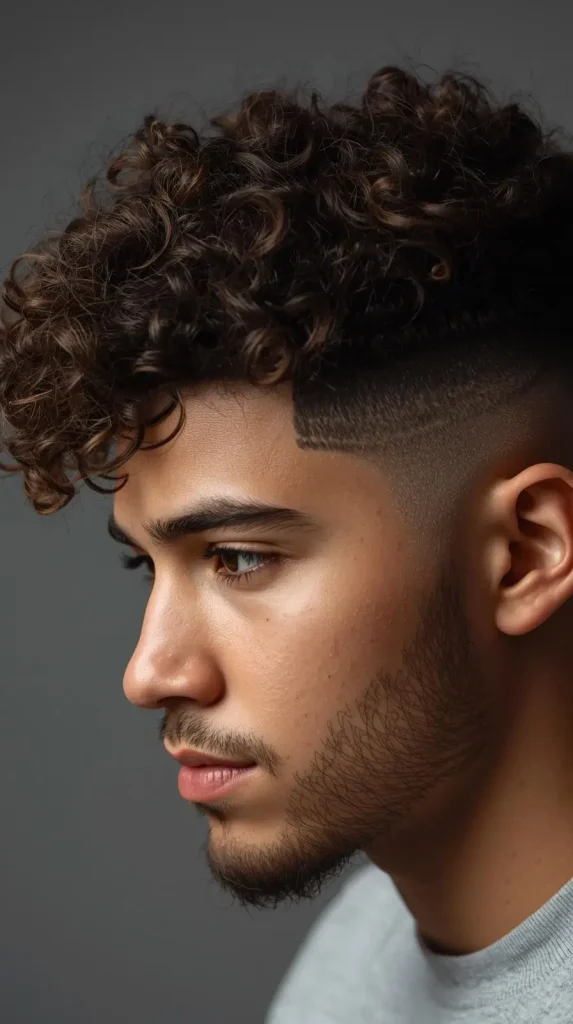
Realistic symmetry expectations include:
- Accepting slight offset in the part line
- Letting curls fall naturally on each side
- Avoiding razor straight center lines
- Prioritizing visual balance over exact division
- Adjusting the part based on curl density
Natural symmetry looks intentional, forced symmetry looks artificial.
Curl Direction Control
Middle parts only work when curl direction is respected. Fighting curl growth patterns leads to collapse and frizz.
Effective curl direction control involves:
- Observing natural curl fall before cutting
- Encouraging separation while hair is damp
- Avoiding heavy brushing across the part
- Letting curls clump naturally
- Training curls with consistent part placement
Control comes from cooperation, not correction.
Styling Techniques
Styling should enhance separation without flattening volume.
Reliable styling techniques include:
- Finger styling instead of combs
- Using lightweight curl creams
- Defining the part while damp
- Allowing air drying whenever possible
- Refreshing with water rather than reapplying product
A curly hair taper fade with middle part looks best when curls stay fluid and mobile.
18. High Taper Fade Curly Hair Back Focused
Contrast Management
A high taper increases contrast, especially at the back. Managing that contrast prevents the cut from looking harsh.
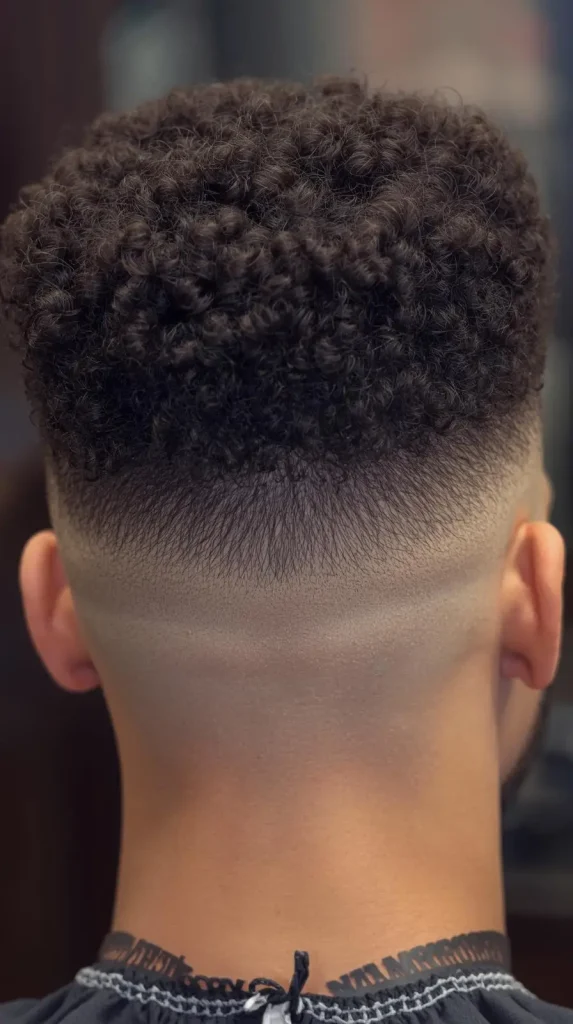
Smart contrast management includes:
- Keeping taper edges clean but blended
- Preserving curl mass above the taper
- Avoiding skin exposure unless intentional
- Softening transitions at the crown
- Maintaining consistent taper height
Controlled contrast adds sharpness without aggression.
Neckline Precision
The neckline is the visual anchor of this style. Poor execution here ruins the entire cut.
Neckline precision requires:
- Clean but natural curves
- Symmetry across both sides
- Avoiding boxy outlines
- Matching taper depth to head shape
- Allowing slight softness for grow out
Precision should enhance shape, not dominate it.
Grow Out Phase
High tapers grow out faster and require planning.
Expected grow out behavior includes:
- Faster loss of contrast at the nape
- Curl expansion above the taper
- Need for earlier cleanup appointments
- Shape remaining intact if blended well
- Reduced awkward phases with proper taper depth
A high taper fade curly hair back focused works best with consistent maintenance.
19. High Taper Fade Mullet Curly Hair
Shape Balance
This style balances sharpness at the sides with length at the back. Without balance, it becomes disjointed.
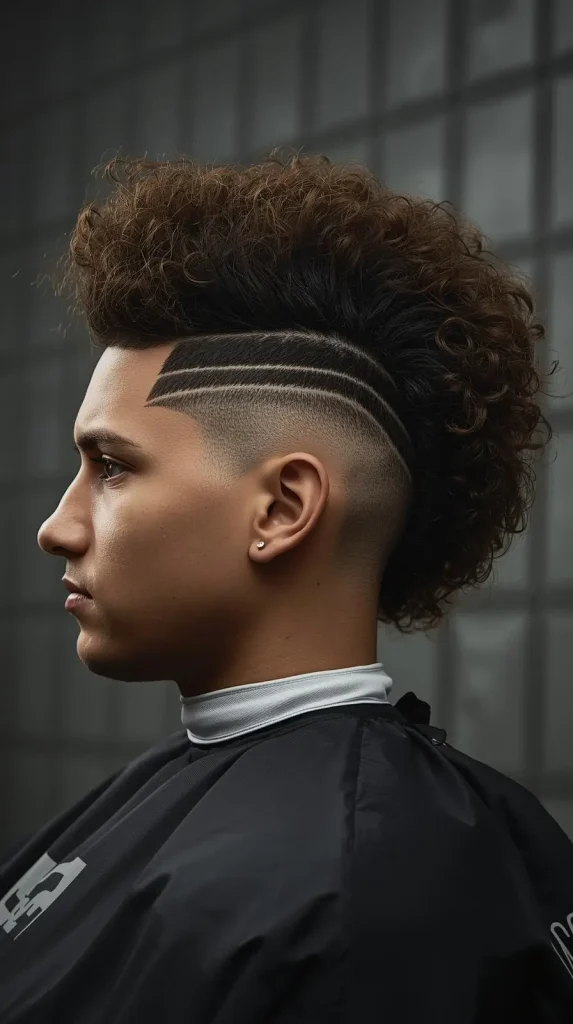
Proper shape balance includes:
- Tight control at the temples
- Gradual transition into back length
- Avoiding extreme side contrast
- Preserving curl flow through the mullet
- Shaping the back rather than letting it grow wild
Balance keeps the style wearable.
Length Distribution
Length placement defines whether the mullet looks modern or outdated.
Effective length distribution involves:
- Keeping length intentional at the back
- Avoiding bulk buildup behind the ears
- Maintaining consistent curl density
- Allowing movement rather than stiffness
- Trimming selectively, not uniformly
Distribution matters more than total length.
Styling Discipline
This style demands styling consistency to stay sharp.
Styling discipline includes:
- Daily curl refresh routines
- Moisture focused products
- Avoiding over styling the sides
- Training the back curls consistently
- Regular barber touch ups
A high taper fade mullet curly hair rewards commitment.
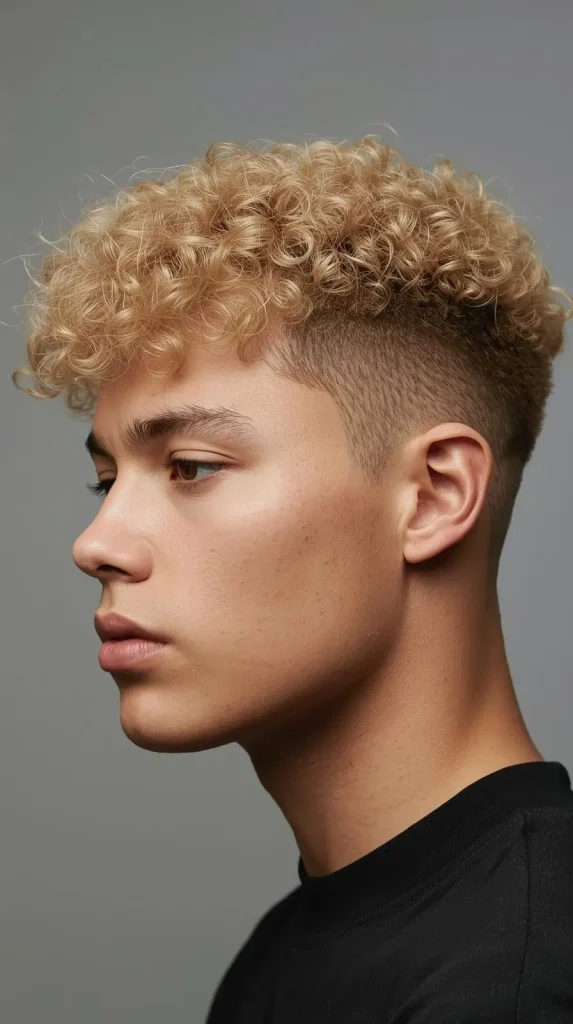
20. Curly Hair Taper Fade Blonde or Dyed
Color Protection
Colored curly hair requires extra care to maintain both tone and texture.
Color protection depends on:
- Using sulfate free cleansers
- Limiting washing frequency
- Applying deep conditioning treatments
- Avoiding excessive heat styling
- Protecting hair from sun exposure
Healthy curls preserve color longer.
Edge Visibility
Light or dyed hair makes edges more visible, increasing the need for precision.
Managing edge visibility involves:
- Clean but soft line work
- Avoiding over sharpening the hairline
- Maintaining even taper depth
- Keeping edges moisturized
- Scheduling regular edge cleanups
Precision matters more with lighter tones.
Maintenance Costs
Dyed hair increases overall upkeep.
Realistic maintenance costs include:
- More frequent conditioning treatments
- Regular toner or color refreshes
- Shorter intervals between barber visits
- Specialized products
- Increased time investment
A curly hair taper fade blonde or dyed is high impact but higher commitment.
21. Modern Clean Curly Hair Taper Fade
Universal Proportions
This style is built on balance, making it adaptable across ages, curl types, and lifestyles.
Universal proportions are achieved by:
- Moderate taper depth
- Natural curl volume retention
- Clean but soft edges
- Even silhouette shaping
- Avoidance of extreme contrast
It works because nothing is exaggerated.
Lifestyle Compatibility
This cut adapts easily to different routines and environments.
Lifestyle compatibility includes:
- Professional settings
- Active daily schedules
- Minimal styling time
- Clean grow out phases
- Flexible product use
It fits most lives without adjustment.
Why Barbers Recommend It
Barbers favor this style because it performs consistently across clients.
Barbers recommend it due to:
- Predictable results
- Easy maintenance
- Clean regrowth
- Low correction risk
- Strong client satisfaction
The modern clean curly hair taper fade is recommended because it delivers results without complications.
Curly Hair Taper Fade Maintenance and Barber Tips
How to Ask Your Barber
Clear communication prevents overcutting.
Tell your barber:
- You want a taper, not a skin fade
- Keep the taper low or mid unless discussed
- Preserve curl density on top
- Avoid thinning curls aggressively
- Blend gradually into the taper
Maintenance Frequency
Realistic maintenance expectations:
- Edge cleanup every 10 to 14 days
- Taper refresh every 3 to 4 weeks
- Full reshaping as curls grow out
Overcutting ruins curl balance faster than undercutting.
Product Strategy
Use products that:
- Maintain moisture
- Support curl definition
- Avoid stiffness at the edges
- Allow restyling with water
Common Mistakes That Ruin a Curly Hair Taper Fade
Avoid these errors:
- Letting the taper climb too high
- Combining sharp line ups with tight curls
- Ignoring curl shrinkage during cutting
- Using heavy waxes or edge gels
- Thinning curls to control volume
Most bad curly taper fades fail because too much hair was removed, not too little.