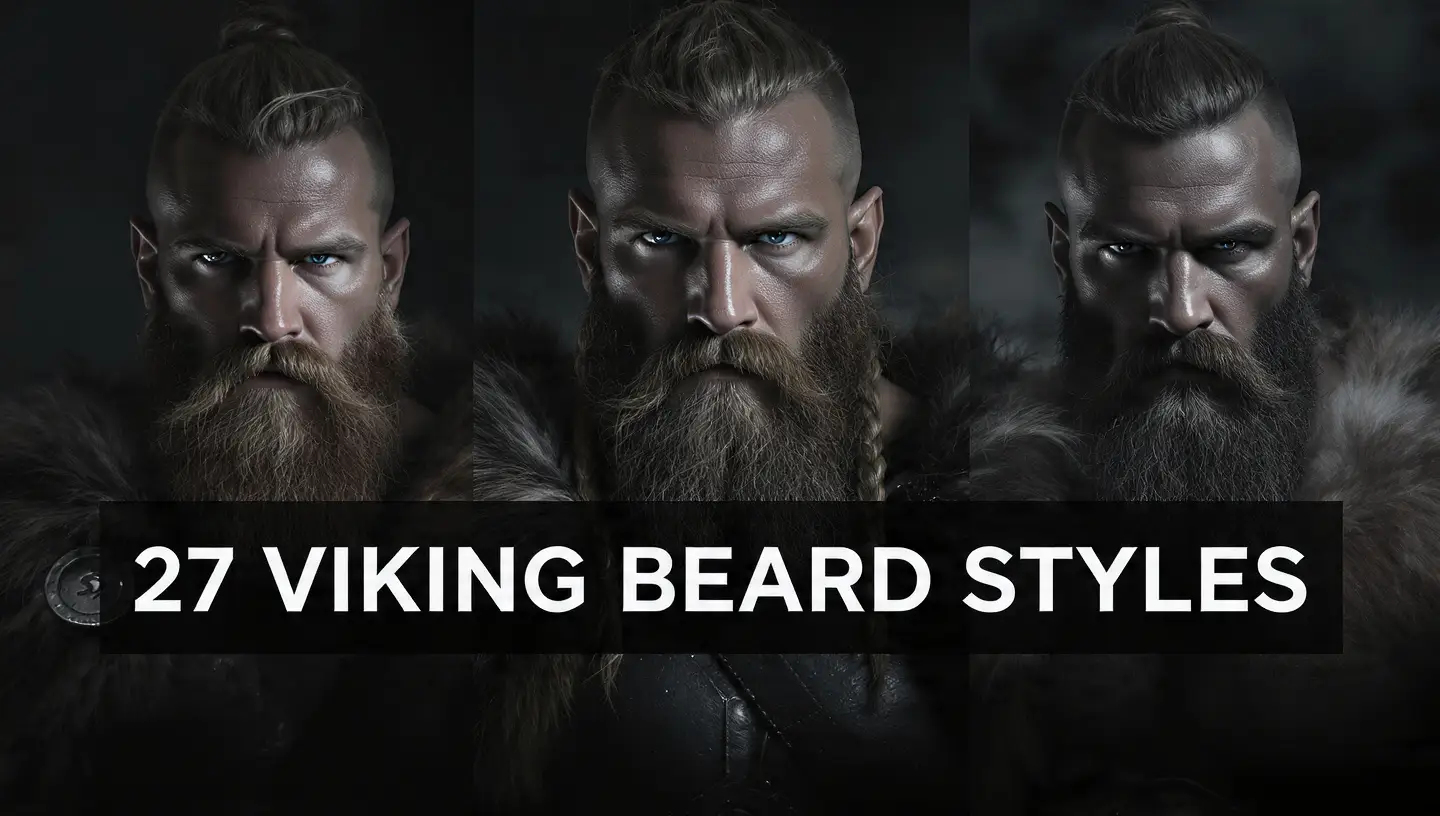
27 Viking Beard Styles for Men That Command Power and Presence
Viking beard styles represent long-beard dominance at its highest level. This is not casual growth. It is structured volume, intentional density, and controlled length designed to command presence. While they sit within the broader world of beard styles for men, a beard Viking aesthetic focuses specifically on power, scale, and bold silhouette.
Below are warrior-level designs that combine length, grooming discipline, and unmistakable character.
27 Viking Beard Styles That Define Warrior-Level Grooming
Viking beard styles are built on scale and structure. Length alone does not create impact. Shape, density control, and proportion determine whether a long beard looks commanding or unbalanced. These 27 variations break down the strongest beard Viking approaches for modern men who want presence without sacrificing grooming precision.
1. Classic Long Viking Beard
The classic long Viking beard embraces full density from cheek to chin and extends well below the jawline. It maintains width through the sides while allowing the length to create a powerful vertical silhouette.
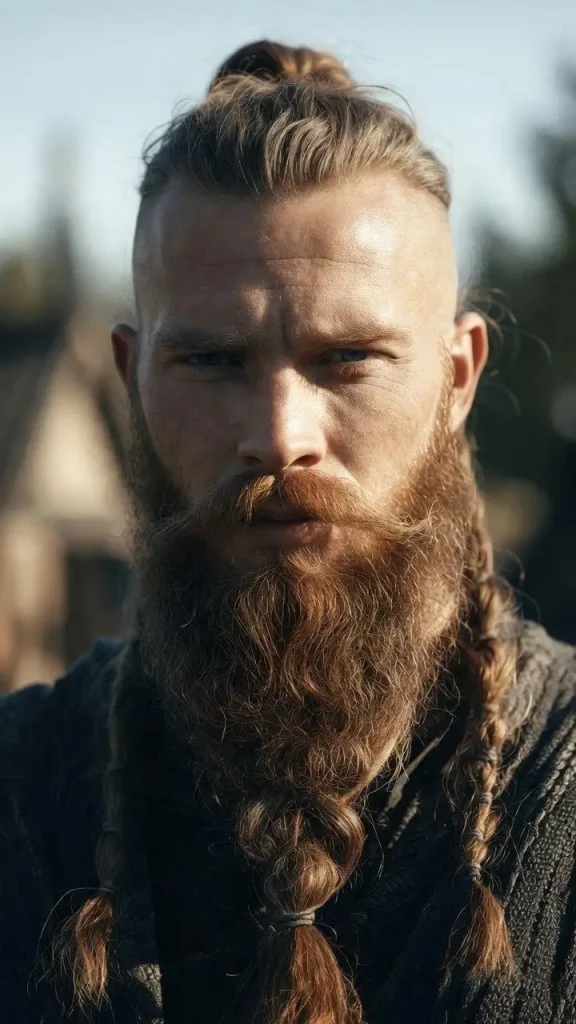
This style works best for men with strong growth patterns and balanced facial structure. The key is controlled trimming along the neckline and subtle shaping at the bottom to prevent an overly rounded appearance.
2. Braided Viking Beard
The braided Viking beard introduces structure within length. Instead of allowing the beard to flow freely, sections are braided to create texture and deliberate styling.
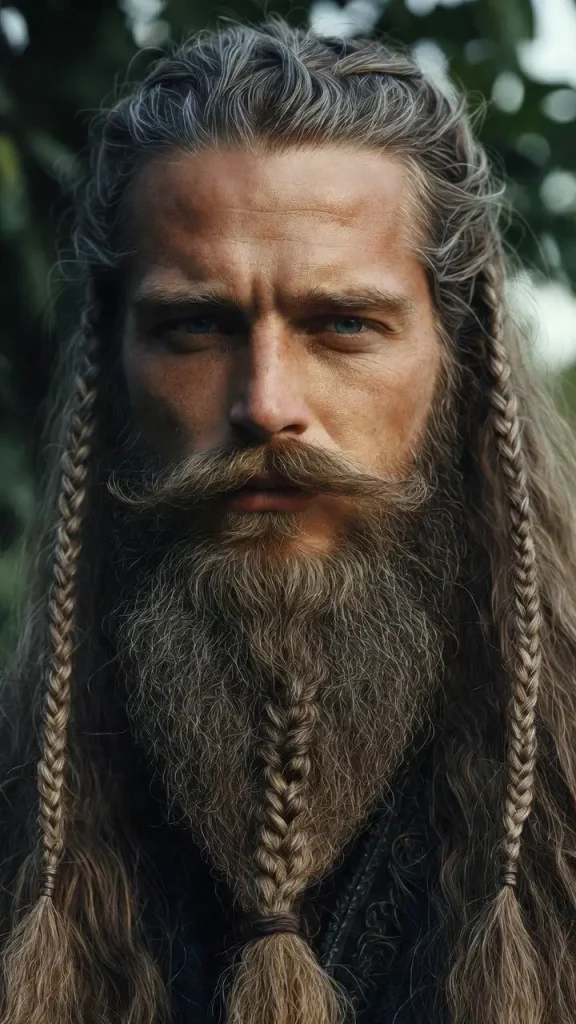
This beard Viking variation adds visual interest and keeps longer hair controlled. Braids also make the beard appear thicker and more intentional, especially when paired with clean cheek lines and disciplined edge control.
3. Double Braided Beard
The double braided beard divides the chin section into two distinct braids. This creates symmetry and enhances the warrior aesthetic.
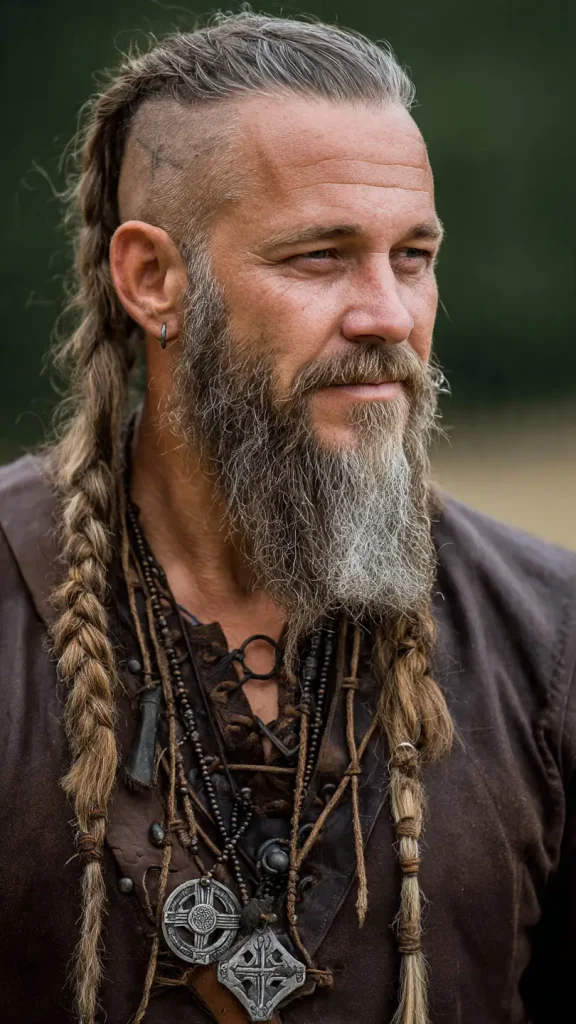
Among Viking beard styles, this option stands out for dramatic structure. Balanced spacing between the braids and consistent thickness ensure the style looks powerful rather than chaotic.
4. Viking Beard with Beard Rings
The Viking beard with beard rings adds metal accents to braided or sectioned beard strands. These rings reinforce the warrior aesthetic and introduce texture contrast within the beard.
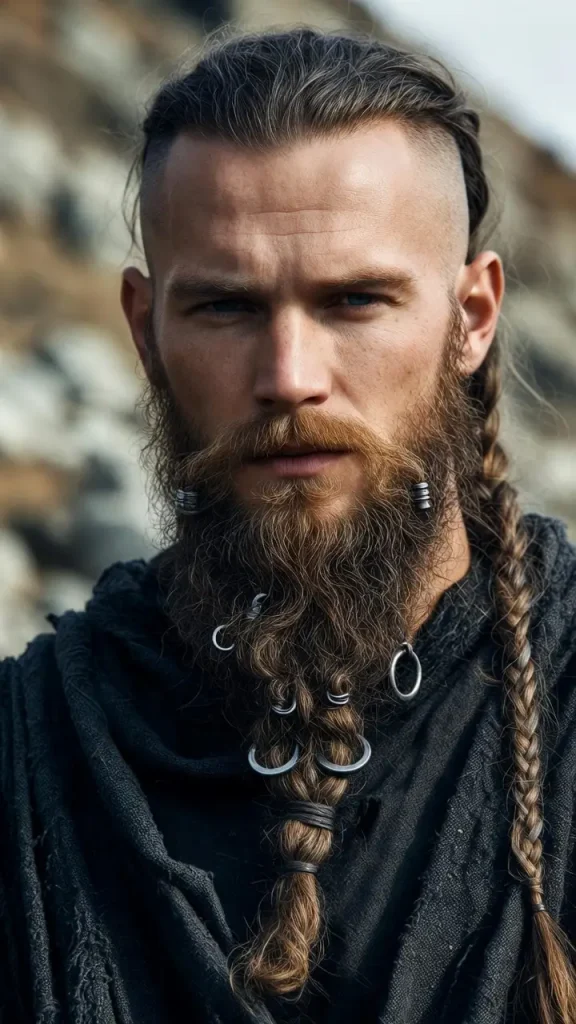
Beard rings work best on medium to long lengths where density can support the added weight. Proper placement is critical. Even spacing and secure fastening prevent strain while enhancing the bold beard Viking identity.
5. Thick Full Viking Beard
The thick full Viking beard emphasizes maximum density and width. It extends outward along the cheeks while maintaining strong length through the chin.
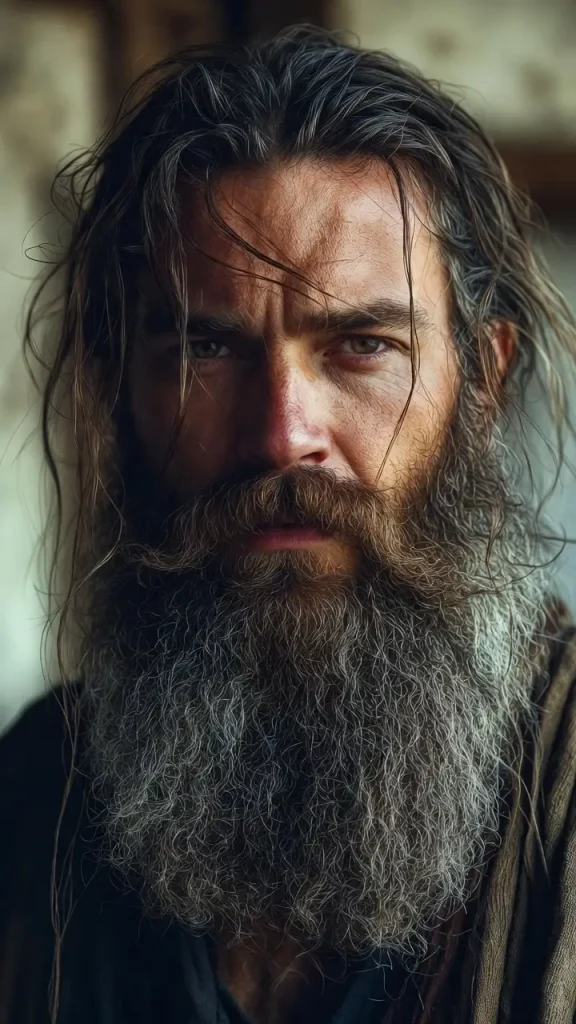
Among Viking beard styles, this variation commands immediate presence. Controlled trimming underneath prevents bulk from overwhelming the jawline while preserving the powerful silhouette.
6. Tapered Viking Beard
The tapered Viking beard gradually narrows toward the bottom instead of maintaining uniform width. This introduces structure and prevents the beard from appearing heavy or blocky.
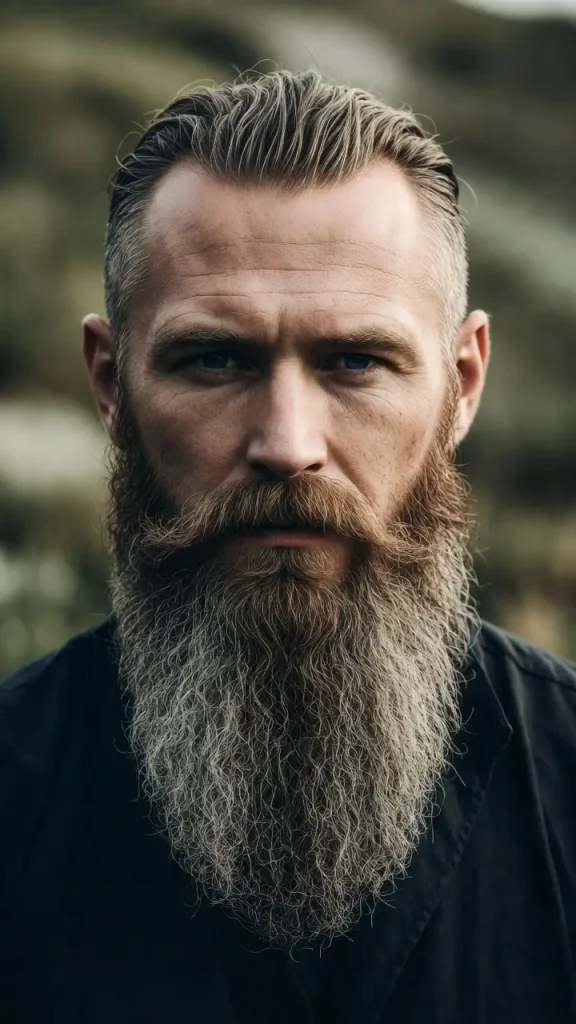
This approach works particularly well for men who want long length without excessive side bulk. The taper sharpens the lower third and creates a more modern interpretation of the traditional beard Viking look.
7. Viking Beard with Undercut
Pairing a Viking beard with an undercut creates dramatic contrast between tight sides and dominant facial hair. The haircut removes upper bulk, allowing the beard to carry visual weight.
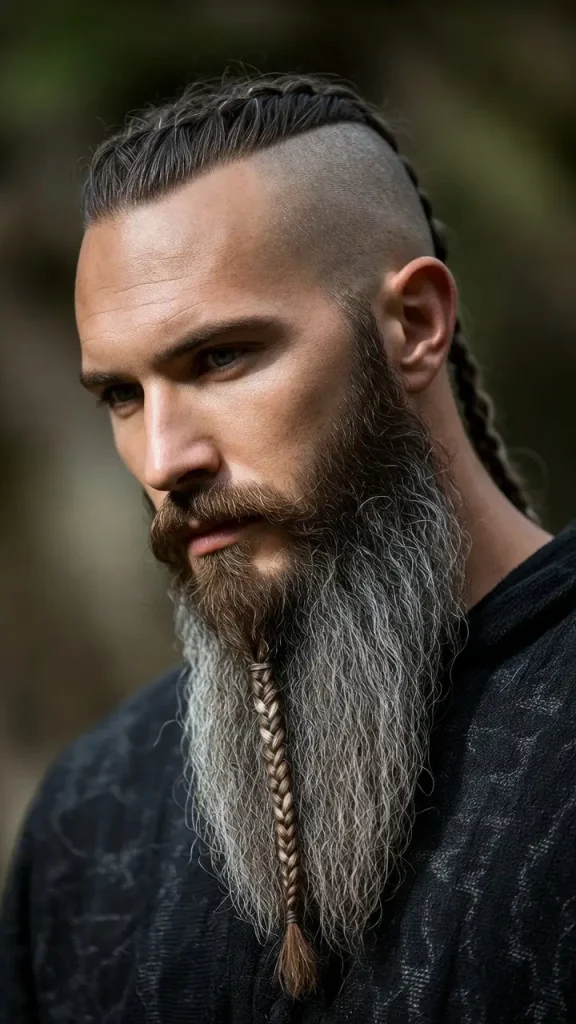
Balance is essential. The beard must remain dense enough to complement the undercut’s sharp transition. Controlled shaping along the sideburns area ensures the style feels connected rather than disconnected.
8. Viking Beard with Buzz Cut
The Viking beard with buzz cut shifts all attention to facial hair. Minimal hair on top amplifies the scale and authority of the beard.
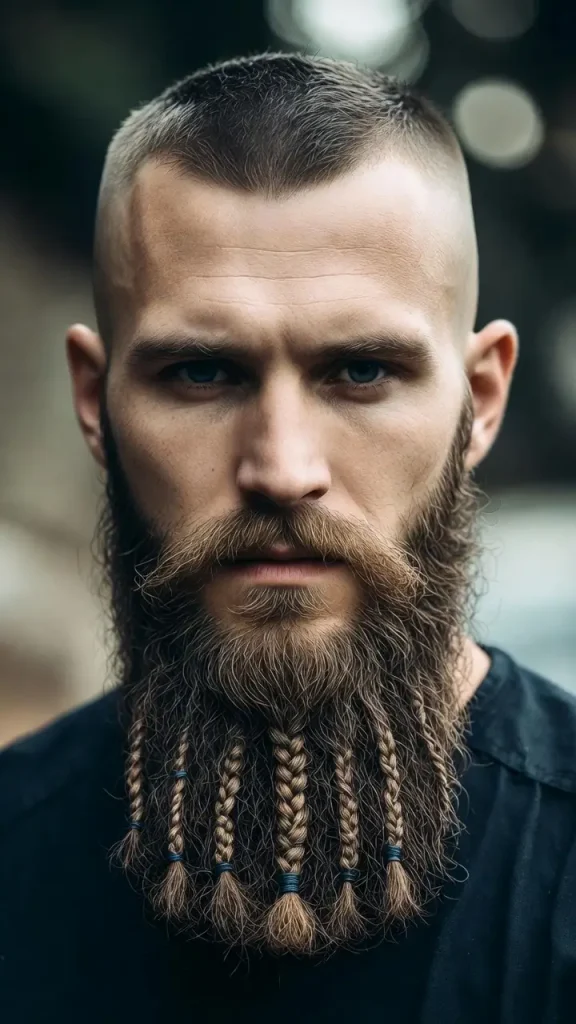
This combination creates strong masculine contrast. Keeping the beard structured and well-shaped prevents the look from becoming overwhelming. The buzz cut simplifies the upper profile while the beard delivers impact.
9. Faded Viking Beard
The faded Viking beard integrates a gradient transition from the temples into the beard. Instead of abrupt separation, the side area gradually blends into the facial hair.
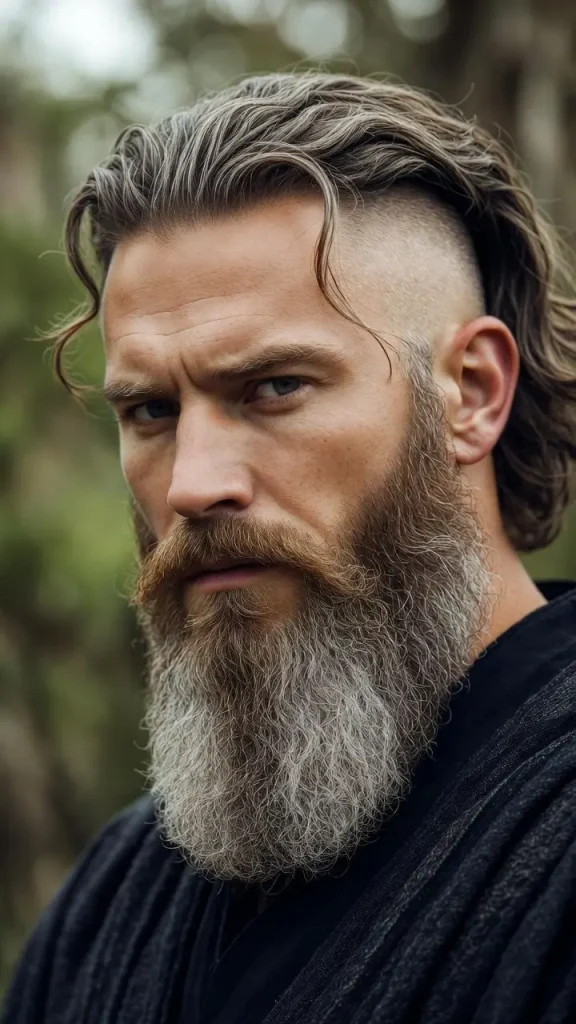
Mastering the transition requires understanding structure from a taper fade haircut styles guide. Depending on preference and head shape, different types of taper fades can influence how aggressively the beard blends from skin to density. This variation modernizes traditional Viking beard styles without sacrificing power.
10. Viking Beard with Line Up
The Viking beard with line up emphasizes sharp cheek and temple edges. The clean lines create contrast against the beard’s volume and texture.
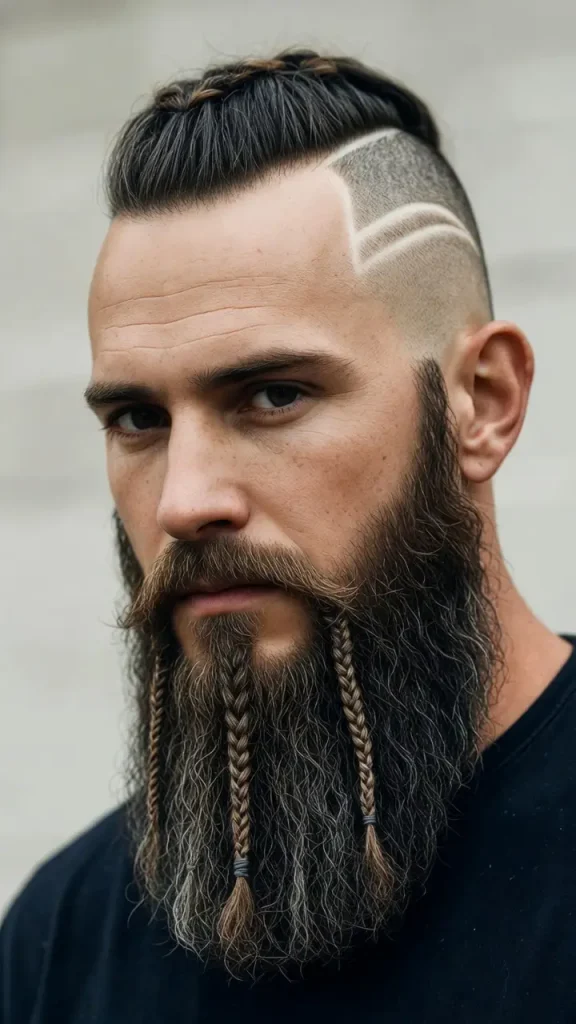
This detail elevates the look from rugged to structured. Crisp edges maintain discipline within length and ensure the beard Viking aesthetic appears intentional rather than unkempt.
11. Medium Length Viking Beard
The medium length Viking beard offers presence without extreme length. It extends beyond the jaw but stops short of dramatic chest-level growth.
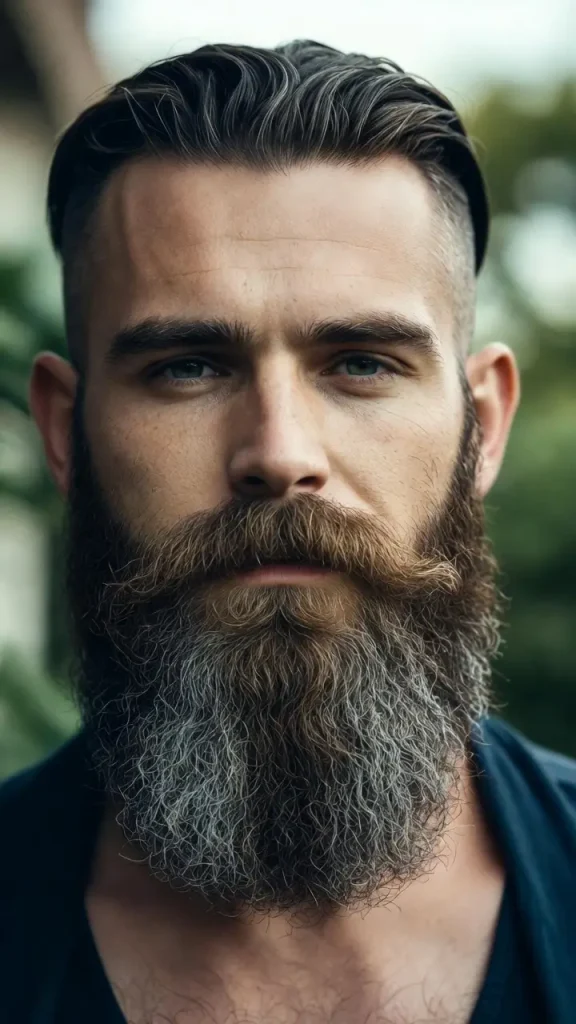
Among Viking beard styles, this option is practical for men who want strength without excessive maintenance. Proper shaping along the bottom and controlled cheek lines preserve the warrior identity in a more manageable format.
12. Viking Beard with Mustache Emphasis
The Viking beard with mustache emphasis keeps the beard dense while allowing the mustache to grow fuller and slightly longer. This creates layered structure across the face and draws attention to the midline.
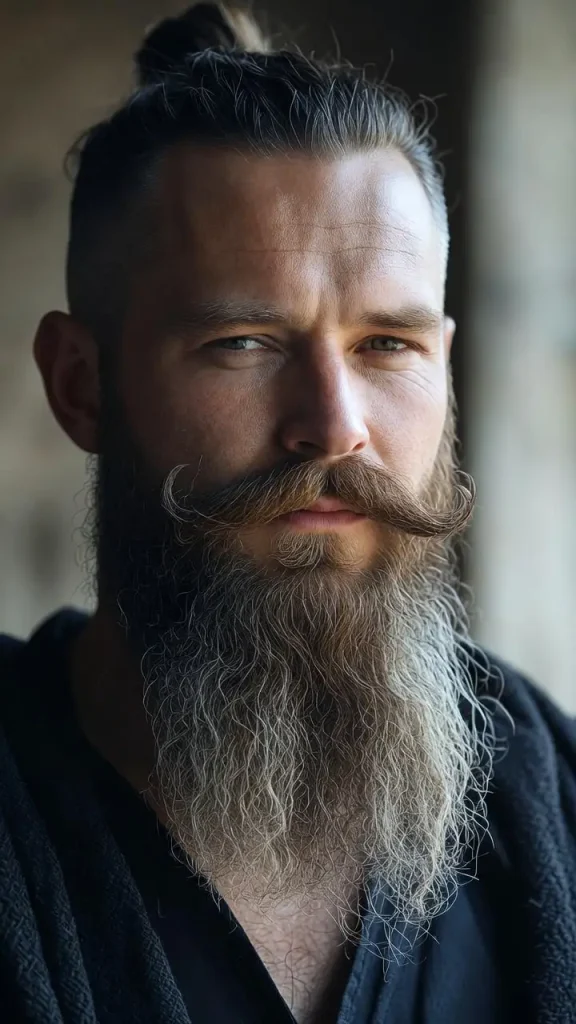
Among viking beard styles, this variation adds personality without sacrificing power. The mustache should remain groomed and shaped to avoid overpowering the chin structure.
13. Split Chin Viking Beard
The split chin Viking beard divides the lower section into two separated panels without full braiding. The gap creates visual contrast and reinforces the warrior aesthetic.
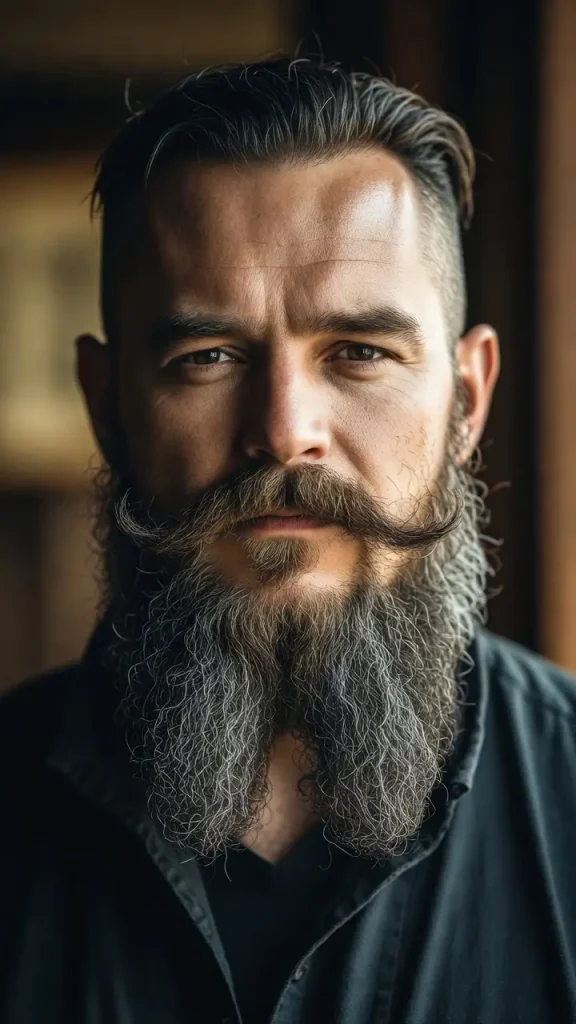
This beard viking style requires symmetry and steady trimming to maintain clean separation. When executed correctly, it delivers bold structure while preserving natural density.
14. Viking Beard with Tight Sides
The Viking beard with tight sides reduces cheek bulk while maintaining length through the chin. This creates a more streamlined silhouette without eliminating the long-beard identity.
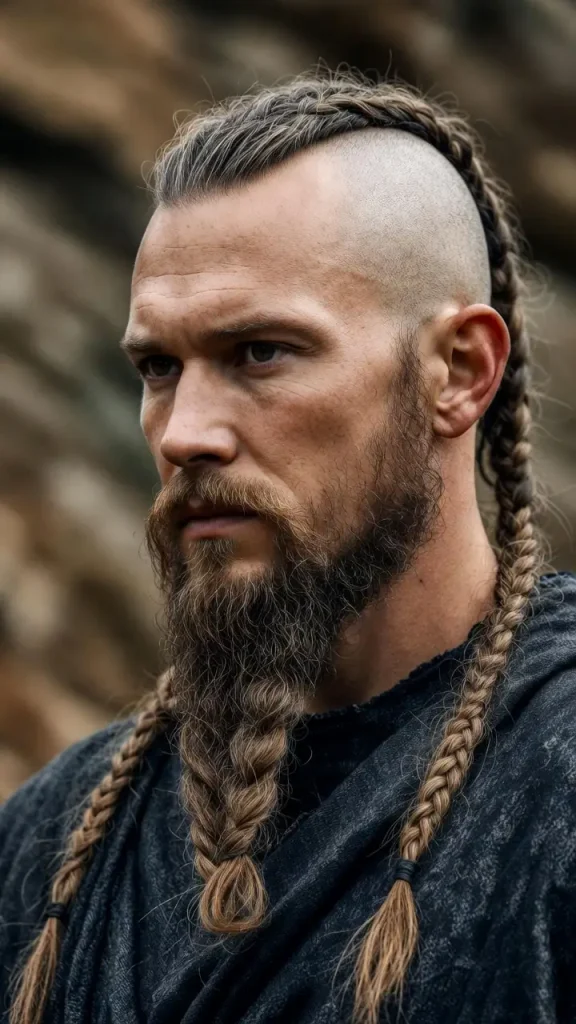
This option works especially well for men who want a controlled profile view. Keeping the sides compact sharpens jaw definition and prevents excessive width.
15. Natural Textured Viking Beard
The natural textured Viking beard embraces organic growth patterns while maintaining essential structure. Instead of heavy sculpting, the focus is on density control and clean edges.
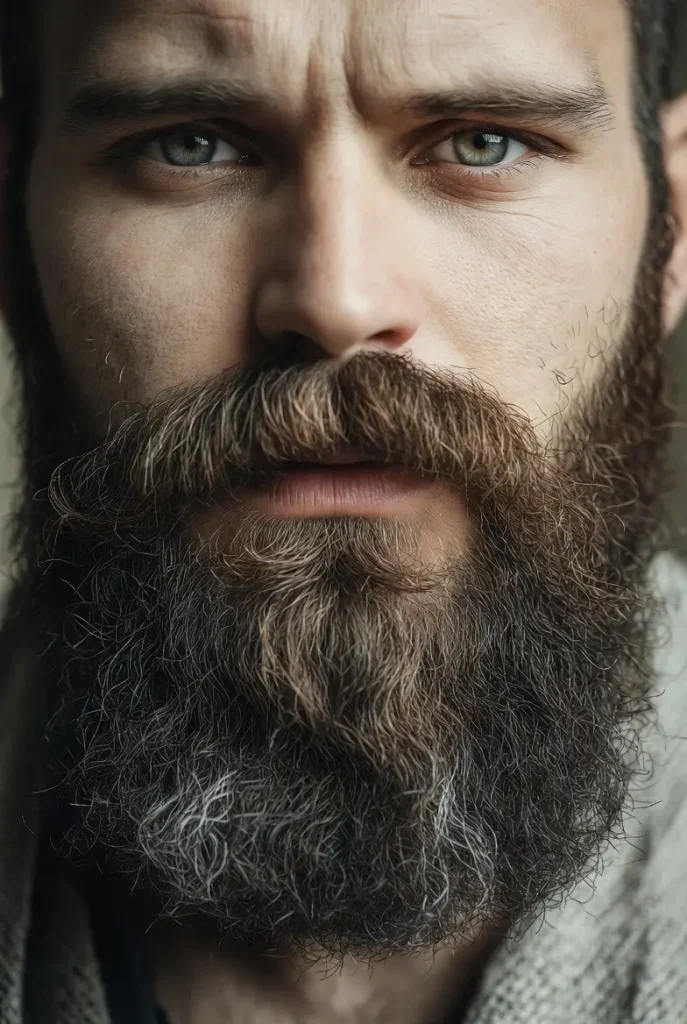
Among viking beard styles, this variation suits men who prefer authenticity with discipline. Subtle trimming at the bottom preserves shape while allowing texture to remain dominant.
16. Viking Beard for Round Face
For round faces, the strategy is vertical emphasis. The beard should extend downward with slightly tighter sides to avoid adding width.
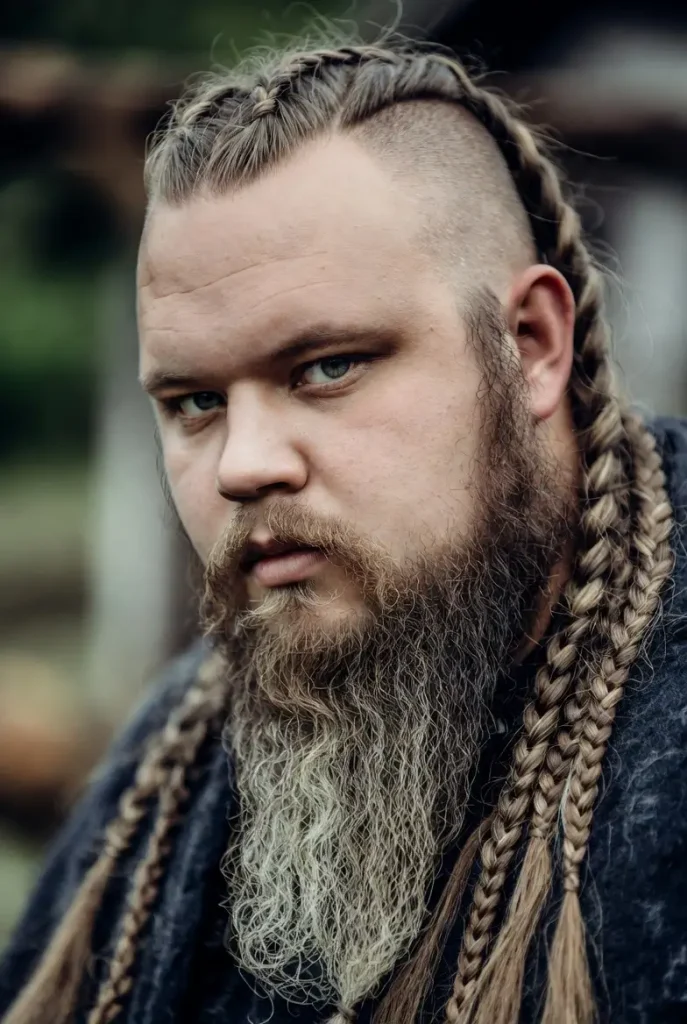
Longer tapered or split chin variations work particularly well. The goal is elongation through the chin while maintaining disciplined cheek control to sharpen facial proportions.
17. Viking Beard for Square Face
Square faces already possess strong angles. The beard should introduce subtle curvature rather than exaggerating sharp corners.
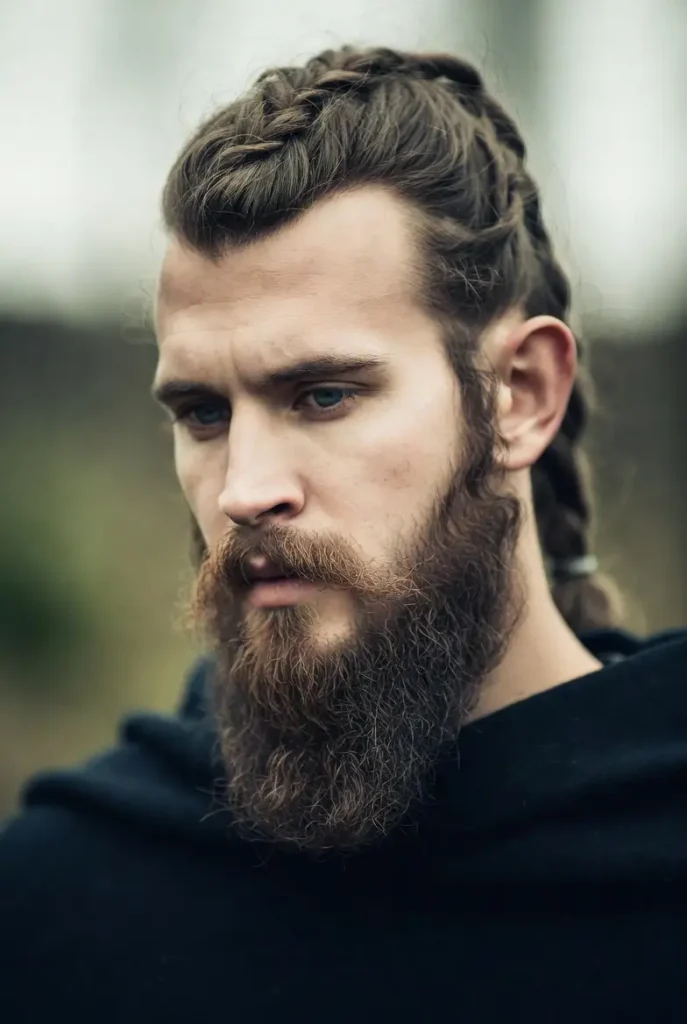
Rounded bottom shaping or slight tapering softens the jaw without removing strength. This balance keeps the beard viking aesthetic powerful yet proportionate.
18. Viking Beard for Bald Men
When paired with a bald head, the Viking beard becomes the central focal point. The absence of hair on top amplifies the beard’s dominance.
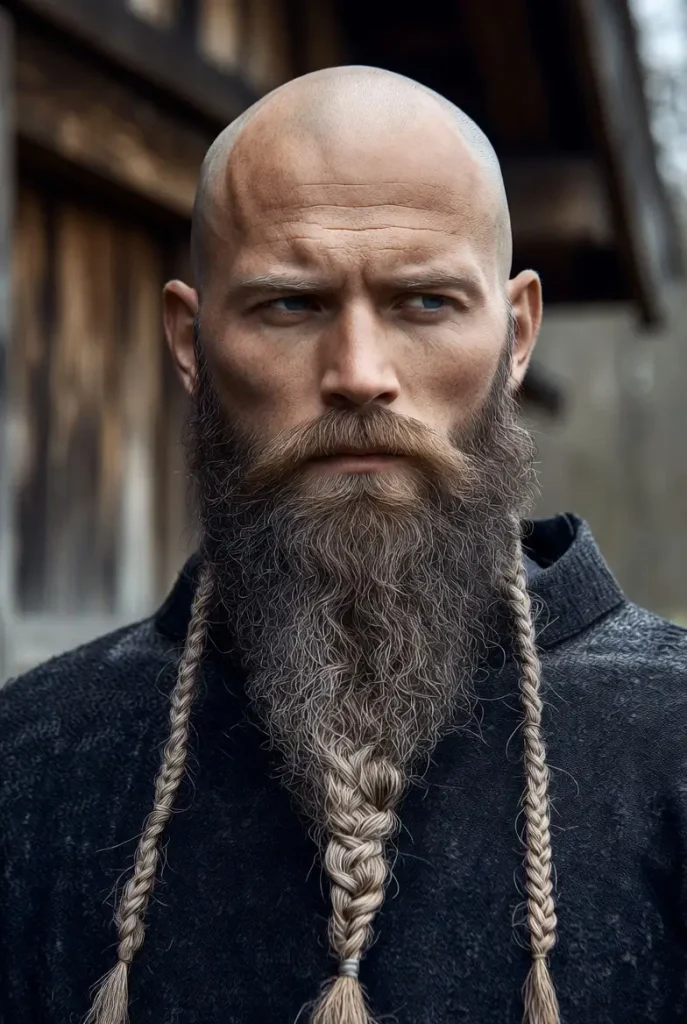
Medium to long lengths with defined edges work best. Precision shaping along the neckline ensures the style appears structured and intentional rather than overwhelming.
19. Viking Beard with Long Hair
The Viking beard with long hair creates a unified warrior profile. Length above and below must complement each other in scale and density.
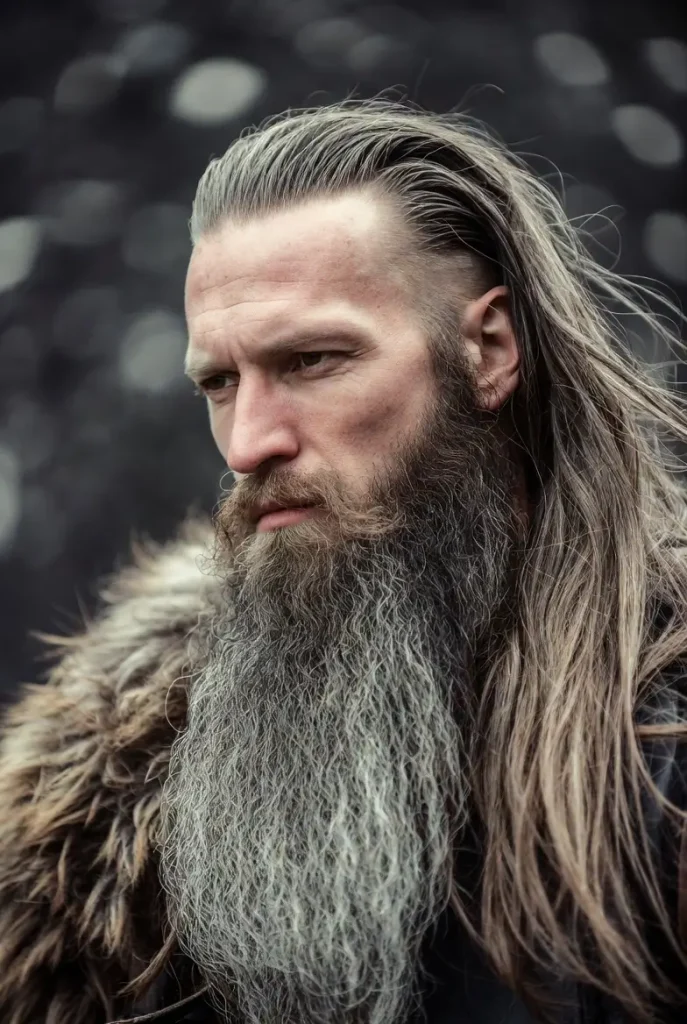
Balanced trimming ensures the beard does not compete with the hairstyle. The two elements should move together visually, reinforcing a cohesive beard viking identity.
20. Viking Beard with Man Bun
Pairing a Viking beard with a man bun concentrates attention at the crown while maintaining dominant lower-face structure. The clean pull-back contrasts effectively with heavy beard volume.
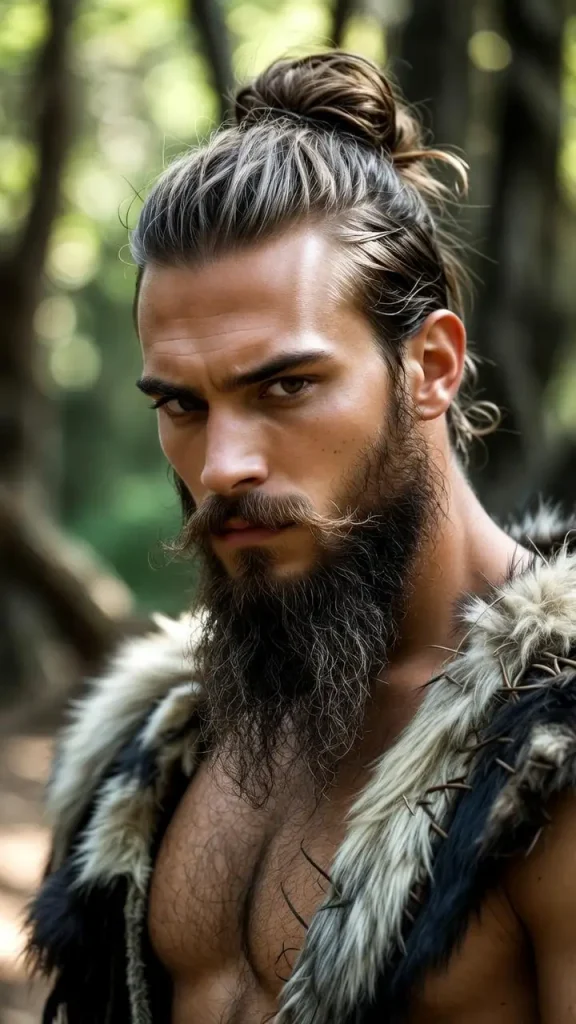
This combination is one of the most visually striking viking beard styles. Proper shaping along the cheeks and jaw keeps the look powerful without appearing chaotic.
21. Short Viking Beard
The short Viking beard maintains the warrior silhouette while reducing overall length. It keeps density strong through the chin but avoids dramatic extension below the jaw.
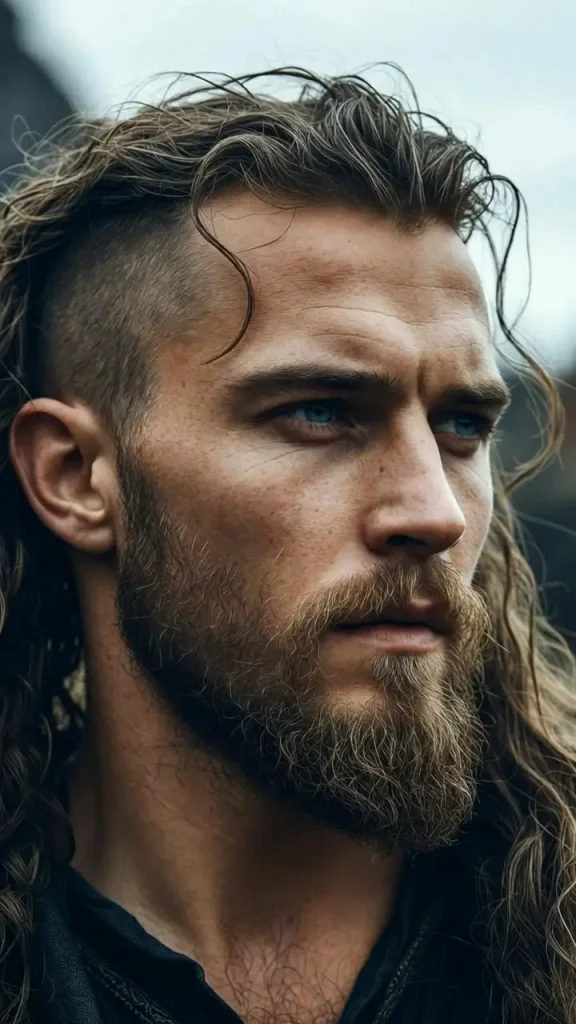
This variation suits men who want the beard viking identity without long growth commitment. Clean edges and disciplined shaping are essential to preserve strength in a shorter format.
22. Structured Corporate Viking Beard
The structured corporate Viking beard refines traditional volume into a boardroom-ready shape. Length remains noticeable, but bulk is controlled and symmetry is prioritized.
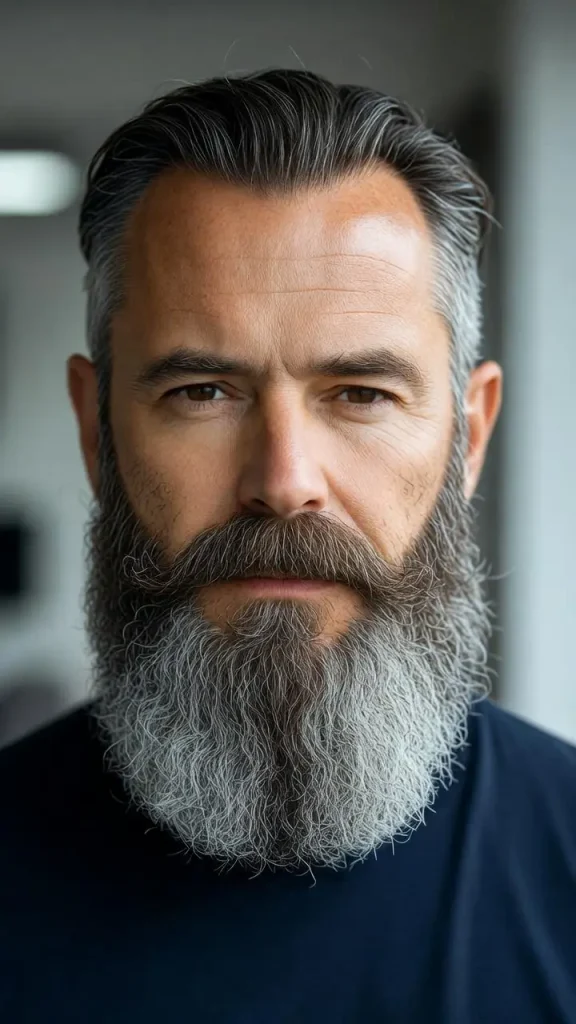
Among viking beard styles, this option balances dominance with professionalism. Defined cheek lines and a precise neckline keep the style sharp and intentional.
23. Gray Viking Beard
The gray Viking beard embraces natural color transition as a strength rather than a flaw. Silver and white strands add depth and contrast within long density.
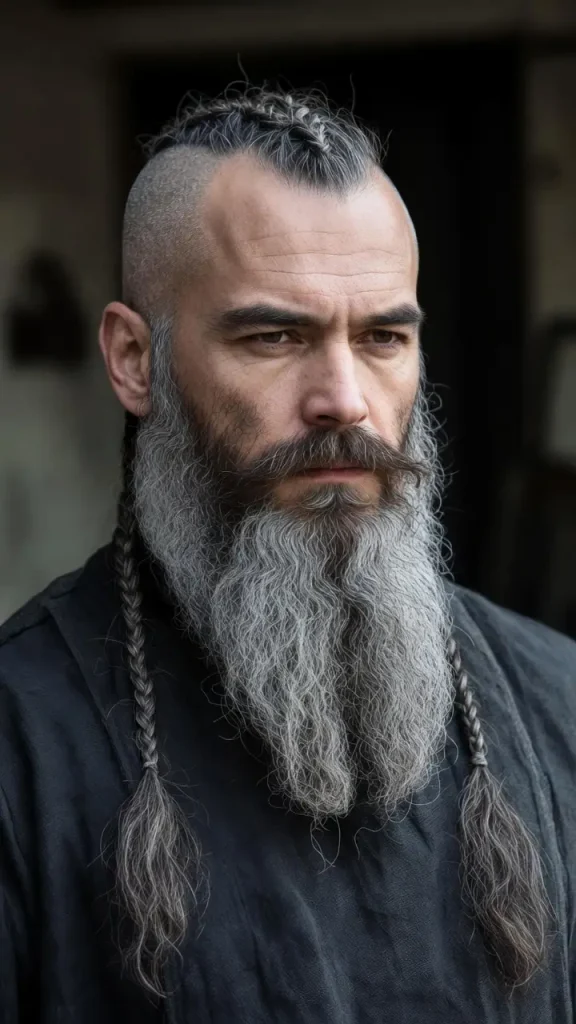
Proper conditioning prevents dryness and keeps texture controlled. Structured shaping ensures the beard looks authoritative instead of neglected.
24. Viking Beard with Skin Fade
The Viking beard with skin fade merges dramatic long length with a tight, clean gradient at the temples. The contrast amplifies the beard’s presence while modernizing the overall look.
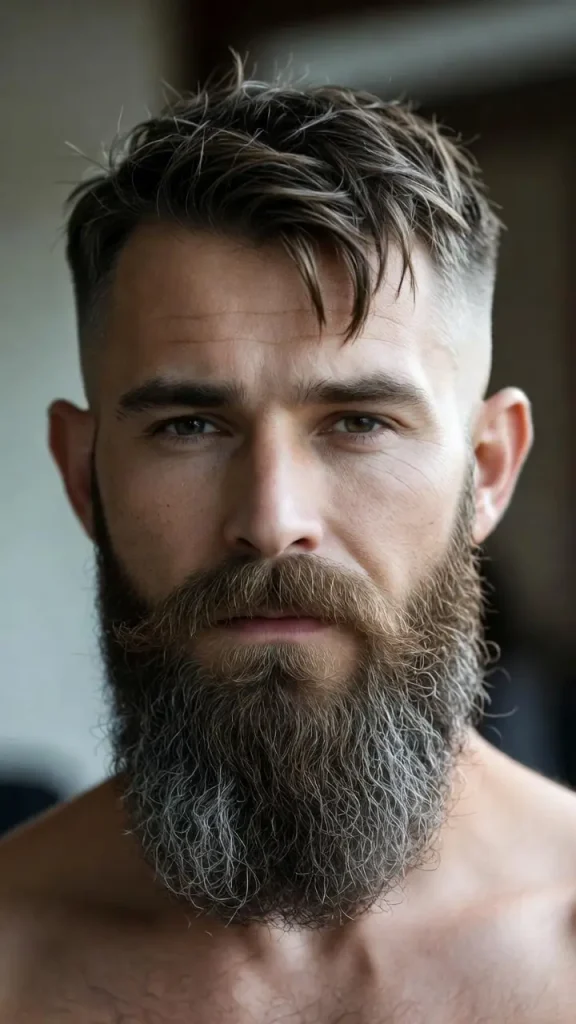
Executing the blend requires understanding different types of taper fades to determine how aggressively the sides transition from skin to density. The result is a powerful combination of warrior volume and contemporary grooming precision.
25. Viking Beard with Hard Part
The Viking beard with hard part introduces a sharp line within the haircut to contrast the beard’s natural density. The hard part creates visual separation and strengthens the upper profile.
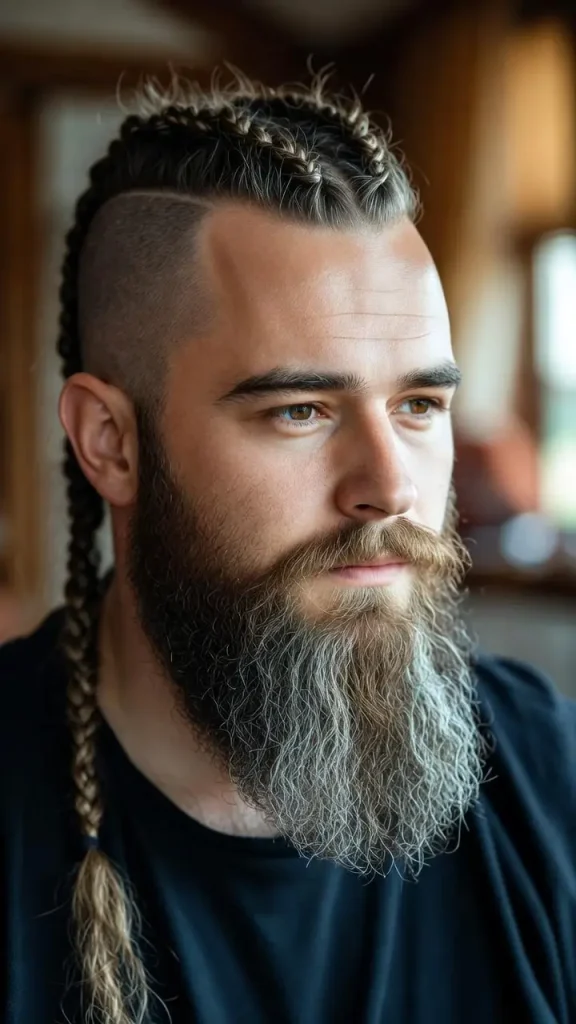
This pairing works best when the beard remains structured and balanced. The precision of the part enhances the boldness of the beard without disrupting proportion.
26. Layered Viking Beard
The layered Viking beard uses subtle trimming at varying lengths to prevent flat density. This approach creates movement and dimension within long growth.
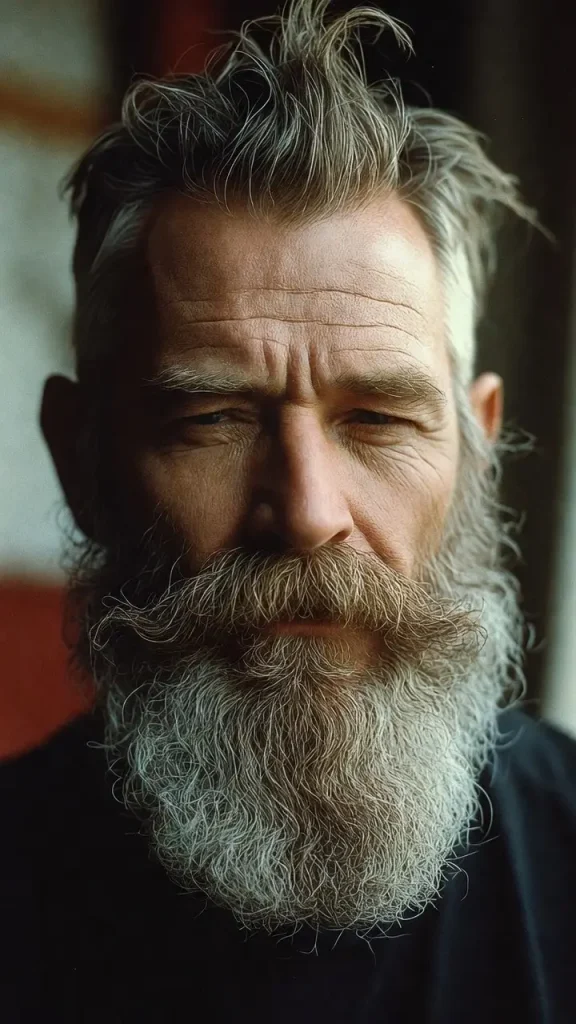
Among viking beard styles, layering improves manageability while maintaining scale. Controlled shaping along the bottom keeps the layers intentional rather than uneven.
27. Sculpted Modern Viking Beard
The sculpted modern Viking beard refines traditional warrior length with deliberate shaping and clean edges. It blends historical inspiration with contemporary grooming standards.
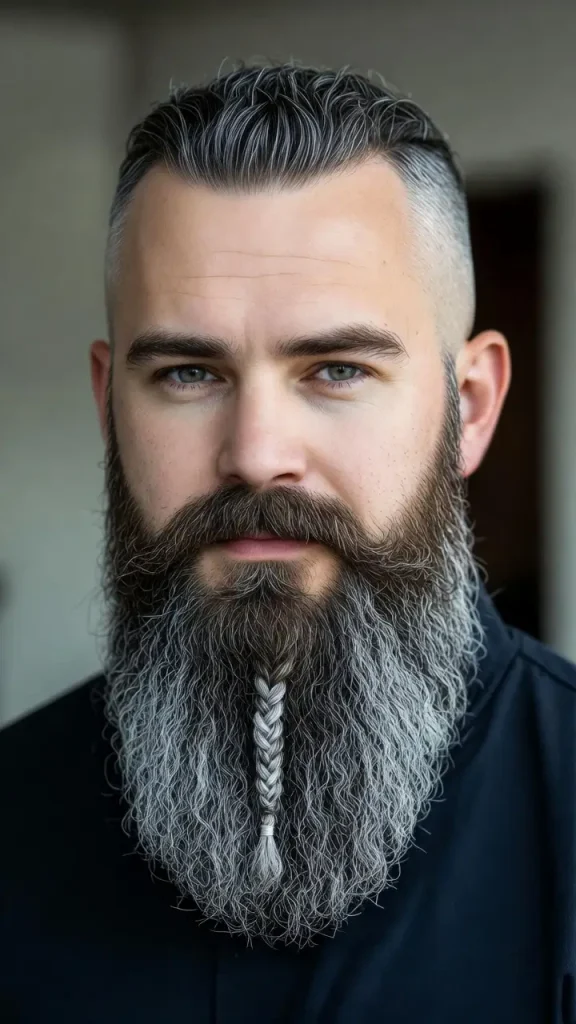
Precision trimming, controlled tapering, and balanced proportions define this final evolution of beard viking style. The result is commanding, structured, and unmistakably modern.
How to Choose the Right Viking Beard for Your Face Shape
Viking beard styles are powerful, but power without proportion can overwhelm the face. Because these beards emphasize length and density, alignment with face shape becomes critical. The goal is not just to grow long facial hair, but to shape it so the beard viking aesthetic enhances structure instead of distorting it.
Round Face Strategy
For round faces, vertical emphasis is essential. The beard should extend downward with slightly tighter sides to avoid adding unnecessary width.
Tapered, split chin, or lightly layered Viking beard styles work best because they elongate the lower third of the face. Avoid overly wide cheek volume, which can exaggerate roundness. Controlled side trimming preserves sharpness.
Square Face Strategy
Square faces already have strong jawlines and angular structure. The beard should soften harsh corners without removing strength.
Rounded bottom shaping or subtle tapering helps introduce curvature. Avoid extremely boxy lower edges that exaggerate width. Balanced contouring keeps the beard powerful yet proportionate.
Oval Face Strategy
Oval faces are naturally balanced, which allows flexibility across most viking beard styles. The objective is maintaining harmony rather than aggressive correction.
Medium to long Viking beards with structured shaping work exceptionally well. Avoid excessive length that stretches facial proportions. Clean cheek lines preserve symmetry.
Bald Head Strategy
With a bald head, the Viking beard becomes the dominant design element. The absence of hair on top increases visual focus on facial structure.
Medium to long lengths with disciplined edges provide balance and authority. Precision neckline placement prevents the beard from appearing heavy. Structured shaping ensures the beard viking aesthetic looks intentional and commanding.
How to Maintain a Viking Beard Without Losing Structure
Long viking beard styles demand discipline. Growth alone does not create dominance. Without structured trimming, conditioning, and edge control, a long beard quickly loses shape. Maintaining a beard viking aesthetic requires balancing length with proportion and precision.
Growth Phase Strategy
The growth phase is where most long beards fail. During early months, uneven density and awkward length transitions are common. Instead of shaping too aggressively, focus on neckline discipline and light cheek control while allowing the chin to develop.
Patience is essential. Avoid trimming the bottom too early. Let the beard gain mass before introducing heavy sculpting. Once sufficient length develops, structural shaping becomes easier and more controlled.
Trimming Long Beard Proportions
Long beards must be shaped in layers to avoid bulk at the sides and weakness at the bottom. Subtle tapering along the cheeks while preserving chin length creates a powerful silhouette.
Precision tools are critical for maintaining symmetry and clean transitions. Using professional barber tools for fades improves accuracy when defining cheek lines and tightening side areas. Structured trimming preserves the commanding profile that defines viking beard styles.
Beard Oil and Conditioning for Long Beards
Length increases dryness risk. Long strands require consistent hydration to maintain flexibility and shine. Daily beard oil application prevents brittleness and reduces frizz.
Conditioning also enhances texture control. A well-moisturized beard flows naturally while maintaining its sculpted form. Proper grooming products elevate the beard viking aesthetic from rugged to refined dominance.
Managing Beard Rings and Braids
Beard rings and braids add visual impact but require care. Rings should be placed securely without pulling excessively on individual strands. Uneven tension can cause breakage over time.
Braids should be tightened evenly and redone regularly to prevent distortion. If your Viking beard integrates a faded temple transition, maintaining that sharp blend through a structured taper fade maintenance guide ensures the overall look remains cohesive. Structured maintenance keeps long, braided beards powerful rather than chaotic.
FAQs About Viking Beard Styles
Viking beard styles project dominance, but many men question how practical they are in modern settings. Length, accessories, and density must align with lifestyle and grooming discipline. Below are direct answers to the most common concerns about maintaining a beard viking aesthetic.