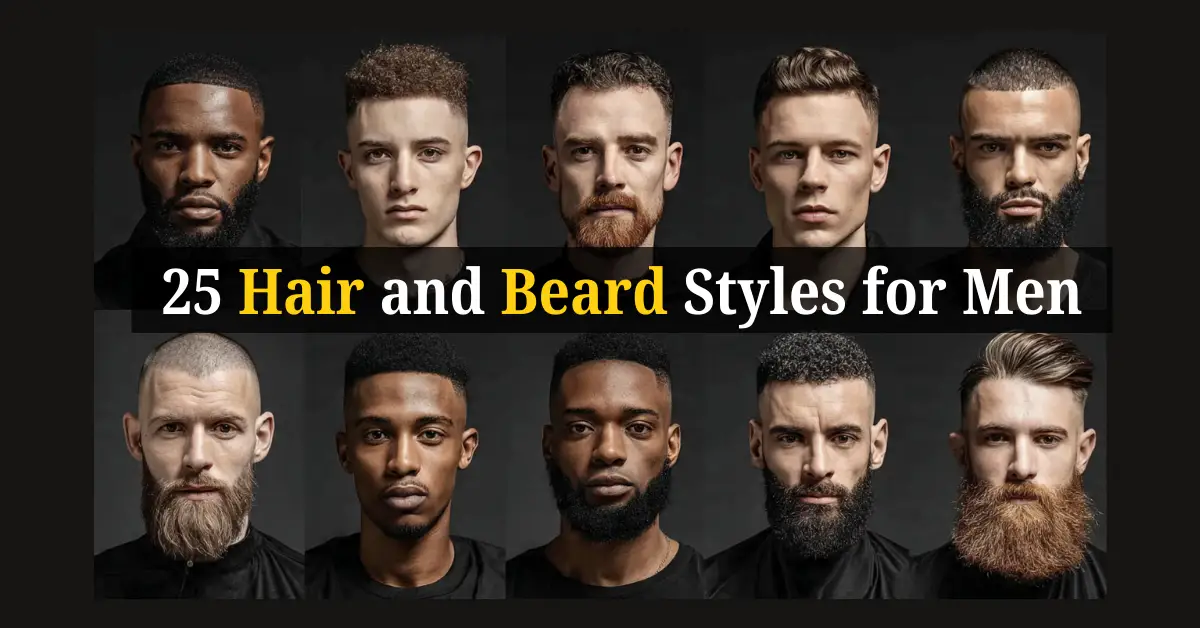
25 Hair and Beard Styles for Men That Instantly Upgrade Your Grooming Structure
The relationship between a haircut and a beard determines the overall geometry of a man’s grooming structure. When hair and facial hair are designed together, they create visual balance between the jawline, cheek structure, and head shape. This is why professional barbers rarely treat the haircut and beard as separate elements.
The best hair and beard styles for men focus on proportion control. Short fades tighten the sides while fuller beards add jawline density. Longer hair can offset lighter beard growth, while structured beards stabilize volume around the lower face.
Understanding how beard density interacts with haircut structure allows men to create intentional grooming architecture instead of random combinations. The following beard and hairstyle combinations illustrate how barbers balance length, tapering, and facial framing.
How Hair and Beard Structure Work Together
Hair and facial hair must function as a single structural system. When barbers design a haircut, they analyze how the head shape transitions into the beard line. The goal is to create smooth visual flow from the temple area down to the jawline without creating abrupt volume changes.
One of the most effective ways to control this transition is through tapering. A properly executed fade gradually reduces density along the sides while guiding the eye toward the beard. Understanding types of taper fades helps explain how barbers manipulate length to blend the sideburn area into facial hair without harsh disconnection.
The temple area is the structural bridge between the haircut and beard. If the temple weight is too heavy, the haircut competes with the beard. If the taper is too aggressive, the beard can look disconnected from the head shape. This is why experienced barbers often use controlled tapering techniques to create smooth transitions. You can explore this blending approach in taper fade styling techniques where fade structure is designed to integrate with beard density.
Beard density also affects haircut selection. Fuller beards introduce visual weight around the jawline, so haircuts with controlled volume on the sides create balance. Shorter beards work better with textured or layered haircuts that introduce movement on the top of the head.
Maintaining this structure requires precise grooming tools. A dedicated beard trimmer helps maintain neckline definition while keeping beard length consistent with the haircut. Tools like the Philips Norelco Multigroom Series 7000 allow controlled trimming across multiple beard lengths, which is essential when maintaining beard fades that connect with tapered haircuts.

The all in 1 trimmer for your choice of beard, head, body, and/or face hair styling with 23 pieces for all your trimming needs
For beard shaping and detailing, a precision comb also plays an important role. A Kent 81T Handmade Beard Comb helps distribute beard oils evenly while guiding facial hair during trimming. This prevents uneven bulk that can disrupt the visual balance between hair and beard.

Men’s Hair Brush, beard grooming kit for men, brush and mustache comb combo, for Mustache & Beard, 360 Wave, that fits perfectly in your jeans’ or bag pocket, so you can groom your facial hair anytime, anywhere.
When haircut structure and beard density are engineered together, the result is a cohesive grooming architecture. Instead of two separate elements, the haircut and beard operate as a single frame that enhances the overall facial structure.
1. Classic Taper with Full Beard
The classic taper creates controlled graduation around the temples and neckline while leaving enough density through the sides to support a full beard. This pairing works because the taper gradually reduces bulk above the ear without disconnecting the beard line.
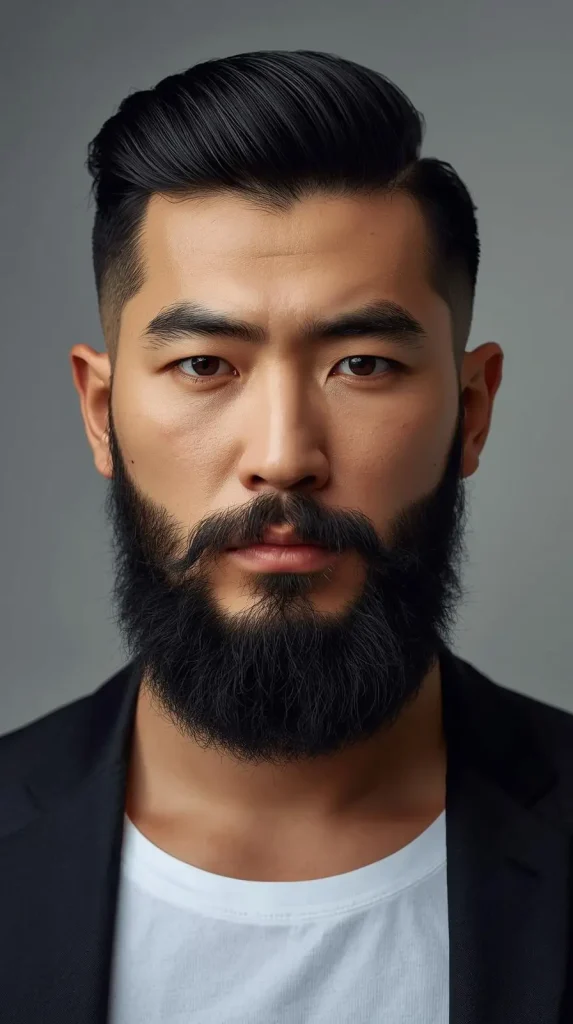
A full beard introduces strong jawline structure. The taper keeps the haircut refined so the beard becomes the dominant facial frame rather than competing with heavy side volume. Barbers often maintain moderate length on top to keep the head shape balanced with beard density.
Understanding types of taper fades helps barbers control how gradually the taper transitions into the beard area. Proper blending through the sideburn zone prevents harsh separation between haircut and facial hair.
Maintaining a full beard requires consistent shaping along the cheek line and neckline. A precision tool like the Norelco Philips 100% Waterproof Beard Trimmer allows controlled trimming so beard length stays proportional to the haircut structure.

PRECISION BEARD STYLER DIAL with 40 settings in 0.5 mm increments to craft your beard to the exact desired length and fullness
2. Textured Crop with Short Boxed Beard
The textured crop places weight at the crown while keeping the sides tight. This haircut introduces forward texture that frames the forehead while allowing the beard to define the lower face.
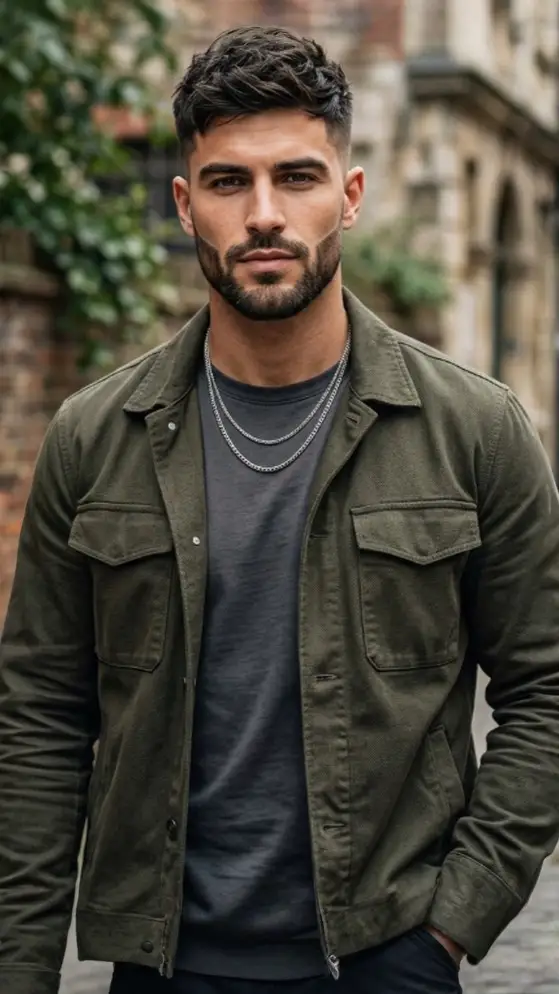
A short boxed beard maintains clean cheek lines and controlled beard length. Because the crop already creates movement on top, the beard should remain structured rather than overly dense.
This combination works particularly well for men with strong cheekbones. The crop shortens the upper head profile while the boxed beard adds horizontal width around the jawline.
For styling the crop, lightweight texture is key. A matte styling clay such as the Hanz de Fuko Claymation helps separate hair strands without creating excessive shine, which maintains the natural texture that defines this haircut.

Claymation provides super high hold, with a shine-free matte finish that’s ideal for textured looks that last all day.
Helps Promote Healthy Hair: Claymation is rich in botanical ingredients that strengthen hair.
3. Slick Back Hair with Medium Beard
The slick back introduces length and direction through the crown while the sides are usually tapered or faded to reduce bulk. The backward flow creates a longer head silhouette that pairs well with medium beard density.
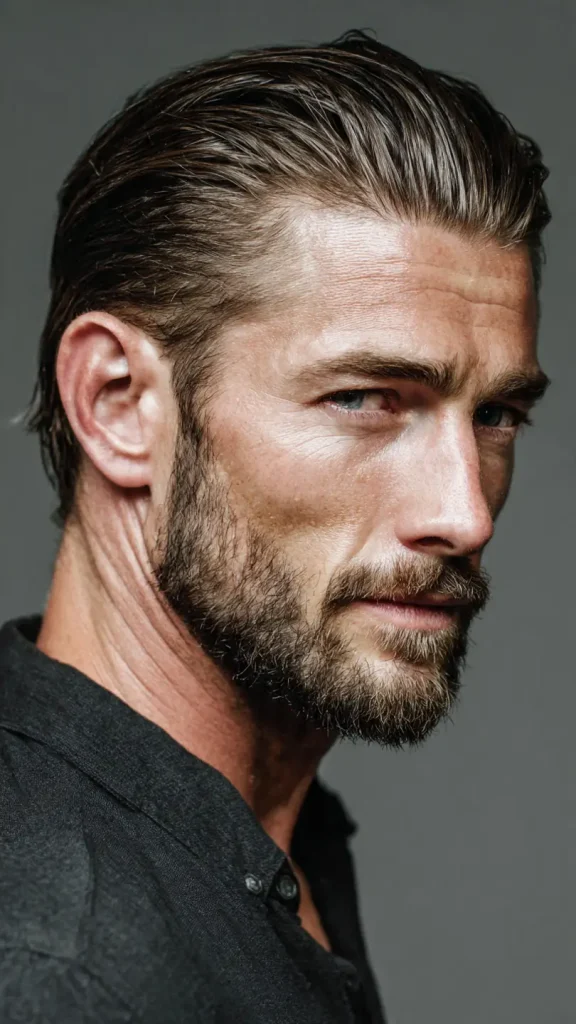
A medium beard stabilizes the lower face without overpowering the hairstyle. The beard length typically sits between 10 to 20 mm, providing jaw definition while maintaining a groomed profile.
Barbers often blend the sideburns directly into the beard so the transition from temple to cheek appears seamless. This integration technique is often discussed in taper fade styling techniques where hair density gradually merges into beard structure.
For styling the slick back, a high control pomade like Suavecito Original Hold Pomade provides directional hold while maintaining flexibility for comb styling.

Suavecito Original Hold Pomade dries with a medium hardness without a crunchy finish. Get maximum styling flexibility that is perfect for both short hair and long hair. After a long day, touch up your style simply by adding water to reactive your do.
4. Low Taper Fade with Heavy Beard
The low taper fade removes weight around the ear while maintaining density through the upper sides. This controlled fade ensures the beard remains the most prominent structural element on the face.
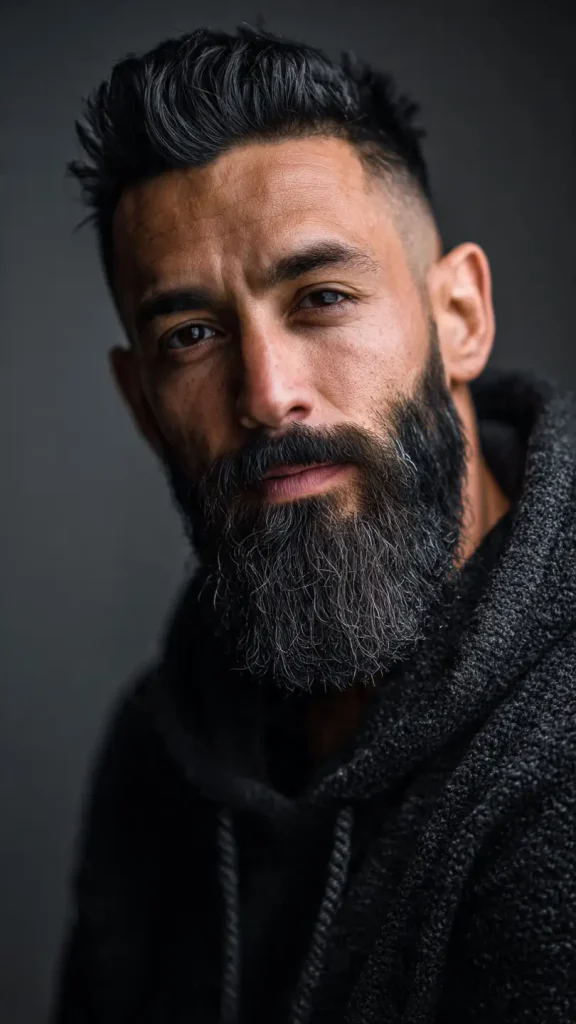
A heavy beard introduces significant volume along the jawline. Without a proper taper, this density can overwhelm the haircut. The low taper fade ensures the beard connects naturally with the haircut without creating a blocky transition.
This haircut and beard combination works especially well for men with thicker beard growth. The fade lightens the upper head area while the beard anchors the lower face.
Daily beard grooming becomes essential with heavier beard density. A conditioning oil such as Viking Revolution Beard Oil keeps the beard soft and prevents bulk from appearing uneven during growth.

Get ready for all the compliments- Even the burliest of beards can be tamed with our high quality beard oil conditioner. Restore softness and shine to your beard. In order to have a great looking beard, you need the right products! Our Beard Oils will give you the confidence to conquer the world, like a Viking!
5. Short Quiff with Trimmed Beard
The short quiff introduces controlled lift at the front hairline while keeping the sides tight. This haircut builds vertical height, which visually lengthens the face.
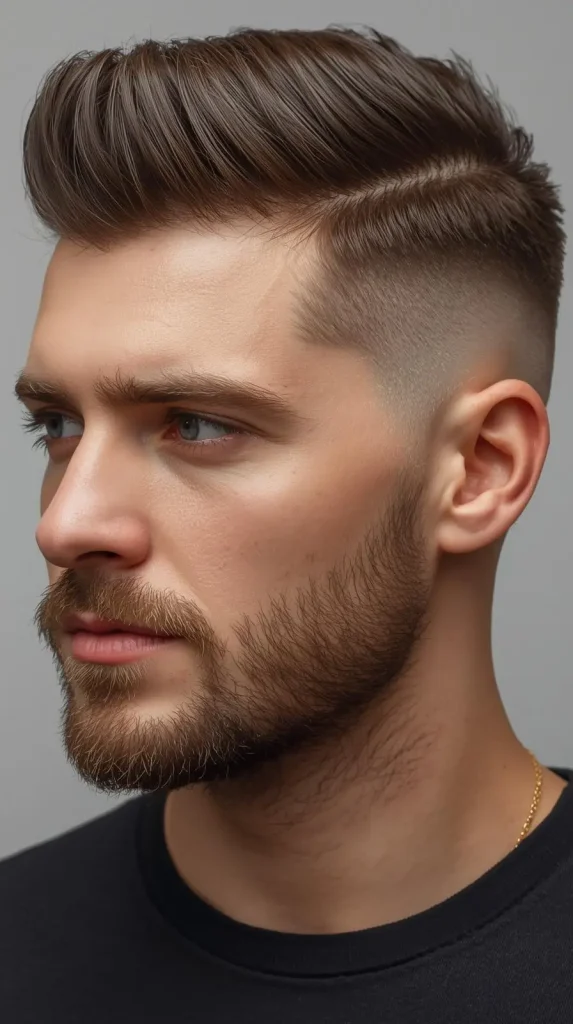
A trimmed beard maintains definition without overpowering the hairstyle. Typically maintained between light stubble and short beard length, it sharpens the jawline without adding excessive bulk.
Because the quiff directs hair upward, the beard should remain compact to keep facial proportions balanced. Too much beard density would compete with the vertical lift created by the quiff.
A vented styling brush such as the Denman D3 Brush helps guide airflow during blow drying, which improves front lift and overall quiff structure.

Best Hair Brush for Styling Naturally Curly Hair and Creating Ringlets. The hair brush has 7 Rows of sculpted round-ended nylon pins gives softer, denser, increased movement and defines curls in wet hair.
6. Buzz Cut with Full Beard
The buzz cut removes almost all hair volume from the head, which makes the beard the dominant grooming feature. This contrast creates strong masculine structure around the jawline.
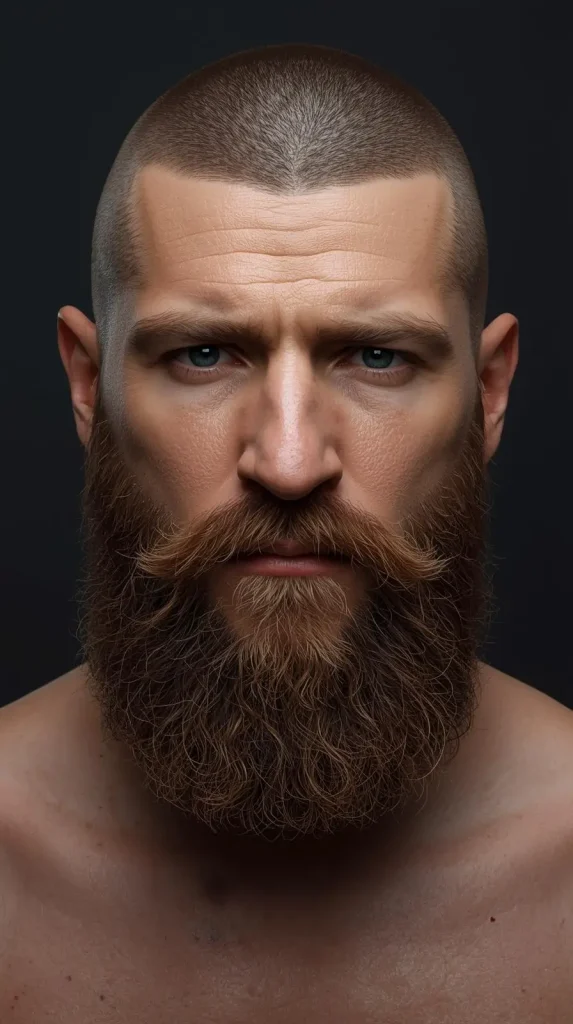
Because the haircut is extremely short, the beard becomes responsible for facial framing. A well shaped beard restores balance by adding density around the chin and cheek area.
Barbers often taper the sideburn area slightly so the beard flows naturally from the scalp line. Without this transition, the beard can appear visually disconnected from the haircut.
Regular beard shaping tools become essential for maintaining clean lines. A stainless steel beard shaping template like the Aberlite Beard Shaping Tool helps maintain symmetrical cheek lines that complement the simplicity of the buzz cut.

This FlexShaper Beard Neckline Guide is the secret weapon to carve a natural beard neckline. It comes in three colors: white, blue, and green. Men will definitely love it! Makes for great gifts for dad. Perfect fathers day gifts from daughter or wife.
7. Side Part Hair with Sculpted Beard
The side part is one of the most structurally balanced haircuts in men’s grooming. The defined part line divides hair density across the head while maintaining controlled volume.
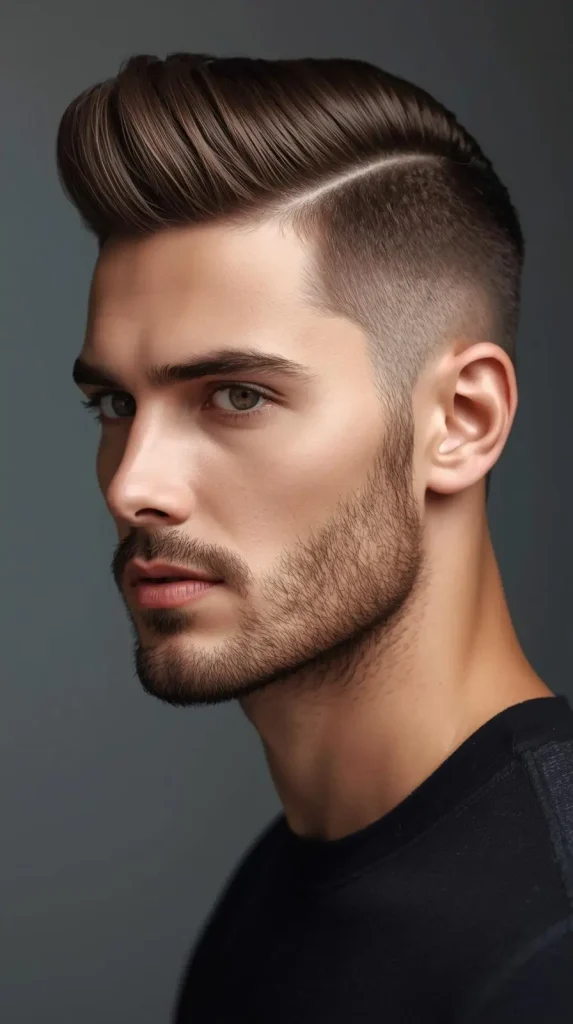
A sculpted beard complements this haircut by maintaining precise cheek lines and defined jaw contours. The beard is usually medium length but carefully shaped to follow natural bone structure.
This pairing works particularly well in professional environments because both the haircut and beard maintain refined structure.
Precision combing is important when maintaining a defined part line. A barber grade comb like the Kent 7T Fine Tooth Comb helps guide hair cleanly along the part without disrupting styling direction.

5.2 inch / 133mm Fine Teeth, Handmade from Cellulose Acetate and Sawcut rather than moulded. The best Kent comb for mustache and beard
8. Curly Hair with Tapered Beard
Curly hair introduces natural volume and movement. When paired with a tapered beard, the goal is to control bulk while preserving texture.
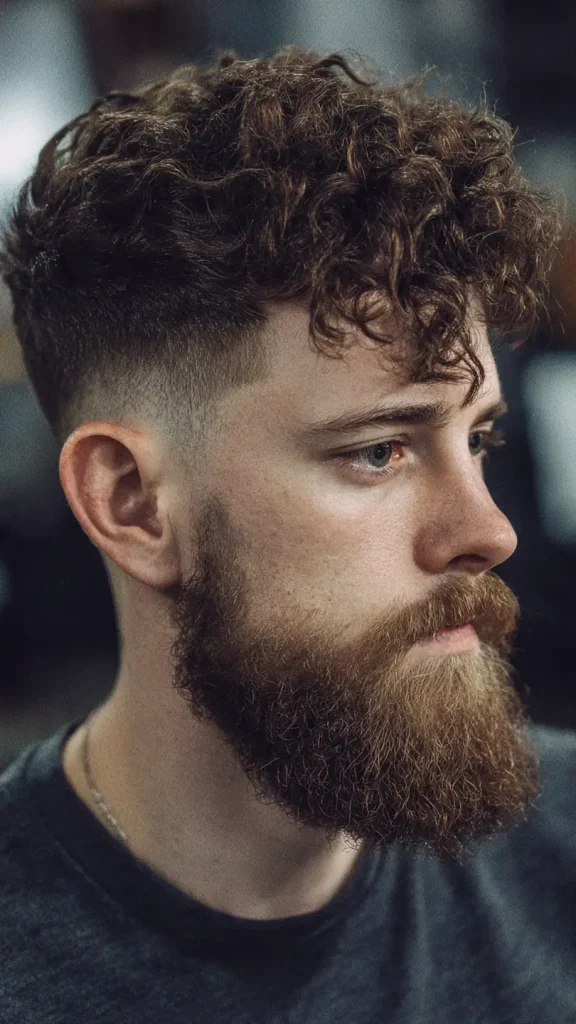
Barbers often keep the curls longer on top while tapering the sides. This allows curls to maintain natural shape while the beard balances the lower face.
The tapered beard gradually reduces density toward the sideburn area so curls and facial hair transition smoothly.
Men with curly hair often benefit from moisture focused styling products. A curl defining cream such as SheaMoisture Curl Enhancing Smoothie helps curls maintain definition without excessive frizz.

heaMoisture Coconut & Hibiscus Curl Enhancing Smoothie is the best hair cream and forming cream hair product for thick, curly hair
9. Crew Cut with Short Beard
The crew cut is designed for simplicity and structural clarity. Hair remains short across the head with slight length toward the front.
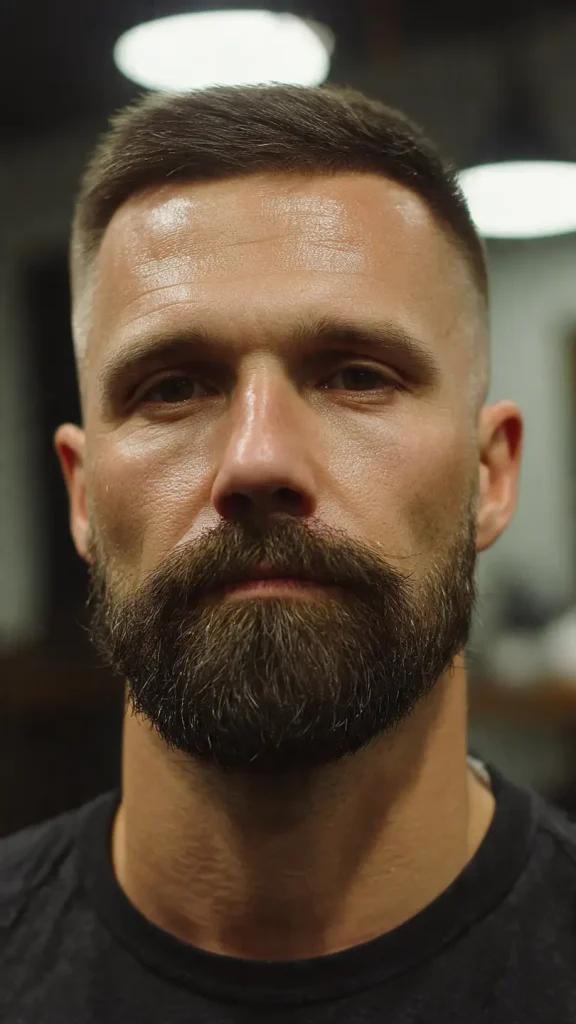
A short beard complements this haircut by maintaining facial definition without introducing too much density. Because the haircut is already minimal, beard growth should remain controlled.
This pairing works particularly well for athletic lifestyles where grooming time is limited.
Maintaining beard length consistently requires a trimmer with adjustable guards. The Wahl Lithium Ion Beard Trimmer provides multiple trimming lengths that help maintain a clean short beard profile.

Featuring 4 different attachment heads, a wide T-Blade for beards and mustache trimming, haircuts, touchups, body grooming, and detailing. The precision detailer head is for details, clean up, and complex designs.
10. Mid Fade with Thick Beard
The mid fade creates a strong transition point between the sides and the crown. By removing weight through the mid section of the head, the haircut visually emphasizes the beard.
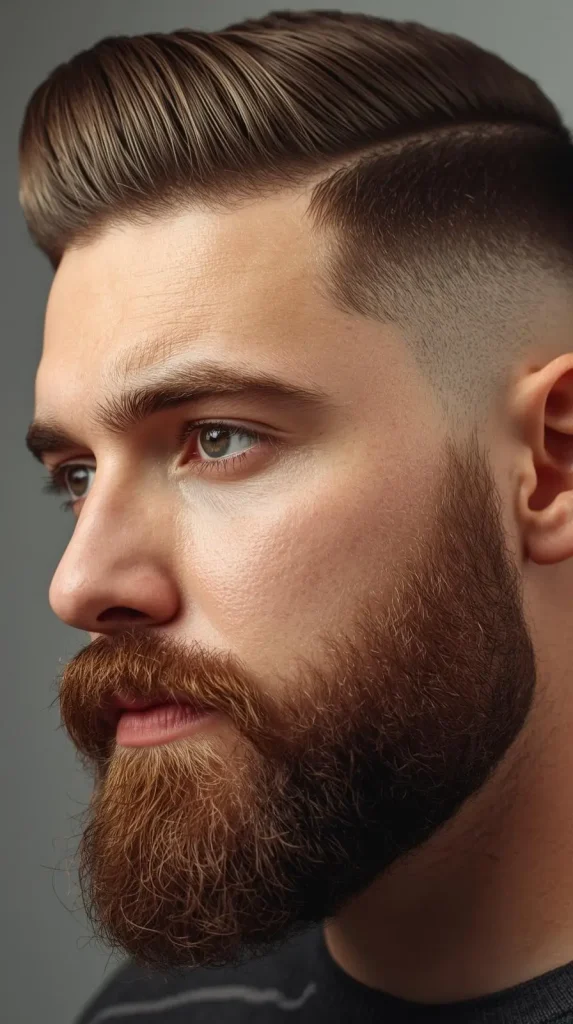
A thick beard pairs well with this fade because the haircut lightens the upper sides while the beard adds weight along the jawline. This contrast produces strong facial structure.
Barbers often blend the fade directly into the beard to create a seamless transition. Mastering this blend is a core technique in taper fade haircut styles guide where haircut architecture integrates with beard density.
Beard combing becomes important for maintaining even volume. A handcrafted Kent Handmade Beard Comb helps distribute beard oils and keeps thicker beards aligned with the haircut structure.
11. Messy Medium Hair with Beard
Messy medium hair distributes volume through the crown and sides, creating relaxed movement rather than rigid structure. The beard stabilizes the lower face so the hairstyle does not appear overly loose or unstructured.

Barbers usually keep the sides lightly tapered to prevent excessive bulk around the temples. This allows the beard to frame the jawline while the medium length hair adds texture on top.
This pairing works especially well for men with naturally thick hair because the controlled disorder on top contrasts with the intentional beard shape.
For styling, a lightweight texture cream like American Crew Forming Cream helps define strands while keeping the messy structure flexible throughout the day.

American Crew Men’s Hair Forming Cream
Medium hold and medium shine. Helps hair look thicker and is ideal for easing new users into the potential of styling pucks.
12. Long Hair with Full Beard
Long hair combined with a full beard creates one of the most dominant masculine grooming structures. The key is maintaining controlled weight distribution so the beard does not overwhelm the face.
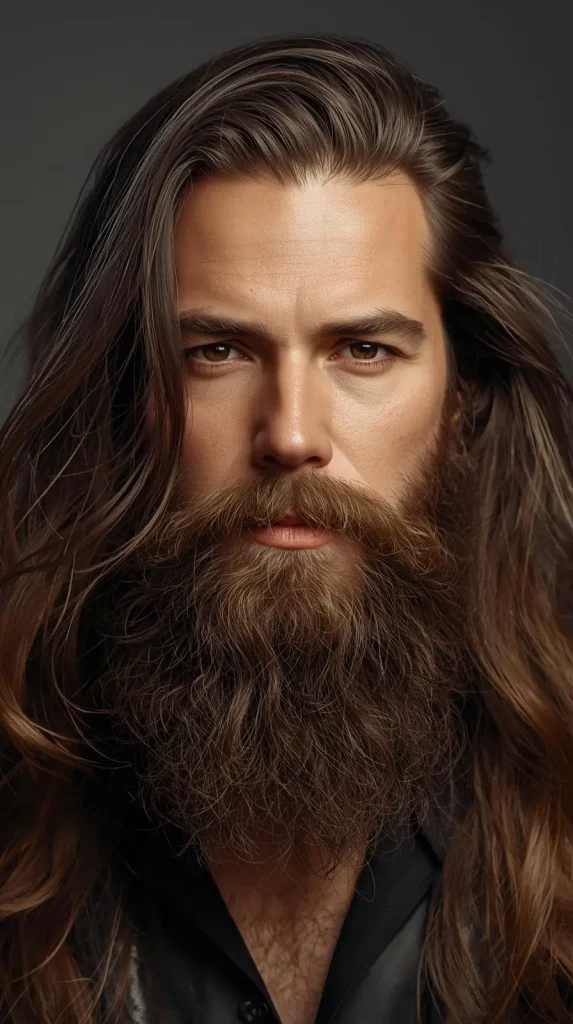
Barbers often taper the sideburn area slightly so the beard flows naturally into the longer hair. Without this transition, the combination can appear disconnected.
This pairing works best when the beard is sculpted along the cheek line while the hair remains layered to prevent excessive heaviness around the crown.
A boar bristle grooming brush such as the ZilberHaar Beard Brush helps control beard density while distributing oils evenly through thicker facial hair.

Beard Brush by ZilberHaar – Stiff Boar Bristles for Men’s Grooming
The bristles are carefully selected to ensure the right stiffness to get through even the thickest of beards. Boar hair is known to soften, clean, and distribute oils naturally and effectively.
13. Undercut Hair with Beard
The undercut removes weight from the sides while leaving strong length on top. This contrast creates a bold silhouette that pairs effectively with a beard.
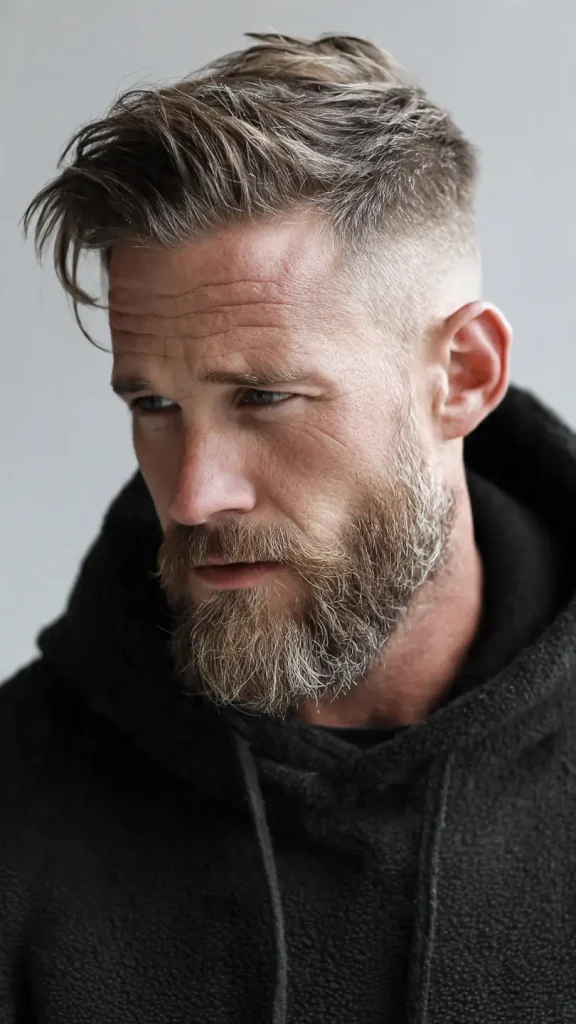
Because the sides are disconnected, the beard becomes the visual anchor along the jawline. A medium to full beard usually works best to balance the dramatic top length.
Maintaining clean undercut structure requires precise side trimming. Many barbers rely on tools discussed in barber tools for fades to keep the side sections sharp and controlled.
For styling the longer top section, a high hold matte product such as Baxter of California Clay Pomade helps maintain shape without creating greasy shine.
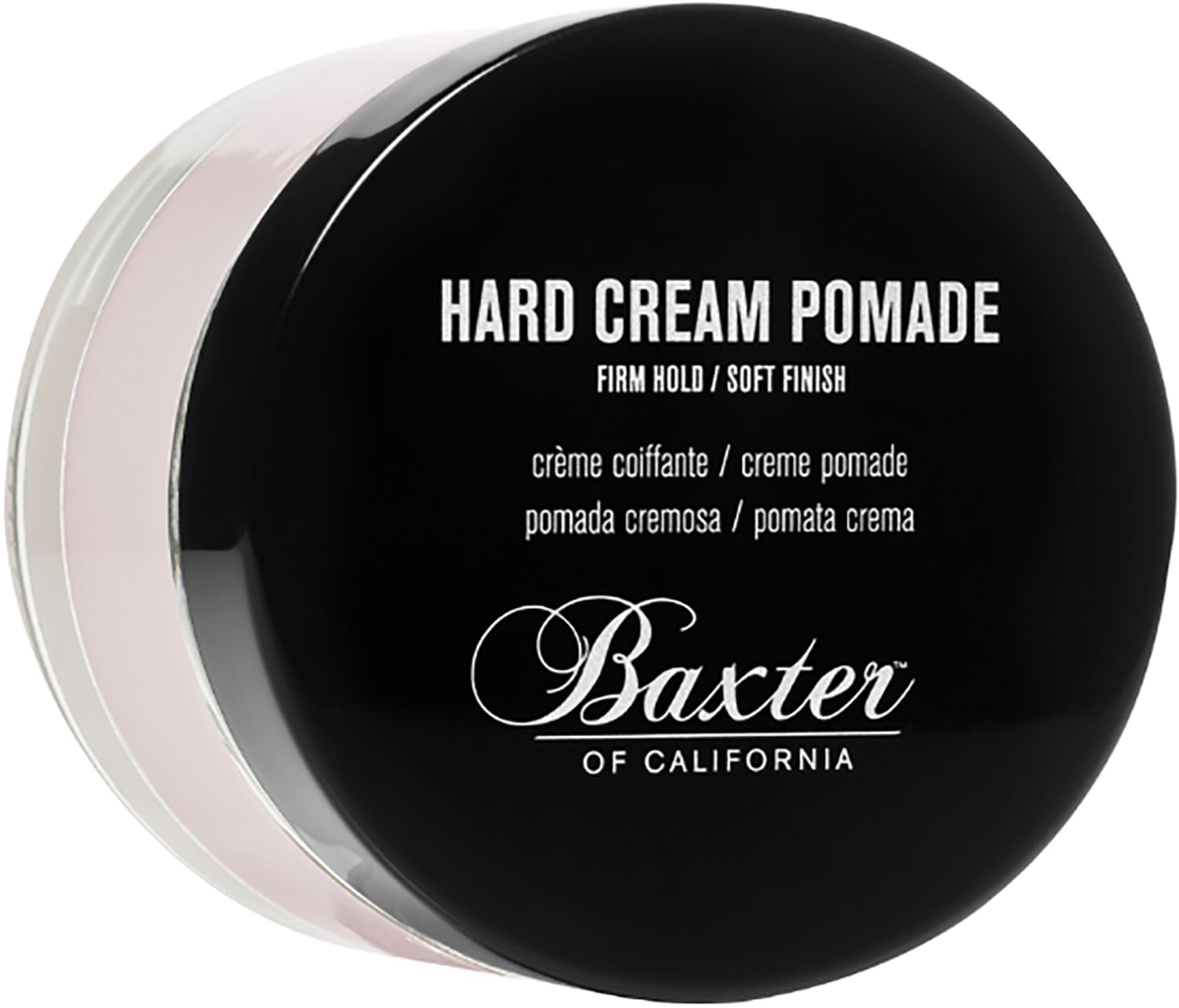
Firm hold, natural finish pomade. This lightweight, solid styling cream provides textured definition
14. Short Textured Hair with Stubble Beard
Short textured hair introduces subtle movement without excessive volume. This haircut works particularly well with stubble because both elements maintain a controlled, minimal grooming profile.
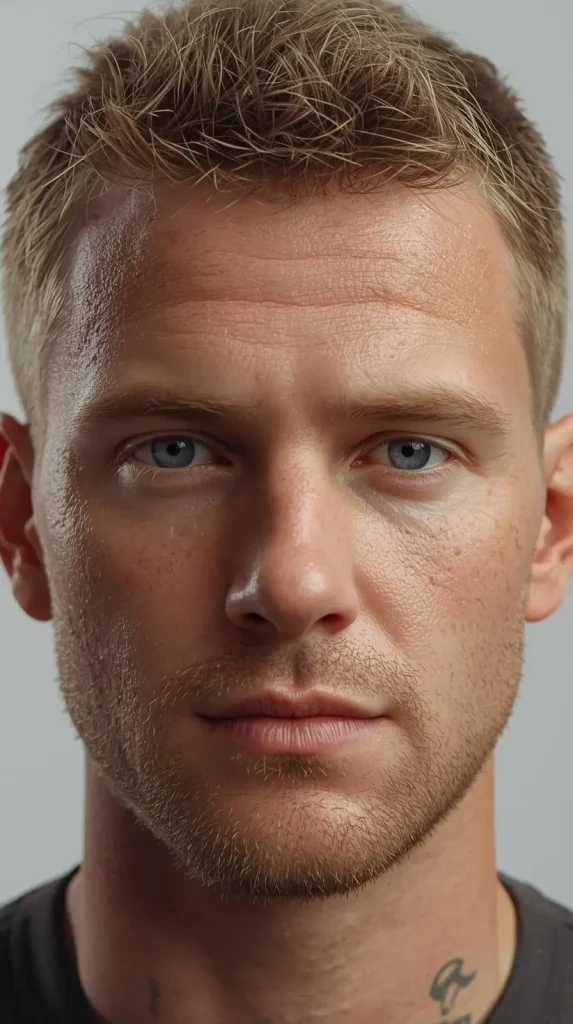
The hair is typically layered with point cutting to produce separation across the crown. The stubble beard sharpens the jawline while maintaining a clean professional appearance.
This combination is ideal for men who want facial definition without maintaining a full beard.
A precision stubble trimmer like the Philips Norelco OneBlade allows accurate control of short beard length while keeping the neckline clean.

The fast-moving cutter (12,000x min) is efficient, even on longer hairs; the dual Protection System with glide coating plus rounded tips makes shaving easier and more comfortable
15. Wavy Hair with Beard Fade
Wavy hair naturally produces directional movement and volume. Pairing it with a beard fade creates a gradual transition from temple to jawline that keeps the overall structure balanced.
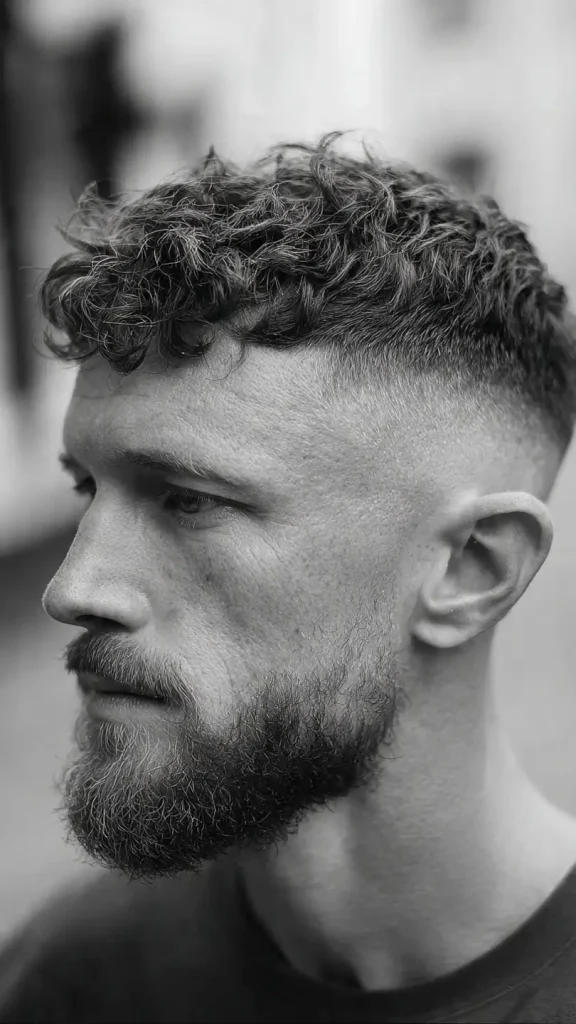
Barbers often taper the sideburn area so the waves on top blend naturally into the beard. This blending technique prevents harsh separation between the haircut and facial hair.
Many barbers study this transition through taper fade styling techniques where fades are engineered to merge seamlessly into beard density.
To control wave definition, a lightweight sea salt spray such as Pete & Pedro Sea Salt Spray helps enhance natural movement while maintaining texture.

Natural sea salt spray for hair men adds incredible volume and texture in a jiffy to take your hairstyling game to the next level. It also adds amazing richness and fullness to thinning or fine hair.
16. Pompadour with Full Beard
The pompadour builds vertical height at the front hairline while tapering the sides. This hairstyle elongates the head shape, which pairs effectively with a full beard that adds weight to the lower face.
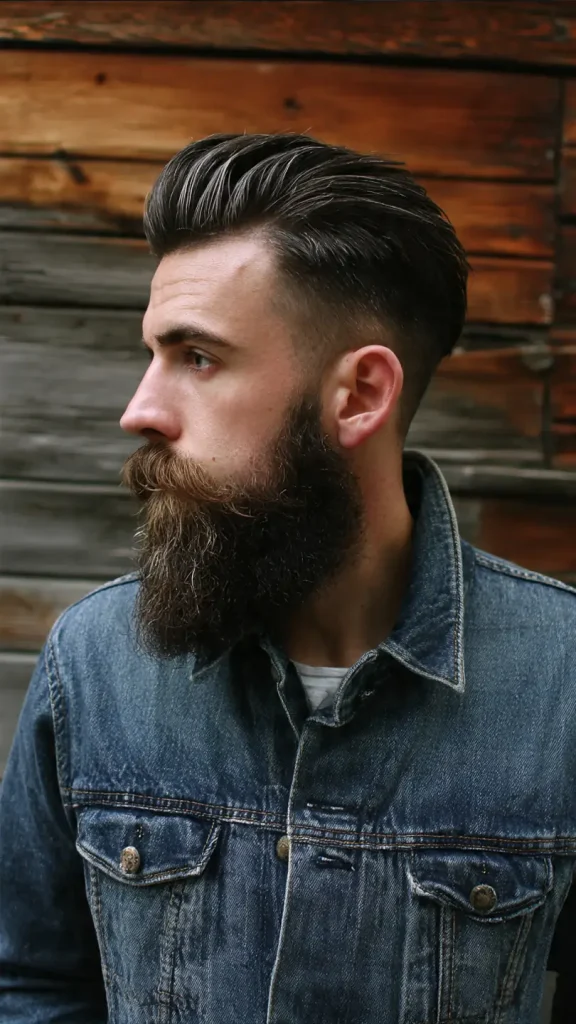
The contrast between lifted hair and dense beard creates strong facial symmetry. Barbers often keep the beard slightly tapered near the sideburns so it integrates smoothly with the haircut.
Because the pompadour requires strong hold, styling products play a major role in maintaining structure.
17. Short Spiky Hair with Beard
Short spiky hair introduces sharp directional texture across the crown. The beard adds grounding weight along the jawline so the hairstyle does not appear overly aggressive.
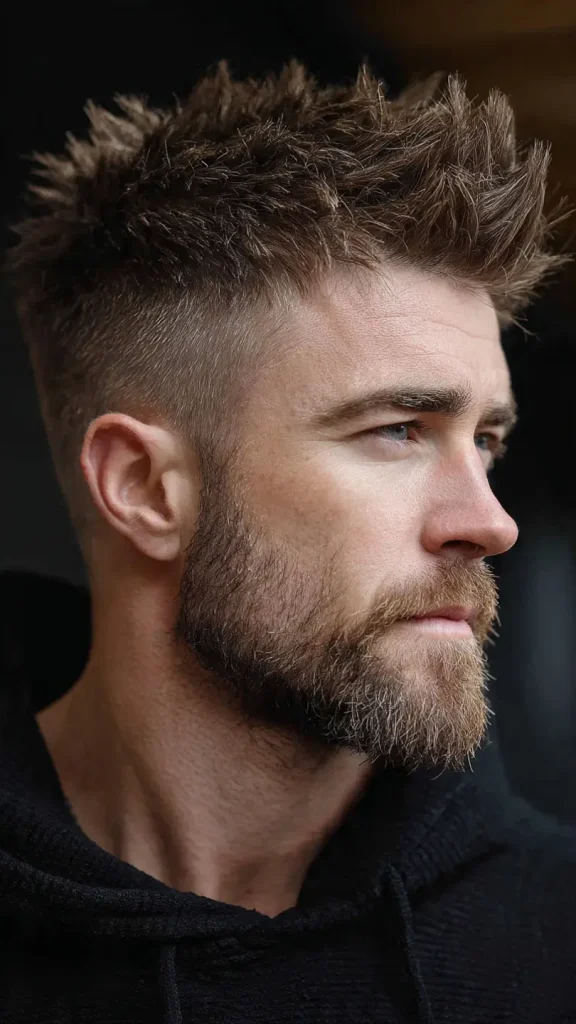
Barbers typically keep the sides short or lightly faded so the spikes remain the primary feature of the haircut.
This pairing works particularly well for men with angular facial structures because both the hair and beard emphasize sharp lines.
A strong hold matte wax like TIGI Bed Head Manipulator helps create defined spikes while maintaining flexible texture.
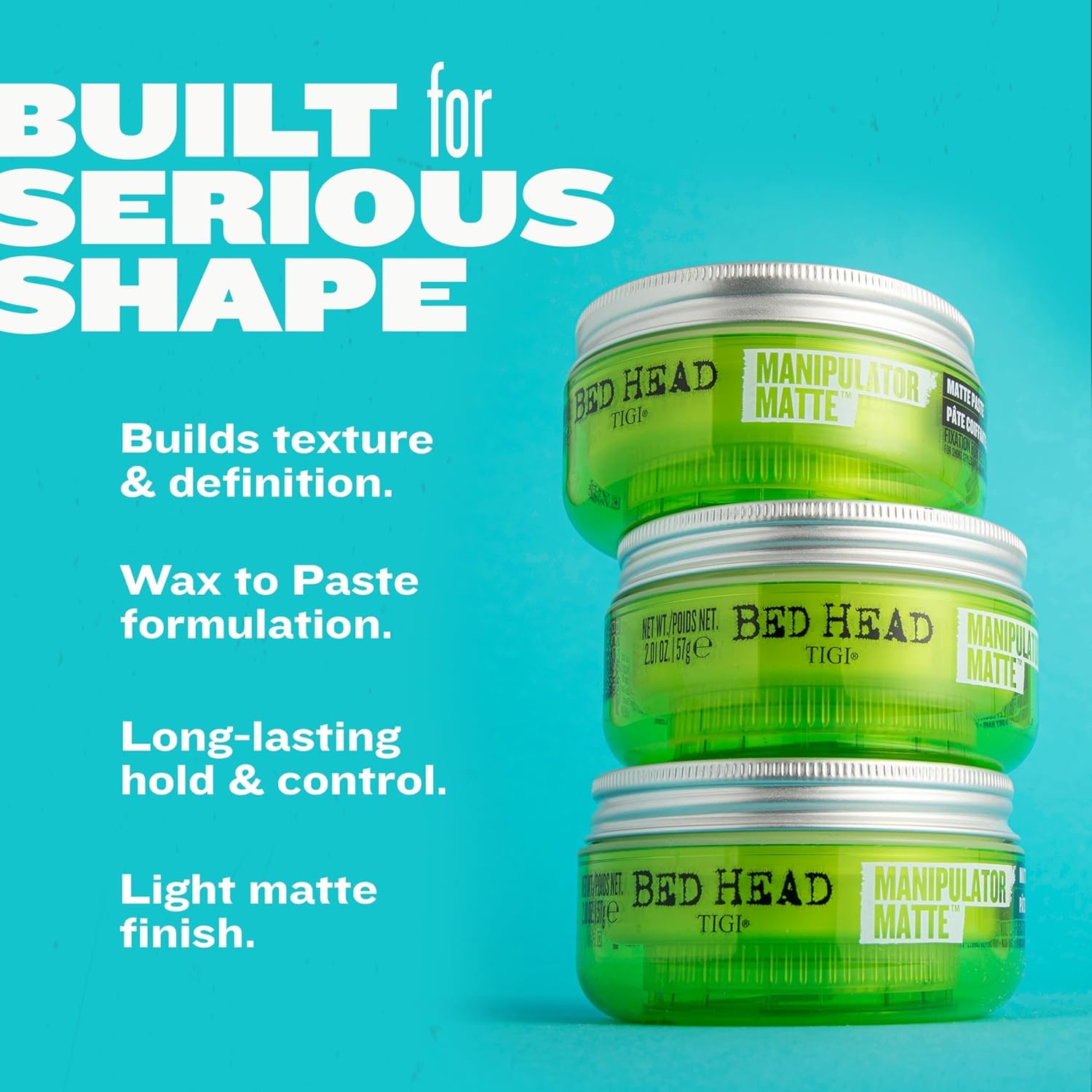
Manipulator Matte Hair Wax Paste delivers a strong hold with a soft, light matte finish, giving you all-day style without leaving behind grease and shine
18. High Fade with Beard
The high fade removes significant weight from the sides of the head. This dramatic transition makes the beard the dominant visual element around the lower face.
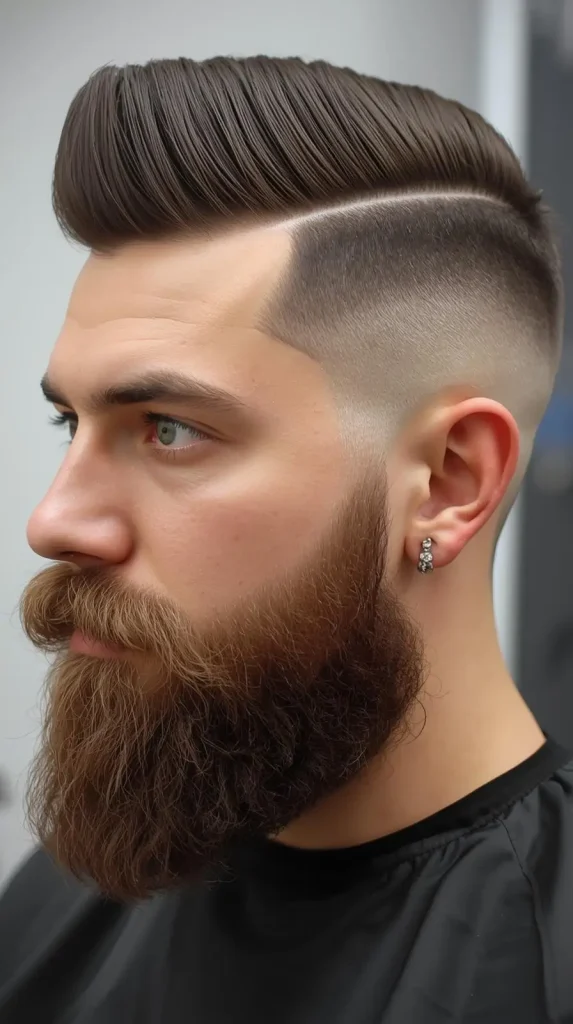
Barbers blend the fade carefully into the beard line so the haircut appears connected rather than separated. Learning about types of taper fades helps explain how different fade heights affect beard integration.
This haircut works especially well with thicker beard growth because the fade reduces upper head density.
19. Ivy League Hair with Beard
The Ivy League haircut maintains short sides with slightly longer hair on top that can be parted or brushed to the side. This refined haircut pairs well with a medium beard that follows natural cheek contours.
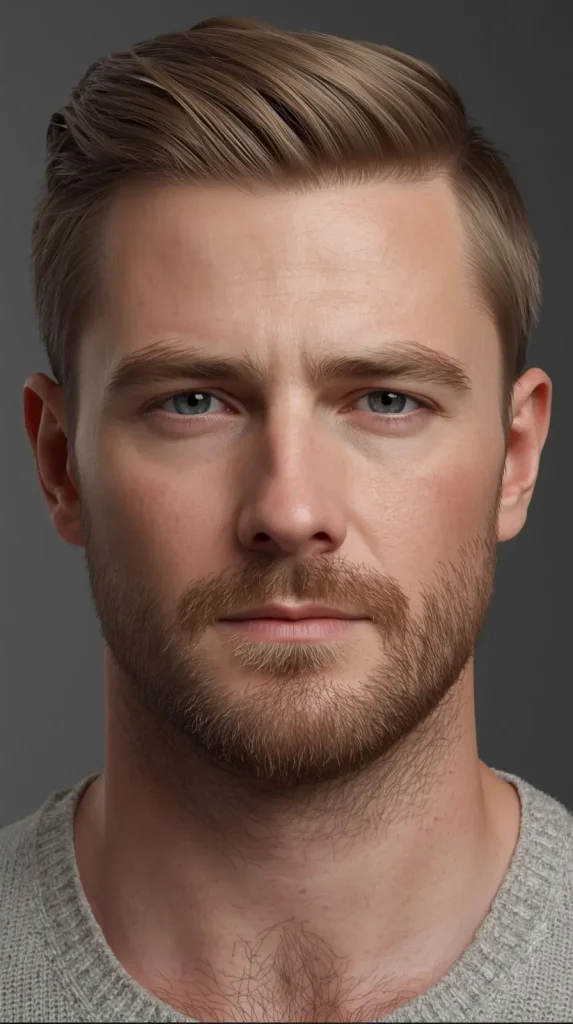
The haircut creates clean structure while the beard adds maturity to the facial profile.
Because the style is subtle and structured, beard shaping becomes critical to maintain balance.
A beard shaping template such as the The BEARD BLACK Beard Shaping & Styling Tool with Inbuilt Comb helps maintain symmetrical cheek and neckline edges.

No more expensive shaves from the barber! Get perfectly symmetric beard trimming lines in a matter of minutes! Simply line up our Beard Shaping Tool and follow our included grooming kit guide to get professional accurate shave lines in no time!
20. Taper Fade with Beard Blend
The taper fade with beard blend is designed specifically to connect the haircut directly into facial hair. The fade gradually reduces hair density through the temple and sideburn region before merging into the beard.
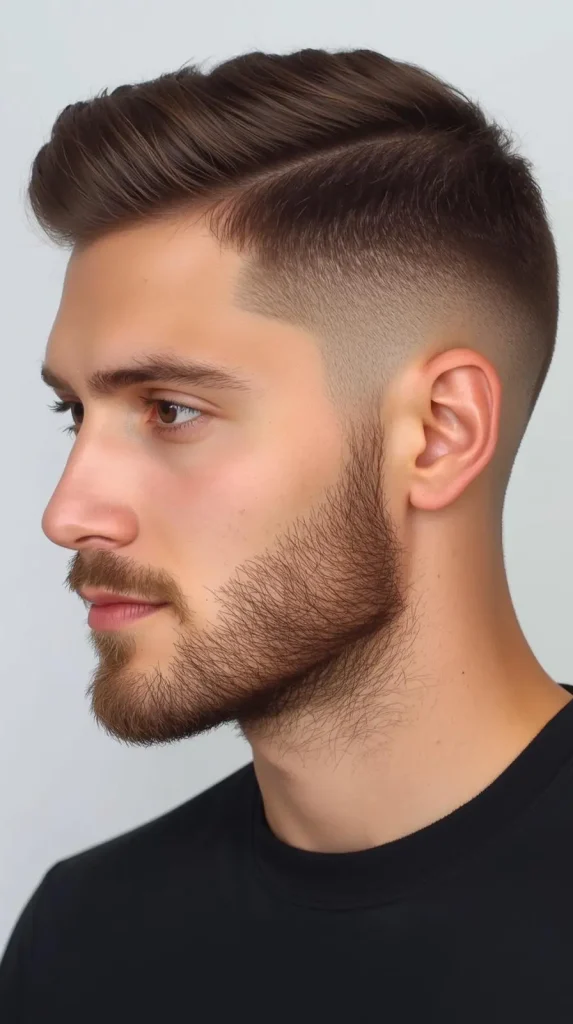
This blending technique prevents visual breaks between the haircut and beard.
Many barbers refine this approach using techniques explained in taper fade haircut styles guide where haircut architecture transitions smoothly into beard structure.
Maintaining this blend requires consistent trimming of both the fade and beard line.
21. Shoulder Length Hair with Beard
Shoulder length hair creates significant volume across the head. A beard becomes essential for balancing the lower face so the hairstyle does not appear top heavy.
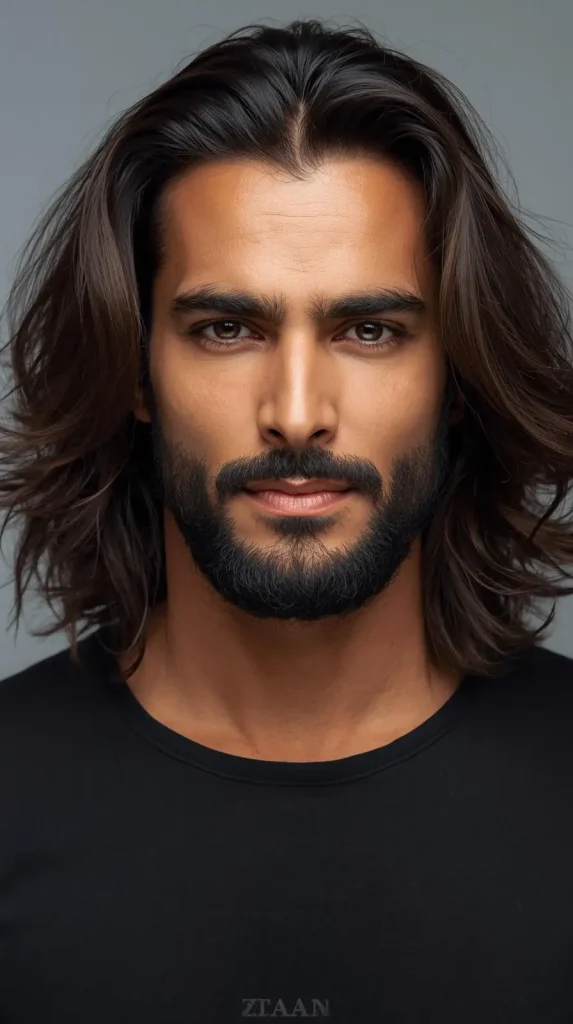
Barbers usually recommend layered cuts for longer hair so the weight distributes evenly across the shoulders.
The beard should remain structured rather than excessively long to maintain proportion between the upper and lower grooming areas.
22. Caesar Cut with Beard
The Caesar cut features a short horizontal fringe across the forehead with uniform hair length across the crown. This haircut emphasizes facial structure and works well with a defined beard.
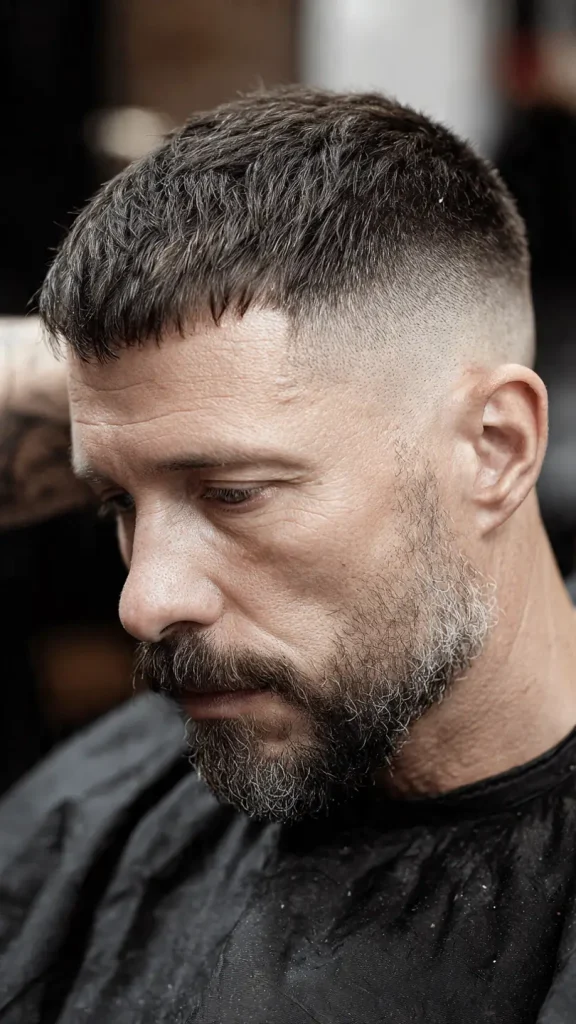
Because the haircut sits close to the head, the beard adds depth and dimension to the lower face.
Maintaining the straight fringe requires regular trimming to keep the line sharp.
23. Faux Hawk with Beard
The faux hawk builds central volume along the crown while the sides remain shorter. This creates vertical focus through the center of the head.
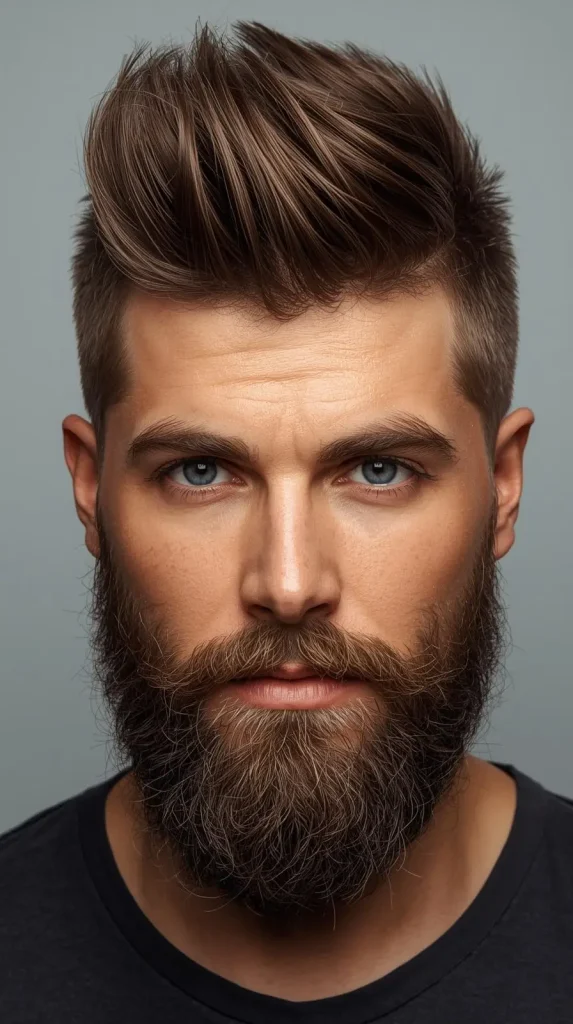
A beard balances this vertical emphasis by adding horizontal density along the jawline.
The combination works particularly well for men who want a bold hairstyle without committing to a full mohawk.
A strong styling product such as Layrite Cement Clay helps maintain the elevated center structure throughout the day.

An extreme high hold styling clay that delivers a clean matte finish that lasts all day.
24. Bald Head with Beard
A shaved head paired with a beard creates a strong contrast between scalp and facial hair. Since the head contains no hair volume, the beard becomes the primary framing element of the face.
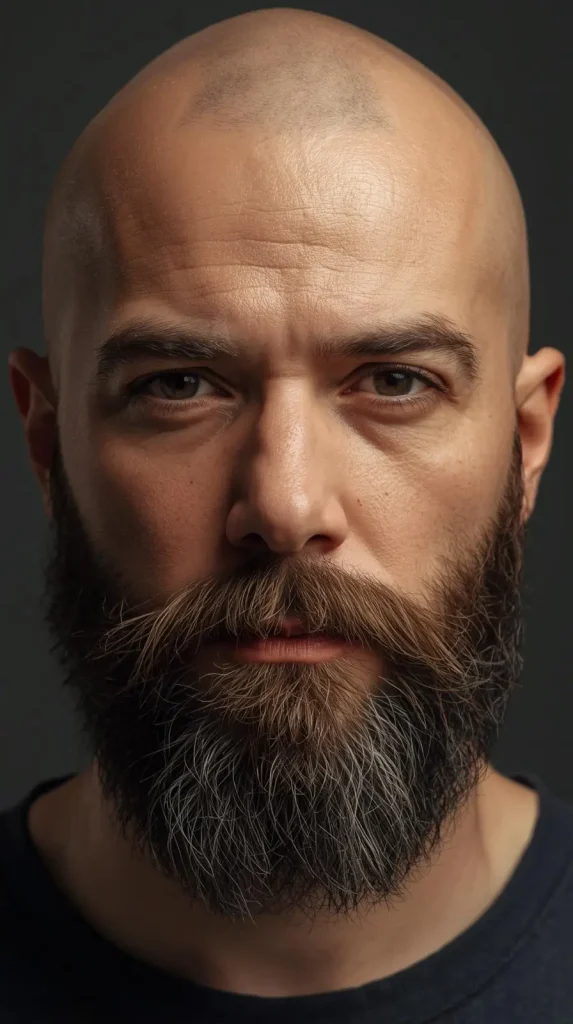
Barbers focus on beard shape to maintain symmetry around the jawline and chin.
Regular scalp maintenance is important to keep the shaved head clean and smooth.
A high quality head shaver like the Skull Shaver Pitbull Gold PRO helps maintain a smooth scalp while supporting consistent grooming.

Skull Shaver – Pitbull Gold PRO GX5 Head and face Shaver
Upgraded with a more powerful motor, allowing it to deliver smoother and faster results
25. Short Layered Hair with Beard
Short layered hair distributes volume through subtle internal layering rather than aggressive texture. This haircut creates movement while maintaining overall shape control.
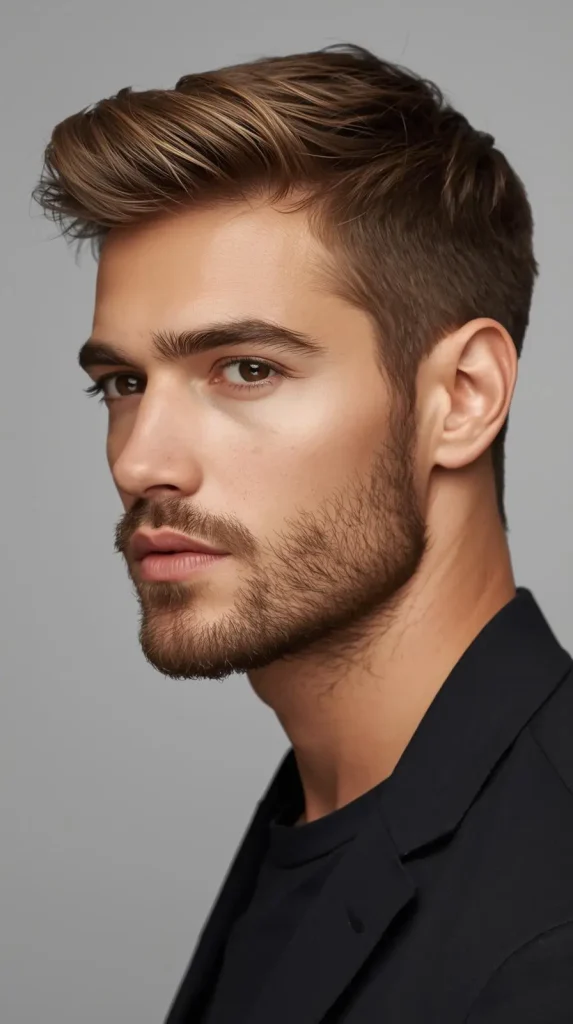
The beard complements the layered haircut by reinforcing facial structure without overpowering the hairstyle.
Barbers often taper the neckline slightly so the haircut blends naturally with beard growth.
Beard Maintenance That Keeps Hair and Beard Styles Balanced
Haircuts and beards must be maintained together to preserve grooming structure. When beard growth becomes uneven or overly dense, it disrupts the visual balance between the haircut and the lower face. Professional barbers approach beard maintenance as an extension of haircut design rather than a separate grooming task.
A properly maintained beard keeps the jawline defined while supporting the haircut’s shape. Without consistent trimming, even well designed hair and beard styles for men can quickly lose their structural harmony.
Below are the core maintenance habits barbers recommend to keep hair and beard proportions aligned.
1. Maintain a Consistent Beard Length
Uneven beard growth creates visual imbalance. The beard should maintain a consistent length that complements the haircut density.
For example, short haircuts usually pair best with shorter beard lengths, while medium or longer hairstyles can support fuller beard volume. Keeping beard guards consistent when trimming prevents uneven patches.
2. Keep the Neckline Clean and Structured
The neckline defines where the beard ends and the neck begins. When this line grows too low, the beard appears bulky and disconnected from the haircut.
Barbers usually position the neckline just above the Adam’s apple, curving slightly upward toward the jaw corners. This keeps the beard tight while preserving facial structure.
Regular neckline maintenance ensures the haircut and beard remain visually connected.
3. Control Cheek Line Density
The cheek line determines how sharp or natural the beard looks. A well maintained cheek line enhances facial structure and prevents the beard from appearing overgrown.
Men with thicker beard growth often benefit from shaping the upper beard boundary. This creates a clean frame that aligns with the haircut’s taper near the temples.
4. Blend the Sideburn Area Properly
The sideburn region is where the haircut transitions into the beard. If this area is not blended correctly, the haircut and beard will appear disconnected.
Barbers typically fade or taper this area gradually to create a smooth transition. This blending technique is explained in taper fade styling techniques where fades integrate hair density into beard structure.
Maintaining this transition is one of the most important steps for keeping hair and beard styles balanced.
5. Use Beard Oil to Control Density
Dry beard hair expands outward and creates bulk that disrupts facial proportions. Beard oil softens the hair and keeps it laying closer to the face.
Regular oil use also improves beard manageability when styling or trimming.
6. Comb the Beard Daily
Beard combing distributes oils evenly and prevents knots that cause uneven volume. It also helps train beard hair to grow in the intended direction.
Daily combing is particularly important for medium to long beard lengths.
7. Trim Hair and Beard on the Same Schedule
Haircuts and beard trims should follow similar maintenance intervals. When one grows faster than the other, facial balance disappears.
Most barbers recommend:
• haircuts every 3 to 4 weeks for fades and tapers
• beard trims every 1 to 2 weeks for shape control
Consistent maintenance also supports techniques discussed in taper fade maintenance guide where haircut structure and beard density are preserved together.
When haircut maintenance and beard grooming are performed together, the overall grooming architecture stays sharp and balanced.
Styling Products That Improve Beard and Hair Coordination
When hair and beard styles are designed together, the right grooming products help maintain structure, control texture, and preserve the balance between scalp hair and facial hair. Professional barbers rely on specific styling and grooming tools to keep both areas aligned with the overall grooming architecture.
- Philips Norelco Multigroom Series 7000
- Suavecito Original Hold Pomade
- Hanz de Fuko Claymation
- Layrite Cement Clay
- Viking Revolution Beard Oil
- Aberlite Beard Shaping Tool
- Wahl Lithium Ion Beard Trimmer
- Pete & Pedro Sea Salt Spray
- American Crew Forming Cream
Common Grooming Mistakes When Pairing Beard and Hairstyle
Haircuts and beards must function as one integrated grooming structure. When men treat them as separate elements, the overall balance of the face breaks down. Barbers constantly evaluate how the haircut transitions into the beard, how density distributes across the face, and how the proportions support the head shape.
Many grooming problems come from ignoring the structural relationship between the temple area, sideburn transition, and jawline density. Understanding fade structure through types of taper fades helps explain how haircut transitions should merge into beard growth without creating visual breaks.
Below are the most common mistakes that disrupt the balance between hair and beard.
1. Disconnecting the Sideburn Area
The sideburn zone is where the haircut meets the beard. If this transition is not blended correctly, the beard appears separate from the haircut.
Professional barbers typically taper the sideburn gradually so the hair density reduces smoothly into the beard. This technique is discussed in taper fade styling techniques where fade control allows hair and beard to integrate seamlessly.
When the sideburn area is ignored, the haircut may look sharp while the beard appears heavy and disconnected.
2. Choosing a Beard That Overpowers the Haircut
Hair and beard volume must remain proportional. A very large beard combined with extremely short hair can shift too much visual weight toward the lower face.
Barbers balance this by adjusting haircut density. For example, fuller beards often pair better with tapered sides or moderate top length so the head does not appear disproportionately small.
The structural logic behind this balance is explored in taper fade haircut styles guide where haircut architecture is designed to complement beard density.
3. Ignoring Face Shape When Pairing Hair and Beard
Face shape determines how hair and beard should distribute volume.
If the haircut and beard both expand outward, the face may appear wider. If both remain too tight, the face may appear overly narrow.
Barbers adjust beard density and haircut height to maintain visual symmetry.
| Face Shape | Hair Strategy | Beard Strategy |
|---|---|---|
| Round | Add height on top | Keep beard slightly longer on chin |
| Square | Maintain moderate top volume | Keep beard structured but not overly wide |
| Oval | Balanced haircut length | Medium beard density |
| Diamond | Add width through sides | Maintain controlled beard length |
Understanding these structural adjustments prevents grooming imbalance.
4. Neglecting Regular Trimming
Hair and beard growth rates differ. When men maintain the haircut but ignore the beard, facial balance quickly disappears.
Fades begin to grow out while beard density expands around the jawline. This shifts attention away from the haircut and creates uneven proportions.
Barbers usually recommend maintaining the haircut and beard on similar schedules. Techniques discussed in taper fade maintenance guide help preserve haircut precision while keeping beard transitions sharp.
5. Poor Beard Line Definition
Undefined cheek lines and necklines make the beard appear unstructured. Even a well designed haircut cannot compensate for poorly maintained beard boundaries.
Beard structure relies on two main lines:
• the cheek line that frames the upper beard
• the neckline that defines the lower beard boundary
When these lines become blurred, the beard loses shape and disrupts the balance with the haircut.
6. Mismatching Texture Between Hair and Beard
Hair texture should complement beard texture whenever possible.
For example:
| Hair Texture | Recommended Beard Style |
|---|---|
| Straight hair | Structured or sculpted beard |
| Wavy hair | Medium natural beard |
| Curly hair | Gradually tapered beard |
| Short buzzed hair | Full or medium beard |
Matching texture creates a cohesive grooming appearance rather than a conflicting combination of styles.
When haircut structure, beard density, and facial proportions are aligned correctly, hair and beard styles function as a unified grooming system instead of two unrelated elements.
Choosing Hair and Beard Styles for Men Based on Face Shape
Face shape plays a major role in determining how hair and beard styles should be paired. Professional barbers evaluate bone structure, jawline width, cheekbone prominence, and forehead height before deciding how beard density and haircut volume should interact.
The goal is to control visual balance. Haircuts influence the upper frame of the head while beards control the lower frame of the face. When these two elements are aligned with the natural face shape, the entire grooming structure appears sharper and more intentional.
Round Face Shape
Round faces typically have softer jawlines and similar width across the cheeks and forehead. The goal is to introduce vertical structure that visually elongates the face.
Haircuts with volume on top help create height, while the beard should remain slightly longer toward the chin to strengthen the jawline.
Structured beard styles that narrow toward the chin work especially well for this face shape. Many barbers recommend exploring classic beard structures such as goatee beard styles for men because they extend the chin area and reduce facial roundness.
Square Face Shape
Square faces have strong jawlines and wide cheekbones. This face shape already contains strong structure, so the goal is to soften the angles without removing definition.
Haircuts with moderate volume on top work best, while the beard should follow the natural jawline without expanding outward too aggressively.
Beard styles with sculpted cheek lines can refine the facial outline. For example, styles discussed in van dyke beard style introduce controlled beard structure while keeping the jawline sharp and refined.
Oval Face Shape
Oval faces are naturally balanced, which means most hair and beard styles work well. However, maintaining proportion is still important.
Haircuts should avoid excessive height that would elongate the face further. Beards should remain moderate in length so the lower face does not appear overly heavy.
Classic beard structures often complement this face shape. Guides such as beard styles for men showcase balanced beard designs that work well with neutral facial proportions.
Diamond Face Shape
Diamond faces feature narrow foreheads with wider cheekbones and a narrower chin. The beard becomes especially important for adding structure around the jawline.
Barbers often recommend fuller beards to increase lower face width. Haircuts with moderate side density also help balance the cheekbone area.
When the beard provides width near the jaw while the haircut maintains controlled top volume, the overall facial structure becomes more symmetrical.
Why Face Shape Matters for Hair and Beard Balance
Haircuts frame the head while beards frame the jawline. When both elements follow the geometry of the face shape, the grooming design enhances natural bone structure rather than fighting against it.
Understanding face shape allows men to select hair and beard styles that reinforce facial symmetry while maintaining strong grooming architecture.
10 Professional Barber Tips for Maintaining Beard and Hairstyle Proportion
Maintaining balanced hair and beard styles requires consistent grooming habits and an understanding of facial structure. Barbers focus on proportion control so the haircut and beard complement each other instead of competing for visual attention. The following professional techniques help maintain that structural harmony.
1. Match Beard Density With Hair Volume
Haircuts with minimal volume usually require controlled beard density. When the beard becomes too heavy compared to the haircut, the lower face appears disproportionate.
Barbers often adjust beard fullness based on haircut weight to keep both areas balanced.
2. Blend the Temple and Sideburn Transition
The temple area acts as the bridge between haircut and beard. A smooth transition prevents harsh separation and keeps the grooming structure cohesive.
When this area is blended properly, the beard appears naturally connected to the haircut.
3. Choose Beard Styles That Fit Your Age and Face Structure
Certain beard styles naturally complement facial proportions better than others. Mature grooming structures, for example, often benefit from styles explained in beard styles for men over 60 where beard density enhances facial definition.
4. Maintain Beard Shape Along the Jawline
A beard should follow the natural contour of the jaw rather than expanding outward. Clean jawline shaping strengthens facial structure and prevents bulky beard silhouettes.
Classic facial hair structures such as french beard styles demonstrate how controlled beard shaping sharpens the lower face.
5. Adjust Beard Length as the Haircut Grows
Hair and beard growth rates differ. When hair grows out, beard density may need adjustment to maintain visual balance.
Barbers often shorten or reshape the beard between haircuts to preserve facial proportion.
6. Maintain Consistent Cheek Line Definition
The cheek line frames the upper portion of the beard. When this line becomes uneven, the beard loses its structure.
Defined cheek lines create a cleaner grooming appearance and support the overall haircut design.
7. Use Beard Styles That Complement Your Lifestyle
Active lifestyles often benefit from shorter, structured beard styles. More rugged grooming approaches, such as those seen in viking beard styles, suit men who prefer fuller beard density and a stronger masculine aesthetic.
8. Keep Neckline Placement Consistent
A properly positioned neckline prevents the beard from appearing too heavy around the neck area. Barbers typically position the neckline just above the Adam’s apple to maintain structure.
Consistent neckline maintenance ensures the beard supports the haircut instead of overpowering it.
9. Balance Hair Length With Beard Thickness
Longer hairstyles can support fuller beards, while shorter haircuts usually work better with trimmed beard structures.
Maintaining this balance prevents the face from appearing top heavy or bottom heavy.
10. Explore Different Beard Structures Over Time
Beard growth patterns change as men age. Trying different beard designs can help refine grooming structure over time.
Style guides such as beard styles for men and goatee beard styles for men provide examples of beard structures that pair effectively with different haircuts.
Occasionally using grooming tools can also improve beard maintenance. A heated beard straightener like the Arkam Premium Beard Straightener.
For beard washing and conditioning, a dedicated grooming kit such as the Grave Before Shave Beard Wash & Conditioner Set helps maintain beard softness and shape.

Our gentle formula cleans and hydrates your beard and skin to reduce itchiness and dandruff (or beard druff). Fresh and masculine scent without being overpowering. Leaves your beard looking healthy and smelling great after every use! Transform your beard from dry, frizzy, and flaky to touchably soft and noticeably shiny. Ideal for all hair and skin types. Looking for the perfect gift for the bearded man in your life? Look no further!
| Grooming Factor | Barber Recommendation | Result |
|---|---|---|
| Hair and beard balance | Match beard density to haircut volume | Prevents facial imbalance |
| Sideburn transition | Blend gradually between hair and beard | Creates seamless structure |
| Beard neckline | Keep neckline above Adam’s apple | Maintains clean lower face |
| Cheek line shaping | Define upper beard boundary | Improves facial framing |
| Hair length vs beard length | Adjust beard thickness to hair volume | Maintains grooming symmetry |
| Regular trimming | Maintain haircut and beard together | Preserves structural balance |
Conclusion
Hair and beard styles for men work best when they are designed as one grooming system rather than two separate elements. The haircut frames the upper portion of the head while the beard defines the jawline and lower face. When both elements are balanced in density, length, and structure, they create a cohesive appearance that enhances facial proportions.
Professional barbers focus on three key factors when pairing hair and beard. First is the transition between the haircut and the beard through the temple and sideburn area. Second is the proportional relationship between haircut volume and beard density. Third is maintaining clean beard lines that support the structure created by the haircut.
Choosing the right beard structure also plays an important role in long term grooming balance. Exploring guides such as beard styles for men and classic beard frameworks like french beard styles can help men understand how different beard shapes interact with various haircuts.
When haircut architecture and beard grooming are maintained together, the result is a structured grooming profile that strengthens facial definition, improves symmetry, and keeps the overall style sharp.